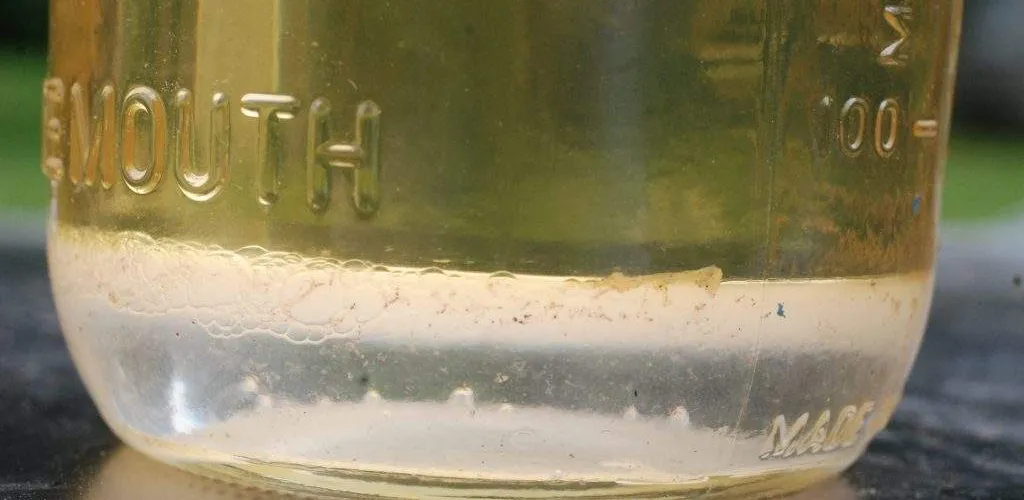
- Water and fuel don’t mix; water settles at the tank bottom, fuel stays above.
- Early operation seems normal; problems appear as the tank empties and water is drawn.
- Water reaching the injection system can cause injector corrosion and costly repairs.
- Symptoms include increased fuel consumption, hesitation, stalling, and loss of power or rough idle.
Water in the fuel tank is a serious issue that can cause major damage to your engine. Many drivers do not grasp the severity until symptoms appear. Understanding how water interacts with gasoline or diesel is essential to prevent costly repairs.
In this article, we explain why water and fuel do not mix in practice, how water enters the tank, the potential consequences for the fuel system, and the immediate steps you should take if you suspect a problem.
Why water and fuel don’t mix
To understand what happens when water enters the fuel tank, we need to know the basic principles of liquid densities. Each substance has a specific density that determines its behavior when it comes into contact with other liquids.
The density of liquid water at room temperature is about 980 kg per cubic meter, while the density of fuel is about 720 kg per cubic meter. This means gasoline or diesel is lighter (less dense) than water.
Because of this density difference, the two substances do not actually mix. The process is similar to trying to mix water with cooking oil – they form separate layers. When water reaches the fuel tank, it settles at the bottom while the fuel remains on top, creating a stratified effect.
How water affects the fuel system
In the first moments after water enters the tank, the car may seem to run normally. The fuel pump draws gasoline or diesel from the upper portion of the tank, and the engine receives clean fuel. The problem becomes evident only when the fuel level drops significantly.
When the tank is around half-full or near empty, the pump starts drawing from the lower area where water has settled. At this moment the first signs appear:
- The engine starts running irregularly
- Hesitations during acceleration
- The car can stall suddenly
- Starting becomes difficult or impossible
If water reaches the injection system, the damage can be severe. Injectors are precision components that operate with very small tolerances. Water can cause rapid corrosion and damage these delicate parts, leading to very costly repairs.
Clear signs you have water in the tank
Early recognition of these signs can save the engine from major damage. Here are the main symptoms to watch for:
Increased fuel consumption
Water dilutes gasoline or diesel, causing the engine to compensate for the poorer mixture quality by using more fuel. If you notice you’re refueling more often than usual, without changing your driving style, water in the tank may be the cause.
Problems with acceleration
The air-fuel mixture entering the combustion chamber does not have the proper properties when the fuel is contaminated with water. The ideal stoichiometric ratio becomes unbalanced, resulting in:

- Hesitant or delayed accelerations
- Sudden power losses during driving
- Inability to reach high RPM
- Uneven idle speed
Acute lack of power
Even if you manage to start the engine, you’ll notice a dramatic drop in performance. The car may struggle to stay at idle or lose power when you press the accelerator, making it hard to accelerate. This symptom indicates the fuel system is already delivering water to the engine.
Damage to the fuel system
In the long term, water in the fuel system causes:
- Corrosion of metal components
- Damage to the fuel pump
- Clogging of the fuel filter
- Premature wear of injectors
- Rust in pipes and hoses
These damages worsen progressively and can become irreversible if the problem is not addressed quickly.
What you should do immediately
If you identify any of the symptoms above, prompt action can prevent major damage:
- Stop the engine immediately - Do not continue driving or try to force the car to run
- Do not restart the engine - Each startup pumps more water into the system
- Pull over safely - If you’re in traffic, find a safe place to stop
- Seek specialized assistance - Contact a workshop that can intervene on-site
Procedura corectă de remediere include:
- Completely drain the fuel tank
- Thoroughly wash the tank to remove all water
- Replace the fuel filter
- Check and possibly clean the injection system
- Refill with fresh, high-quality fuel
How water gets into the tank
There are several ways water can enter the fueling system:
Natural condensation
A small amount of water can form naturally in the tank through condensation. This occurs especially when:
- The tank is kept half-full or nearly empty
- There are large temperature differences between day and night
- The car sits unused for long periods
- The air in the tank contains humidity that condenses on the cold walls
These small amounts (a few milliliters) usually do not damage the engine and are managed by the tank’s drainage system.
Physical faults
The most serious problems occur when there is a fault that allows water to enter directly:
- Defective or missing fuel cap
- Cracks in the car body near the tank
- Worn seals at the fill neck
- Corrosion that has created holes in the tank
Poor quality fuel
Sometimes water can come directly from the fueling station. If you notice substantial amounts of water right after fueling, it means you have received very poor-quality fuel. In this case:
- Keep the receipt
- Document the problem (photos, service report)
- Contact the fueling station
- Report the case to consumer protection authorities
Preventing the issue
To avoid water contamination in the tank, follow these recommendations:
- Keep the tank as full as possible to reduce the space where condensation can form
- Regularly check the tank cap and replace if worn
- Refuel at trusted stations with high customer traffic
- Avoid refueling immediately after a tanker has delivered fuel at the pump
- Use additives periodically to remove condensation from the tank
- Visually inspect the tank for signs of corrosion or cracks
Remember that a small amount of condensation water is not a major danger to the engine. Modern fuel systems can handle such minimal amounts. The problem becomes serious only when the amount of water exceeds a few hundred milliliters or when water intrusion is constant due to a physical fault.