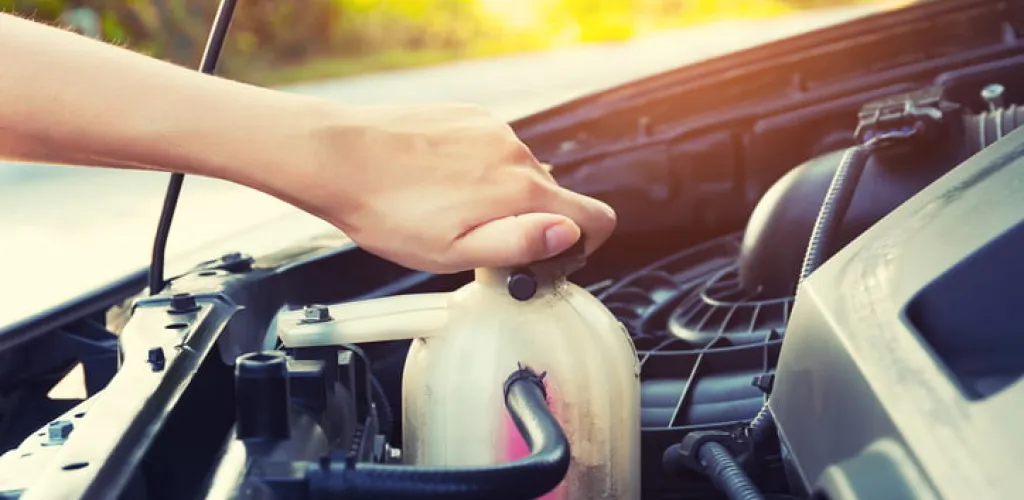
- Air entering expansion tank causes foaming, disrupts coolant flow and overheating risk
- Main cause is a failing cylinder head gasket letting exhaust gases into coolant
- System pressure loss lowers coolant boiling point, worsening foaming and leaks
- Other causes include radiator blockages, water pump wear, and thermostat faults
Cooling systems in a car are designed to operate sealed, maintaining a constant pressure and preventing uncontrolled entry of air from the outside. When air enters the expansion tank for various reasons, air pockets and foaming can quickly form, disrupting coolant flow, causing overheating, and leading to costly engine damage.
Coolant foaming is a warning sign that should not be ignored, as it can indicate serious problems with the cylinder head gasket or other cooling system components. Below we analyze the main causes of this problem and how to address them.
Why coolant foaming occurs
The foaming process explained
Foaming is the process by which gases are forced through a liquid. In the cooling system, infiltrated air creates bubbles that rise through the coolant in the expansion tank, giving the impression that the liquid is boiling. This phenomenon is not due to an excessively high temperature, but to the presence of air in the circuit.
These pockets of air have a density different from the liquid and act as “caps” that block normal circulation. The result is uneven heat distribution, increased local pressure, and, ultimately, engine overheating.
Main cause: cylinder head gasket
In most cases, coolant foaming indicates a problem with the cylinder head gasket. This component seals the joint between the engine block and the cylinder head, separating the combustion chambers from the cooling system.
The cylinder head gasket is a wear part that can deteriorate due to:
- Repeated thermal cycles
- High pressures in the combustion chambers
- Normal wear over mileage
- Prior overheating of the engine
When the gasket fails, exhaust gases under pressure breach into the cooling system, causing the characteristic foaming.

Coolant boiling point
Standard coolant properties
Quality coolants have the following properties at normal operating pressure:
- Boiling point: approximately 120°C
- Freezing point: approximately -35°C
- Working pressure: 1.2-1.5 bar in modern systems
These values can vary depending on:
- Coolant concentration in the mix
- Product quality
- System pressure
- Elevation at which the vehicle operates
Effect of pressure on the boiling point
System pressure plays a crucial role in determining the boiling point. As pressure drops, the boiling point decreases. Therefore, any leak that reduces system pressure can cause the coolant to boil at temperatures well below normal operating temperatures.
This principle explains why the foaming problem worsens quickly — once system pressure drops due to air ingress, the coolant can start boiling even at normal operating temperatures.

Other possible causes of foaming
Radiator issues
- Partial blockages in radiator tubing
- Damage to radiator fins
- Cooling fan failures
Water pump failures
- Wear of impeller blades
- Pump bearing failure
- Leaks at the pump gasket
Thermostat problems
- Thermostat stuck in the closed position
- Premature opening or late opening of the thermostat
- Complete thermostat failure
What to do in case of foaming
Immediate steps
- Turn off the engine immediately when you notice foaming
- Allow the engine to cool completely before any intervention
- Check the coolant level in the expansion tank
- Look for visible signs of leaks under the vehicle
Professional diagnosis
For a precise diagnosis, it is recommended to contact a specialized auto service that can perform:
- System pressure testing
- Checking the integrity of the cylinder head gasket
- Analysis of exhaust gases to detect hydrogen
- Endoscopic inspection of the combustion chambers
Repair costs
Repairing the cylinder head gasket can be costly, ranging between 1,500-4,000 lei depending on:
- Vehicle make and model
- Engine complexity
- Need for cylinder head resurfacing
- Replacement of other affected components
Preventing cooling system problems
Regular maintenance
- Replacing coolant according to the service schedule
- Periodic checks of the coolant level and condition
- Cleaning the radiator and the cooling circuit
- Timely replacement of wear parts
Warning signs
Be attentive to the following symptoms:
- Rising engine temperature
- Decreased coolant level
- Color change of the coolant
- Presence of oil in the coolant
- White smoke from the exhaust
Coolant foaming is a serious issue that requires immediate attention. Ignoring this symptom can lead to complete engine failure, with repair costs running into tens of thousands of lei. Diagnosing and repairing it promptly can save the engine and avoid major unforeseen expenses.