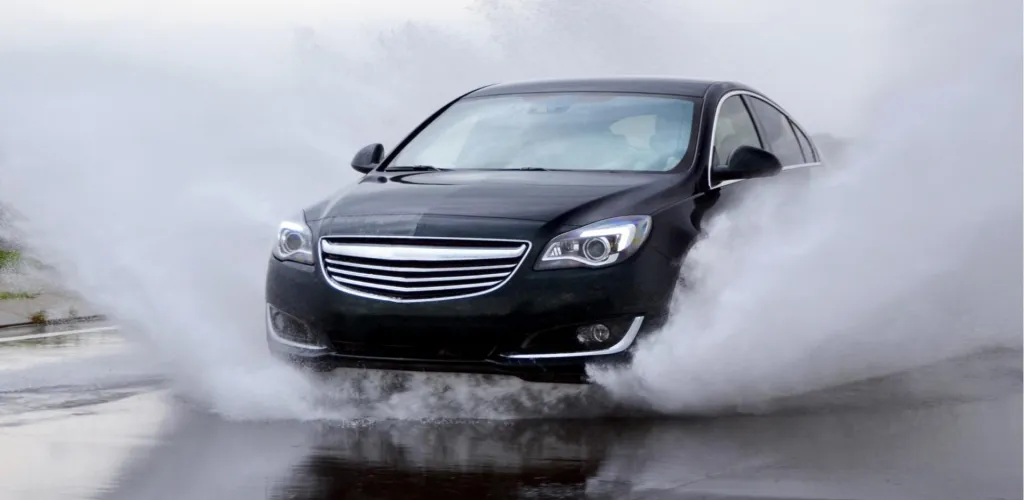
- Aquaplaning occurs when a water layer prevents tire-road contact, reducing grip
- Water layer must be at least 2.5 mm; occurs on poorly drained or damaged roads
- Tire condition affects water evacuation; wear reduces capacity, increasing aquaplaning risk
- Recognize symptoms and stay calm; abrupt reactions worsen control during aquaplaning
In Romania, rainy days exceed 100 per year, and in some regions up to 200 days, according to ANM. This means many drivers experience aquaplaning, a dangerous phenomenon that can lead to loss of vehicle control and serious accidents.
Understanding this phenomenon and the science behind prevention and control is essential for road safety. A prepared driver can completely avoid aquaplaning or correctly manage the critical moments when it occurs.
What is aquaplaning and how does it occur?
Aquaplaning is a physical phenomenon that occurs when a layer of water forms between the tires and the roadway, preventing direct contact between the tread and the asphalt. At this moment, the vehicle’s grip drops dramatically, and the driver loses control of braking, steering, and even acceleration.
The phenomenon is based on hydrodynamic principles: when the travel speed exceeds the tire’s ability to evacuate water through the grooves in the tread, a water cushion forms under the vehicle and the car literally floats. This situation transforms the car from a controllable vehicle into an object sliding on the surface of the water.
Water layer thickness
The water layer must be at least 2.5 mm thick to produce aquaplaning. This situation often occurs on:
- Roads with poor drainage
- Potholes filled with water
- Undulations that accumulate rainwater
- Areas with deteriorated asphalt

Tire condition
Tires play a crucial role in preventing aquaplaning. The ability to evacuate water depends on:
- Tread depth: new tires can remove up to 10 liters of water per second
- Channel design: transverse and longitudinal channels guide water away from the contact patch
- Inflation pressure: incorrect pressure reduces water evacuation efficiency
As tires wear, their water evacuation capacity decreases significantly, increasing the risk of aquaplaning.
Speed
Speed is the most important controllable factor for the driver. There is no fixed aquaplaning speed, but studies show that:
- An average car begins aquaplaning at around 60 km/h on water about 2–3 cm deep
- The critical speed decreases with tire wear
- Lighter vehicles aquaplane at lower speeds
Recognizing aquaplaning symptoms
When driving in rainy conditions, the following symptoms can indicate the onset of aquaplaning:
- The engine sounds louder — it revs up but the travel speed remains the same
- The clutch feels pressed — the RPMs rise toward the redline without a corresponding increase in speed
- The steering wheel becomes very soft — it loses response to inputs
- The rear of the car “dances” — the vehicle becomes laterally unstable
How to control the car during aquaplaning
If you feel you are losing control due to aquaplaning, follow this procedure:
Stay calm
Panic is the biggest enemy in this situation. Abrupt reactions can worsen the problem and cause a serious accident when the wheels regain contact with the road.

Immediate actions
- Do not brake hard — this can lock the wheels and worsen the situation
- Ease off the accelerator slightly — allow the vehicle to slow down naturally
- Keep the steering wheel straight — maintain the desired direction for when the wheels regain grip
- Disable cruise control if active — many cars disable it automatically when you brake
Returning to control
As soon as the car starts to regain traction:
- Begin braking gently and progressively
- Keep the steering wheel in a neutral position
- Continue reducing speed until you are completely out of the problematic area
Prevention strategies for aquaplaning
Prevention remains the most effective way to avoid aquaplaning dangers. Here are the measures you can implement:
Tire maintenance
Regularly check tire conditions:
- Tread depth: minimum 3 mm for optimal wet safety
- Inflation pressure: check monthly and always before long trips
- Even wear: watch for signs of uneven wear that may indicate geometry problems

A tire with 3 mm tread depth will brake about 25% worse than one with 6 mm in a hard braking scenario from 80 km/h.
Adapting driving technique
Trip planning
- Check the weather forecast before departure
- Plan alternate routes on roads with better drainage
- Avoid travel during intense storms
Speed control
- Reduce speed by 20–30% compared to normal dry conditions
- Respect the rule that stopping distances increase significantly when wet
- Adjust speed to visibility and road conditions
Following technique Use the technique observed in Formula 1: follow the line of the vehicles in front. Their tires shed part of the water from the road, creating a safer running line.
Avoiding risky behavior
- Do not use cruise control in rainy weather, especially on cars with advanced driver assistance systems
- Avoid abrupt braking, acceleration and steering maneuvers
- Maintain a larger distance from other vehicles
- Stay alert to signs of changing grip
Understanding wet weather traffic conditions
Rainy conditions affect not only grip but also:
- Reduced visibility due to rain on the windshield and spray from other vehicles
- Reflections of lights on wet asphalt that can hide water-filled potholes
- The behavior of other drivers who may not be prepared for these conditions
Additional safety equipment
For optimal protection in rainy conditions:
- Premium summer tires with advanced water evacuation design
- Timely replacement of tires before the tread depth falls below 3 mm
- Tire pressure monitoring systems
Aquaplaning is a serious phenomenon that can be prevented through knowledge, preparation, and defensive driving. Understanding the mechanisms of this phenomenon and consistently applying preventive measures can make the difference between a safe journey and a serious accident.