- Damage varies by water level, duration, water type, and response time.
- Hydrolock risk grows if water reaches the intake, causing severe engine damage.
- Water exposure can cause short circuits, corrosion, ECU failure, and intermittent faults.
- Interior moisture leads to mold, odors, and long-term damage.
Flooding represents one of the most serious threats to a passenger car, whether it stems from natural causes such as storms or river overflows, or human errors such as windows left open or car wash mishaps. In this article we will examine in detail the damages a flooded car can suffer, when an economic investment in repair is still worth it, and in which situations it is better to walk away.
The issue of flooding a vehicle is extremely complex and there is no universal answer about whether it can be repaired. The extent of damage varies significantly depending on several factors: water level, exposure duration, type of water (fresh or saltwater), and speed of intervention. From interiors soaked with water to hydro-locked engines or completely submerged vehicles, each situation requires careful individual assessment.
Types of Flooding and Effects on the Car
When we talk about flooding a car, we refer to a wide range of scenarios. The most frequent include:
- Storms and torrential rains that create large puddles on the roads
- River overflows that cover large areas
- Accidents at car washes
- Windows or sunroof left open during rain
- Unexpected situations in which the vehicle ends up in water
The most dangerous and common cases are natural floods, where massive amounts of water and mud rapidly penetrate all components of the vehicle. Water seeps into tight spaces, covers absorbent surfaces, and produces mold in a surprisingly short time.
How Water Affects the Car’s Engine
The engine is the most vulnerable and costly component when it comes to water damage. When water enters through the intake system into the combustion chambers, the engine can hydrolock. While the air in the cylinders is compressed during the engine cycle, water is incompressible and will cause instant mechanical destruction.
A hydro-locked engine suffers major damage:
- The connecting rod may bend or break completely
- The pistons may crack or fracture
- The cylinder head may crack
- The crankshaft may deform
- The valves may bend
This catastrophic scenario can occur even when trying to cross a deep puddle or a river and water reaches the intake height. A simple rule: if water rises above halfway up the wheel, the risk of hydro-lock becomes very high.
Damage to Electronic Systems
Modern cars are equipped with dozens of electronic modules and computers that control everything from the engine to safety systems. Water and electronics do not mix, and submerging these components can cause:
- Short circuits in the electrical system
- Corrosion of contacts and connectors
- Damage to ECU modules (engine control unit)
- Sensor failures
- Problems with safety systems (airbags, ABS, ESP)
Even if systems seem to work initially after drying, corrosion may continue to progress for months, causing intermittent faults hard to diagnose.
Effects on the Interior and Upholstery
The car’s interior suffers significant damage after a flood:
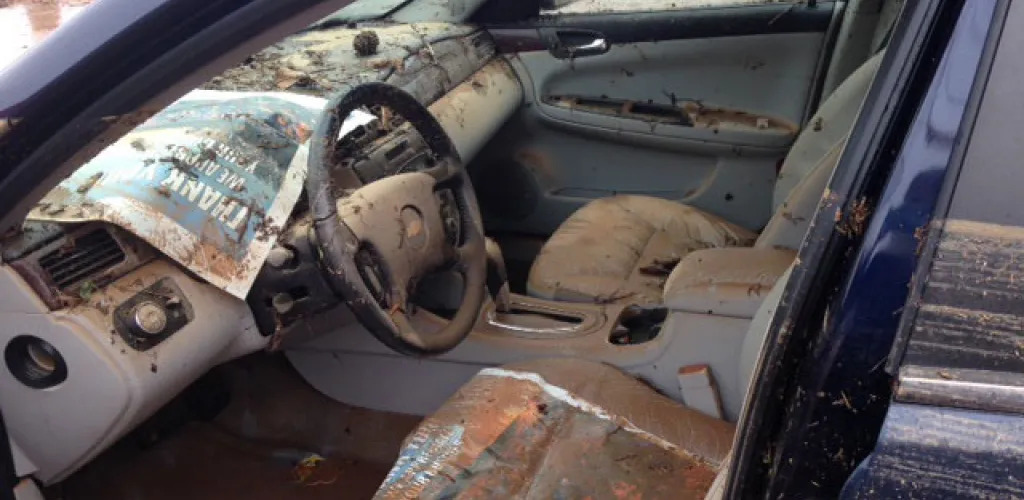
- The seats and upholstery absorb water like a sponge
- The sound insulation under the floor becomes saturated and becomes a mold hotspot
- Carpets and mats retain moisture for months
- Electronics in the dash can suffer damage
- The mold odor becomes persistent and hard to remove
Cost of Repairing a Flooded Car
From a theoretical standpoint, almost any automotive defect can be repaired if parts and the necessary technical knowledge exist. The real question is whether it is economically worthwhile.
Estimating Repair Costs
Costs vary dramatically depending on several factors:
Type and value of the vehicle:
- A premium or new car may justify a higher investment
- An aged car with low market value rarely justifies the repair
Extent of the damage:
- Minor damage (wet interior only): €1,000-€3,000
- Moderate damage (electronic systems affected): €3,000-€8,000
- Severe damage (hydrolocked engine): €8,000-€15,000+
Speed of intervention:
- Rapid intervention (within 24-48 hours): significantly lower costs
- Delayed intervention: additional corrosion and mold damage
Typically, full repair of a car seriously affected by flood damage can cost between €5,000 and €15,000, depending on the model and service. Authorized service centers charge higher rates but offer warranties, while independent shops may be more affordable.
Insurance Considerations
It’s important to know that:
- RCA (mandatory third-party liability) does not cover flood damage
- Full coverage Casco can include coverage for natural disasters, but premiums are considerably higher
- If repair costs exceed 70-80% of the vehicle’s market value, the insurer will declare a total loss
- In the case of total loss, you will receive the current market value of the car, not the repair cost
Reality of Repairing a Flooded Car
Even if you decide to invest in full repair of the vehicle, you should be prepared for some unpleasant realities:
Long-Term Issues
No matter how professional the repair, the car will never be the same:
- Complete removal of moisture is impossible: Water penetrates inaccessible areas of the body, insulation and joints
- Progressive corrosion: Even if not visible immediately, corrosion will continue at points where water has penetrated
- Intermittent electrical problems: Faults may appear months or years after the repair
- Persistent odor: Mold smell is extremely difficult to eliminate completely
- Low resale value: Flood history will dramatically reduce the selling price
Hidden Risks
There are components and systems that can develop problems long after you think everything is resolved:
- Bearings can rust internally and fail prematurely
- Hydraulic systems (brakes, clutch) can be contaminated
- Electronic components can function intermittently
- Mold can reappear in areas with poor ventilation
Buying a Flood-Damaged Car
Flood-history cars sell at very low prices on the used-car market, which can be tempting for buyers with a tight budget. However, this type of purchase comes with major risks.
Evaluation Criteria
Before considering such a purchase, you should determine:
Water level:
- Below thresholds: minor damage, potentially repairable
- At seat level: moderate interior and electrical damage
- Above the hood: severe damage, very likely engine damage
Exposure duration:
- A few hours: higher chances of recovery
- One day or more: far more extensive damage
Type of water:
- Fresh water: considerable but manageable damage
- Saltwater: accelerated and aggressive corrosion, practically unrecoverable
- Mud water: high risk of contamination of mechanical systems
Legal and Practical Considerations
If you buy and repair such a car:
- Duty to disclose: you must declare flood history to future buyers
- Warranty loss: the manufacturer’s warranty becomes null automatically
- Resale difficulties: you will receive well below market value on resale
- Hidden costs: unexpected faults may appear even after seemingly complete repairs
When It Might Be Worth the Investment
There are some limited scenarios where buying a flooded car might make sense:
- You need a cheap car for a very short term (6–12 months)
- You are a mechanic and can perform the repairs yourself
- The damages are minor (only superficially wet interior)
- The price is so low that it compensates for the risks
- You plan to use the car for parts
Final Recommendations
If You Own a Flood-Damaged Car:
- Do not attempt to start the engine — risk of hydro-lock
- Contact a specialized service urgently — every hour counts
- Document everything with photos — for insurance
- Get multiple repair quotes — compare costs
- Calculate whether it’s economically worthwhile — compare to market value
If You Want to Buy a Flood-Damaged Car:
- Request a complete history of the vehicle
- Have a detailed professional inspection — don’t rely on appearances
- Ask for all repair evidence
- Test all electronic systems — including those that appear to work
- Negotiate a price that compensates for the risks — it should be 50–70% below market value
- Have an emergency fund for unforeseen repairs
Conclusion
In general, we do not recommend buying or repairing a car that has suffered significant flooding. Water damage is among the most complex and costly issues in the automotive field, and hidden problems can continue to emerge for years.
The exception might be only in cases of very minor damage (a window left open in the rain) or if you have advanced technical knowledge and the time to perform repairs yourself. For the vast majority of drivers, investing in a car with a clean history will always be the wiser long-term choice.
If you still choose to go down this path, ensure the price is low enough to justify the risks and that you have a clear plan for all necessary repairs, including a budget for issues that will inevitably appear later.