- Crashes can crack fuel systems, causing leaks that ignite on hot engine parts
- Electrical failures cause sparks and fires from damaged wiring or battery in crashes
- Crashes involving hazardous materials vehicles greatly increase fire risk
- Preventive maintenance reduces fire risk; in a crash, exit safely and call emergency
Road safety is a fundamental concern for every driver and their passengers.
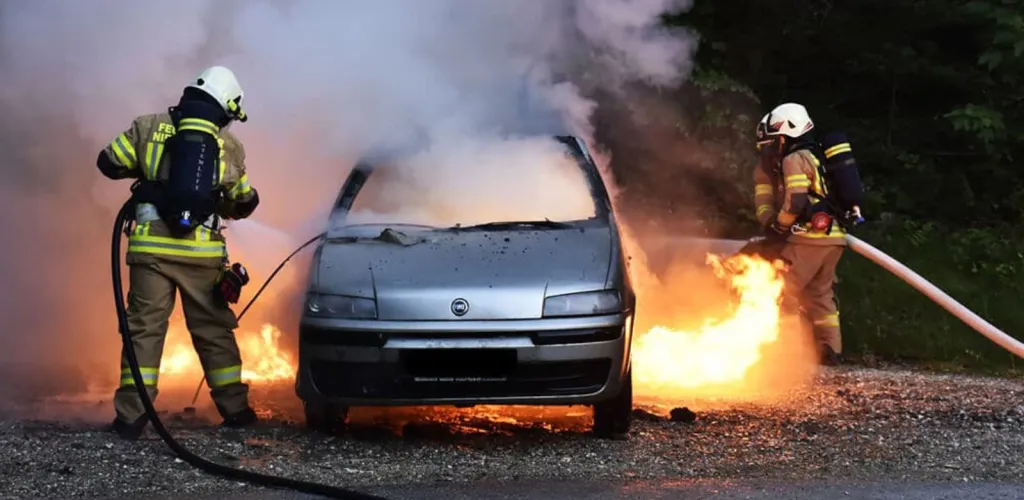
Among the most serious consequences of a road crash is a vehicle fire, a situation that can put the occupants’ lives at grave risk. Although it may seem like an extreme scenario, cars can catch fire after a violent impact, and understanding the causes and preventive measures can make the difference between life and death. Understanding the mechanisms that lead to a vehicle fire after an accident, as well as knowing the specific safety measures, is essential for any responsible driver.
Main causes of vehicle fires during a crash
Damage to the fuel delivery system
When two vehicles collide with considerable force, the energy generated by the impact can be high enough to cause cracks and ruptures in the fuel delivery system. The fuel tank, fuel lines, and related components can suffer serious damage that leads to dangerous leaks.
Fuel spilled may come into contact with hot surfaces of the engine, such as the exhaust manifold or other components operating at high temperatures. This combination of fuel and heat can trigger a rapid and violent fire.
Electrical system failures
The vehicle electrical system is highly vulnerable in a violent crash. Electrical wires can be cut or damaged, and connections can be affected, which can cause dangerous short circuits. These short circuits generate sparks that can ignite fuel vapors or other flammable materials near the impact area.
The car battery is another critical point - if damaged, it can produce violent chemical reactions and release toxic and flammable gases.
Accidents involving dangerous goods transport vehicles
The risk of fire increases exponentially when the crash involves vehicles carrying flammable materials, such as fuel tankers, vehicles transporting liquefied gases or other hazardous chemicals.

Prevention and safety measures
Preventive vehicle maintenance
- Periodic inspection of the fuel system: Regularly inspect fuel lines for cracks, wear, or signs of deterioration
- Electrical system check: Inspect wiring, connections and battery
- Engine maintenance: A well-maintained engine runs at optimal temperatures and reduces the risk of overheating
- Safety systems check: Ensure all vehicle safety systems function correctly
Correct behavior in case of an accident
- Immediate exit from the vehicle: If possible, quickly get out of the car and move away to a safe distance of at least 30 meters
- Quick assessment of the situation: Check for visible signs of fire, fuel leaks or gasoline smell
- Call for emergency assistance: Contact emergency services immediately and inform them about the situation
- Avoid ignition sources: Do not smoke and do not use devices that can spark near the crash site
Warning signs and road safety
- Maintain a safe following distance
- Respect speed limits
- Avoid driving while fatigued or under the influence of alcohol
- Increased attention in adverse weather conditions
What to do if you see a vehicle on fire
- Stop the vehicle at a safe distance (minimum 50 meters)
- Alert emergency services (112)
- Do not attempt to approach the burning vehicle to help - leave this task to professionals
- If necessary and safe, assist with evacuating the area and directing traffic
Conclusion
Vehicle fires following a road accident are real and extremely dangerous, but they can be prevented with proper measures. Regular vehicle maintenance, adherence to traffic rules and knowledge of correct procedures in case of an accident are fundamental for the safety of all road users.
Every second counts in such situations, and mental preparation and knowledge of safety measures can save lives. Investing in vehicle safety and traffic education is the best guarantee against tragedies on the road.
Cei de la MythBusters au verificat dacă mașina ia sau nu foc la impact: