- Level 1 uses a standard 230V outlet, 2–3 kW, 12–24h charging at home.
- Level 2 offers 3.7–22 kW, Type 2 connectors, 3–8h full charge.
- Level 3 DC fast charging ranges 50–350+ kW, 15–45 minutes to 80%.
- Trade-offs: higher speed costs, installation complexity, and potential battery wear with frequent fast charging.
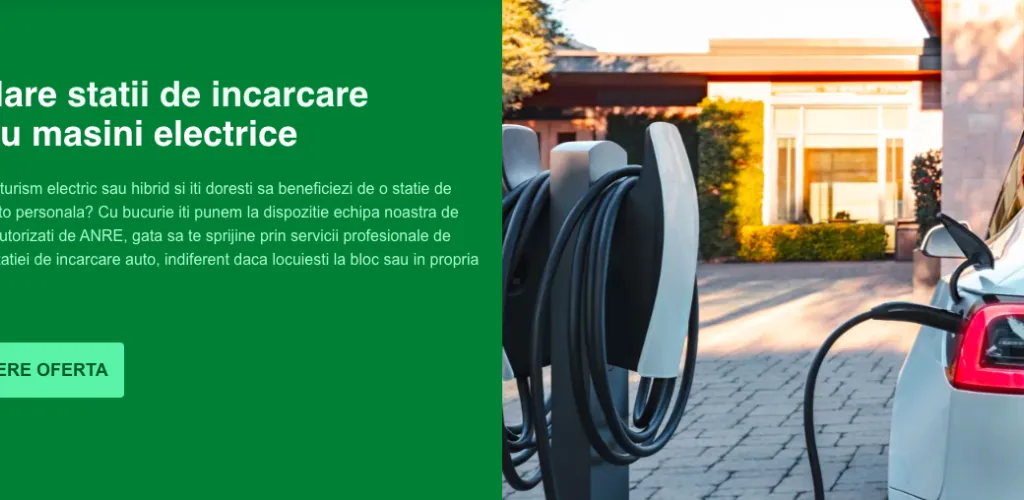
An electric vehicle charging station (EV) represents the fundamental infrastructure that enables charging of batteries for electric and plug-in hybrid vehicles. These specialized devices convert electrical energy from the grid into a form compatible with the vehicle’s charging system, providing a safe and efficient solution for electric car owners.
As Romania’s electric vehicle market continues to grow, understanding the types of charging stations and their characteristics becomes essential for any potential buyer or current user of electric cars.
Types of EV charging stations by power
Level 1 charging (AC slow)
Level 1 charging uses a standard 230V outlet (in Romania) and offers the slowest charging speed of all options. This method provides approximately 2-3 kW of power, allowing about 15-25 kilometers of range per hour of charging.
Key characteristics:
- Power: 2-3 kW
- Voltage: 230V AC
- Full charging time: 12-24 hours (depending on battery capacity)
- Typical locations: home, residential garages
Advantages:
- Maximum accessibility – can be used with any standard outlet
- Minimal or no installation costs
- Suitable for overnight home charging
- Low electrical system demand
Disadvantages:
- Very slow charging speed
- Not suitable for emergencies or long trips
- May require up to 24 hours for a full charge
Level 2 charging (AC fast)
Level 2 stations are the standard for home charging and commercial spaces. They use alternating current at a power range of 3.7 kW to 22 kW, offering an optimal balance between charging speed and installation costs.

Key characteristics:
- Power: 3.7-22 kW
- Voltage: 230V or 400V AC (three-phase)
- Charging time: 3-8 hours for a full charge
- Connectors: Type 2 (European standard)
Advantages:
- Optimal charging speed for daily use
- Possibility to install at home
- Compatibility with most electric vehicles
- Reasonable purchase and installation costs
- Smart features (scheduling, app monitoring)
Disadvantages:
- Requires professional installation and possibly upgrade of the electrical system
- Higher initial costs than Level 1
- Still relatively slow for long-distance travel
Level 3 charging (DC fast and ultra-fast)
DC fast charging stations offer the highest power, ranging from 50 kW to over 350 kW in modern technologies. These are primarily intended for public networks and long-distance travel.

Key characteristics:
- Power: 50-350+ kW
- Direct current (DC) charging directly into the battery
- Charging time: 15-45 minutes to 80% capacity
- Standards: CCS Combo 2, CHAdeMO
Advantages:
- Extremely fast charging – ideal for trips
- Enables emergency charging in a short time
- Increased availability in public networks
- Advanced cooling and thermal management technologies
Disadvantages:
- Very high purchase and installation costs
- Limited to commercial locations and highways
- Can slightly accelerate battery degradation if used frequently
- Higher price per kWh than slow charging
Locations and accessibility
Home charging stations
Installing a home charging station offers the greatest convenience for electric vehicle owners. Most opt for Level 2 solutions, enabling full charging overnight.
Installation considerations:
- Assess the capacity of the existing electrical installation
- Optimal positioning in the garage or parking area
- Obtaining the necessary permissions
- Choosing a station with smart features
Public charging network
Romania continues to expand its public charging network, with focus on:
- Highways and major national roads
- Shopping centers and office parks
- Public city parking
- Hotels and tourist destinations
Workplace charging stations
Many companies implement charging solutions for employees, offering:
- Free or subsidized charging
- Reservation via dedicated apps
- Integration with the company’s access systems
Technical aspects and compatibility
Types of connectors
In Europe and Romania, the primary standards are:
- Type 2 (AC): for Level 1 and 2 charging
- CCS Combo 2 (DC): for rapid charging
- CHAdeMO: Japanese standard, gradually being phased out
Communication protocols
Modern stations use standardized protocols such as:
- OCPP (Open Charge Point Protocol): for communication with management systems
- ISO 15118: for automatic authentication and payments
- Plug & Charge: technology that enables charging without cards or apps
Payment and monitoring systems
Accepted payment methods
- Mobile apps of network operators
- RFID cards
- Contactless bank cards
- Roaming systems across different networks
Monitoring features
Modern apps offer:
- Real-time localization of available stations
- Reservation of charging slots
- Monitoring charging progress
- Detailed history of consumption and costs
- Push notifications for charging completion
Economic considerations
Acquisition and installation costs
- Level 1: 0-500 lei (only charging cable)
- Level 2 at home: 2,000-8,000 lei (station + installation)
- Level 3 commercial: 50,000-200,000+ lei
Operational costs
Prices vary significantly depending on:
- Type of station and power offered
- Network operator
- Time of day (differentiated tariffs)
- Subscriptions and loyalty packages
Future trends in charging technology
Bidirectional charging (V2G)
Vehicle-to-Grid technology allows vehicles to return energy to the grid, turning them into mobile batteries that can help stabilize the electrical network.
Wireless charging
Inductive charging systems remove the need for cables, providing automatic charging simply by parking over a special plate.
Stations powered by renewable energy
Integrating solar panels and storage systems makes charging stations more sustainable and energy-independent.
Environmental impact and benefits
EV charging stations contribute to:
- Reducing carbon emissions from transport
- Lowering urban noise pollution
- Diversifying energy sources in transport
- Stimulating investments in renewable energy
Current challenges and limitations
Grid infrastructure
Rapid growth of EV charging requires:
- Upgrades to the distribution grid
- Intelligent demand-management systems
- Investments in generation capacity
Standardization and interoperability
The industry is working on:
- Unifying charging standards
- Cross-network compatibility
- Simplifying the payment process
EV charging stations form the backbone of modern electric mobility. Understanding the different types, features, and potential uses is crucial to maximize the benefits offered by electric vehicles. As technology continues to evolve and infrastructure expands, the user experience will become increasingly seamless and convenient for all users.