- Staying parallel to trucks is dangerous due to blind spots, wake, and sudden moves.
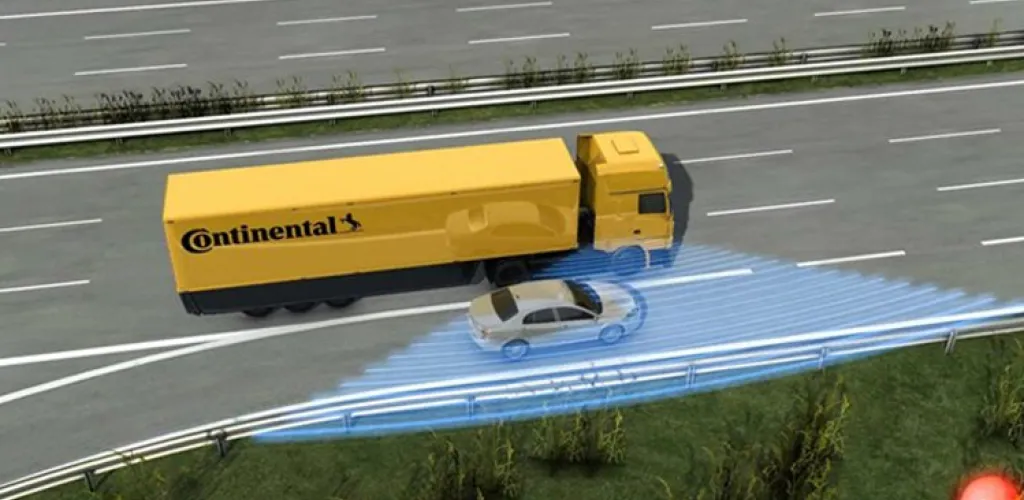
- Trucks’ blind spots: right side largest, rear 6-9 meters, front ~6 meters.
- If you can’t see the truck’s mirrors, the driver can’t see you.
- Overtake on the left; maintain 300-500 meters clearance; never overtake on the right.
Driving in busy traffic around trucks is one of the most challenging situations for drivers, especially for those with limited experience. Heavy vehicles not only take up more space on the road, but they also move more slowly, brake with difficulty, and have much larger blind spots than cars. One of the most dangerous mistakes a driver can make is to stay parallel to a truck for an extended period. This comprehensive guide explains why you should avoid this situation and how to drive defensively and safely around heavy vehicles.
Why it is dangerous to stay parallel to a truck
Staying in a parallel position with a truck for an extended period is extremely risky for several reasons:
Extensive blind spots - Trucks have massive blind spots on both sides. If you stay parallel to a truck, chances are you will be completely invisible to the driver, even if they check the mirrors.
Unpredictable maneuvers - A truck driver may need to change lanes suddenly to avoid an obstacle, a pothole, or a vehicle that has cut in. If you are alongside, they have no way to see you and you risk being hit.
The aerodynamic wake - At high speeds, trucks create strong air currents that can destabilize your car, especially if it is light or if you are driving in windy conditions.
Reduced reaction time - If the truck brakes suddenly or makes an unexpected maneuver, being parallel gives you little space to react and essentially leaves you with near-zero reaction time.
Rule of thumb: If you can’t see the truck’s side mirrors, the driver can’t see you. Avoid staying in these blind spots for more than a few seconds.
Understanding the blind spots of trucks
To drive safely beside trucks, you must understand exactly where their blind spots are:
Right side - This is the largest and most dangerous blind spot of a truck. It extends across about one and a half lanes, starting from the middle of the cab and continuing the full length of the trailer. Truck drivers have very limited, or zero, visibility on the right side.

Rear - The blind area behind the truck extends roughly 6-9 meters. If you stay too close behind a truck, the driver cannot see you in their mirrors at all.
Left side - Although smaller than the right-side zone, the blind spot on the left remains dangerous, spanning roughly half a lane beside the cab and trailer.
Front area - About 6 meters in front of the cab represents a blind spot. If you cut in abruptly in front of a truck, the driver may not see you immediately.
Practical tip: On multi-lane highways, always overtake on the left. Never attempt to overtake on the right, where a driver’s visibility is at its lowest.
Correct techniques for overtaking trucks
Planning and preparation for overtaking
Overtaking a truck takes substantially longer than passing a car and requires careful planning:
Assess visibility and distance - Before starting the maneuver, ensure you have a minimum of 300-500 meters free on the oncoming lane (one-lane-per-direction roads). On highways, make sure the overtaking lane is clear for a sufficient distance.
Signal in advance - Activate your signal at least 3-5 seconds before starting the maneuver. This alerts the truck driver and other road users.
Calculate the required distance accurately - A truck needs roughly 200-300 meters for a complete and safe overtaking, depending on the speed difference and the vehicle length. Never underestimate this distance.
Accelerate decisively - Once you have started overtaking, accelerate firmly (within the speed limit) to minimize the time spent parallel to the truck. The faster you overtake, the less time you spend in the truck’s blind spots.
Do not hesitate halfway - If you have begun the overtaking and everything is safe, complete it to the end. Hesitating and slowing in the middle keeps you in the danger zone longer.
After completing the overtaking
Check the rearview mirror - Before moving back to your original lane, you should see the truck’s cab completely in the interior rearview mirror. This confirms you’ve left sufficient space.
Maintain a safe following distance - After you’ve returned to the lane, keep a minimum 50-70 meters of distance in front of the truck. Trucks need much more space to stop than cars.
Avoid sudden braking - After returning in front of the truck, avoid hard braking. The truck driver cannot react as quickly as you and may not be able to stop in time.
Do not insert yourself between trucks - On highways, avoid positioning yourself between two trucks moving in a convoy. This exposes you to risks from both directions and severely limits your maneuver options in emergencies.
Maintaining safe distances
Distance behind trucks
Avoid tailgating - Riding too close behind a truck is extremely dangerous for several reasons:
- Zero visibility - You cannot see traffic ahead of the truck, so you cannot anticipate sudden stops or slowdowns
- Eliminated reaction time - If the truck brakes suddenly, you have little time to react
- Cha in collisions risk - If there’s an accident ahead, you are automatically involved
- Falling objects - Trucks can lose cargo or throw rocks and debris that can damage your car
The 3-second rule - Choose a fixed landmark on the road (a sign, a tree, a marker). When the back of the truck passes that landmark, start counting: “one and, two and, three and.” You should reach that landmark after counting at least 3 seconds. In adverse conditions (rain, night, wet roads), increase to 4-5 seconds.
Optimal distance - In practice, 3 seconds roughly equals:
- 50-60 meters at 90 km/h
- 70-80 meters at 130 km/h (highway)
- 100+ meters in rain or reduced visibility
Distance in front of trucks
If you must position yourself in front of a truck (after overtaking or changing lanes):
Minimum 50-70 meters - This is the minimum safety distance to allow the truck to brake if necessary.
Avoid hard braking - A fully loaded truck can weigh over 40 tons and needs much more space to stop than your car.
Anticipate traffic - If you see the traffic ahead slowing, begin reducing your speed gradually to give the truck behind you time to react.
Special situations to avoid
Overtaking in turns and curves
NEVER overtake in turns — this is one of the riskiest maneuvers:
- Trucks require much more space in turns and often encroach on adjacent lanes
- Visibility to oncoming traffic is greatly reduced or zero
- If an oncoming vehicle appears, there is little space to avoid a collision
- The truck may lose traction or stability, especially on wet surfaces
Wait for straight sections — Even if you have to wait a few minutes, overtake only on straight portions of road with full visibility.
Urban areas and intersections
Be mindful of truck turns — At intersections, trucks need much more space to turn:
- Never position yourself on the inside of a truck preparing a right turn
- The truck may cross into your lane to complete the turn
- Wait behind the stop line and give enough space
Intersections with heavy traffic — Avoid threading between trucks at intersections. If you stop between two trucks, you have zero visibility and risk being hit from behind if traffic starts unevenly.
Adverse weather conditions
Heavy rain — Trucks spray large amounts of water that reduce visibility almost to zero:
- Increase following distance to at least 5-6 seconds
- Overtake only if absolutely necessary
- Use headlights and wipers on max speed
Snow and ice — Avoid overtaking in these conditions as much as possible:
- Braking distance increases by 3-4 times
- Trucks can skid or jack-knife
- Stay in the tracks left by trucks for better traction
Dense fog — Reduced visibility makes overtakes extremely dangerous:
- Use fog lights and low beams
- Dramatically increase following distance
- Do not overtake unless you have at least 200 meters of visibility
Strong winds — Trucks create turbulence that can destabilize your car:
- Keep the steering wheel firm with both hands when overtaking
- Anticipate the moment you exit the truck’s shadow — you’ll feel a lateral push
- Taller vehicles (SUVs, vans) are more susceptible
Defensive driving around truck traffic
Dangerous behaviours to avoid
Sudden lane changes — Changing lanes without signaling or with insufficient signaling in front of a truck is extremely dangerous. The truck driver may not see you in time and may not be able to brake adequately.
Uncontrolled speed — Remember that a loaded truck can weigh up to 40 tons and needs 40-50% more stopping distance than a car:
- At 90 km/h, a car stops in about 70 meters, a truck in about 100-110 meters
- At 130 km/h, the gap becomes even larger
Late slowing down — If you see traffic slowing or stopping ahead, start reducing speed early and turn on hazard lights to warn trucks behind you.
Aggressive overtakes — Forcing a truck driver to brake suddenly through dangerous gaps can cause:
- Loss of vehicle control
- Truck rollover
- Chain-reaction accidents
- Complete traffic blockage
Distractions at the wheel — You need all your attention around trucks:
- No phone use (even hands-free reduces attention)
- No eating or drinking while driving
- No fiddling with the multimedia system
- Keep eyes on the road and in the mirrors
Principles of defensive driving
Anticipation — Try to predict what others will do:
- If a truck slows, there’s likely a problem ahead
- If a truck signals, give it space to perform the maneuver
- If you see a truck approaching an intersection, assume it may turn
Visibility — Ensure you are always visible:
- Use daytime running lights for better visibility
- In reduced visibility, also use fog lights
- Avoid staying in a truck’s blind spots for more than 2-3 seconds
Communication — Use all available means of communication:
- Signal any maneuver at least 3 seconds in advance
- Use the horn moderately but firmly when necessary
- In emergencies, use hazard lights to attract attention
Patience and calm — Perhaps the most important trait:
- Don’t stress if you must go slower for a while
- Prefer arriving a few minutes late than risking an accident
- Don’t rush risky overtakes just to gain 30 seconds
- Respect rest rules — fatigue dramatically reduces reaction time
Additional tips for maximum safety
Daytime driving
Use daytime running lights — Even if not mandatory everywhere, keeping lights on during the day increases your visibility by up to 30%, especially in variable light (dawn, dusk, shaded areas).
Check mirrors constantly — Develop a habit of checking mirrors every 5-8 seconds:
- Central rearview mirror
- Left side mirror
- Right side mirror
- Check blind spots by turning your head before changing lanes
Keep windows clean — Dirt, bugs, and dust on the windshield can greatly reduce visibility, especially when the sun is low.
Night driving
Reduce speed — Nighttime visibility requires slower speeds:
- 10-15 km/h below the legal limit on national roads
- 15-20 km/h on winding or unlit roads
Increase safety distances — At night, reaction times increase, so the minimum distance should be 4-5 seconds instead of 3.
Use lights correctly — Switch to low beams when:
- Approaching another vehicle from the opposite direction within 200 meters
- Following another vehicle within 50 meters
- In built-up areas, even when law does not require it
Watch for temporary glare — If an oncoming vehicle does not switch to low beams:
- Do not stare at their headlights
- Focus your gaze to the right edge of the road
- Temporary glare can last 3-5 seconds — slow down during this interval
Vehicle maintenance
Brakes in good condition — Regular checks:
- Brake pads/shoes (minimum 3 mm thickness)
- Discs/drums (no deep grooves)
- Brake fluid (replaced every 2 years)
Tires in good condition:
- Legal minimum tread depth: 1.6 mm (recommended minimum 3 mm)
- Correct inflation per the manual
- No deformities, cracks, or uneven wear
Functional lighting — Check weekly:
- All headlights (low/high beams, fog)
- All indicator lights
- Brake lights
- Reverse lights
Signaling correctly — the key to safety
Signaling prevents accidents — Studies show over 40% of crashes could be avoided with correct signaling and timely use.
When and how to signal
Before overtaking:
- Activate the signal 3-5 seconds ahead
- Check that the driver behind you has noticed (they may reduce their closing speed)
- Keep the signal on for the entire overtaking
Returning to your lane:
- Activate the signal only after you can see the truck completely in the rearview mirror
- Don’t signal too early — it may mislead other road users
- Keep signaling until the maneuver is fully completed
During lane changes:
- Signal 3 seconds ahead, even on highways
- Check your blind spots by turning your head
- Execute the maneuver smoothly with no abrupt steering
Even if you don’t see other vehicles:
- Always signal — there may be vehicles in your blind spot
- Build a correct driving habit
- Signaling is also for pedestrians and cyclists
The psychology of the truck driver
Understanding the truck driver’s perspective helps you drive safely around trucks:
High stress - Truck drivers work under constant pressure:
- Tight delivery deadlines
- Unpredictable traffic
- Fatigue from long-haul driving
- Responsibility for valuable cargo
Technical limitations - A truck driver faces:
- Much lower visibility than a car
- Longer reaction times due to vehicle mass
- Inability to perform abrupt maneuvers
- Need for much more space for any maneuver
Mutual respect saves lives - If you behave predictably and respectfully toward truck drivers:
- They will facilitate overtakes when safe
- They will warn of hazards on the road
- They will maintain safe distances
- They will be more relaxed and attentive
What to do in emergency situations
If a truck approaches quickly from behind:
- Do not slow down or brake abruptly
- If possible, change lanes to give it space to pass
- If you cannot change lanes, gently accelerate to increase the distance
- Activate hazard lights if traffic ahead is stopped or very slow
If a truck starts moving toward your lane:
- Honk firmly and repeatedly
- If safe, move to the shoulder
- Do not assume it has seen you — react proactively
- After the danger passes, maintain distance from that truck
If you lose control next to a truck:
- Do not brake abruptly — you risk skidding
- Keep the steering wheel straight and brake progressively
- If the car starts skidding, divide focus between the road and the vehicle
- In extreme cases, prefer hitting the shoulder rather than colliding with a truck
Conclusion
Driving safely in truck traffic boils down to a few core principles: never stay parallel to a truck for more than a few seconds, maintain generous safety distances, signal every maneuver well in advance, and drive defensively by anticipating others’ moves. Trucks are work vehicles that keep the economy moving, and their drivers are professionals who deserve respect and understanding. By acting correctly and predictably, you contribute to the safety of all road users. Remember: a 40-tonne truck cannot react as quickly as your 1.5-ton car. Instead of hoping the truck driver will avoid you, make your driving safer for everyone through patience, planning, and defensive driving. The time gained from a reckless overtaking is never worth the risk of a devastating crash.