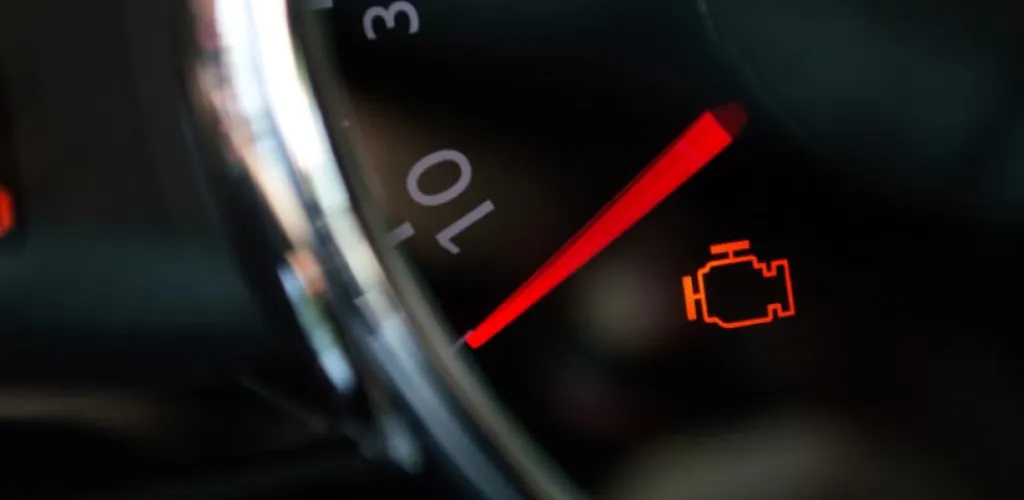

- Dash lights test at startup; if on after start, a malfunction is indicated.
- Colors show severity: green/blue OK, yellow/amber attention, red requires immediate stop.
- Some lights aren’t problems: indicator, position, short/high beam, fuel, fog lights.
- Critical warnings include Check Engine, oil (level/pressure), and brake system.
Every driver has faced the moment when, at startup, the dashboard lights up like a Christmas tree. Dashboard warning lights are the vehicle’s communication system with the driver, essential for safety and reliable operation of the car.
These indicator lights come in different colors and, if all of the car’s systems are functioning correctly, they go out as soon as the engine starts. Through this simultaneous lighting, the on-board computer tests the operation of all systems and confirms that everything is in order.
The problem arises when one or more lights stay on after starting the engine, signaling a malfunction in a system. A fault can also occur during driving, at which point the corresponding system’s warning light will illuminate.
Classification of warning lights by color and severity
The color of dashboard warning lights is an essential indicator of the severity of a problem:
- Green/blue - indicates only the status of a system (on/off) and does not represent a fault
- Yellow/amber - may indicate the status of a system or a problem that requires attention
- Red - signals a serious problem that requires an immediate stop
In the case of a red warning light, we recommend stopping the car as soon as it is safely possible. For the other colors, consult the user manual and visually inspect the vehicle to identify the possible issue.
Warning lights that do not indicate serious problems
- Indicator or hazards
- Position lights indicator
- Short beam or high beam indicator
- Fuel level warning
- Fog light indicator (headlights and rear lights)
Warning lights that signal important problems
- Check Engine light (orange/red) - serious issue in the engine management system
- Oil level/pressure yellow light - approaching service interval
- Oil pressure red light - low oil level or insufficient pressure
Critical dashboard warning lights - detailed explanations
Check Engine light - “Check the engine”
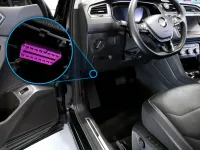
Check Engine is the best-known and most feared warning indicator, signaling that the engine is not operating within proper parameters. While it can indicate a minor issue, such as a faulty sensor feeding incorrect data to the ECU, it is essential to seek diagnostic OBD2 at a service center.
Causes can range from simple problems (faulty sensors) to major faults (low compression, spark plugs burned, transmission problems). Only a specialized tester can identify the exact cause.
Oil pressure light
An engine without oil can be destroyed in seconds. This light warns that the engine does not have the required oil level or that the pressure is insufficient.

Causes include:
- Oil leaks through gaskets
- Faulty oil pump
- Excessive oil consumption
- Insufficient oil level
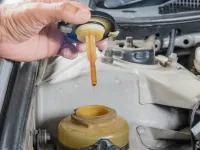
If the light is red and appears while driving, stop the engine immediately. Check the oil level and, if necessary, top up to the maximum mark.
Brake system warning
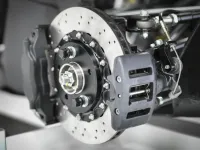
This light signals critical problems with the braking system.

Possible issues:
- Low brake system pressure
- Seized caliper
- Insufficient brake fluid
- Faulty pump or master cylinder
If the braking system no longer functions, use the handbrake and engine braking to stop the vehicle safely.
Battery and charging system warning
Indicates problems with the battery or alternator. Both components are vital for the operation of power steering, ABS, and the engine.

Common causes:
- Worn battery
- Defective alternator
- Broken or worn accessory belt
- Corroded connections
If the alternator is functioning but the battery is discharged, you may reach a service, but if you stop the engine, external starting will be required.
Engine temperature warning
Signals that the engine is not cooling properly, a critical issue that can lead to complete engine damage.

Possible causes:
- Insufficient coolant
- Cracked or blocked radiator
- Faulty cooling fan
- Faulty water pump
- Stuck thermostat
Stop the engine immediately to avoid engine destruction due to overheating.
Fuel indicator
Lights up when the fuel level drops below the threshold set by the manufacturer. Generally, you have about 80–100 km of range left.

If the light comes on soon after refueling, it may indicate a leak in the tank. On some modern cars, flashing can signal the presence of water in the fuel.
TPMS - Tire Pressure Monitoring System
TPMS is standard on modern vehicles. Four sensors continuously monitor tire air pressure.

It activates when:
- One tire has low pressure
- There are significant pressure differences between tires
- The sensor is defective
After correcting the pressure, the light must be reset from the on-board computer.
Traction control warning
A flicker of this light indicates that the drive wheels are losing grip. If it stays on continuously, the system is disabled or faulty.

In sports cars, in Race or Sport mode, this light remains on because ESP and traction control are deactivated.
Glow plugs indicator (diesel engines)
Diesel engines use glow plugs to heat the air in the combustion chamber to about 800°C, facilitating fuel ignition when the engine is cold.

When this light is on, at least one glow plug is faulty, causing difficulties starting in cold conditions.
Complete dashboard warning lights guide

Explanation of the 64 warning lights (left to right, in rows):
- Adaptive Cruise Control - adaptive cruise engaged
- Cruise Control - cruise control active
- Lane Assist - lane keeping assist
- Brake pedal pressed - for automatic transmissions
- Airbag fault - airbag system or seat belts
- Hood open - hood not closed
- Trunk open - luggage compartment open 8.Brake system - problem with brake system
- Door open - at least one door not closed
- Engine temperature - cooling system with serious problems
- Oil pressure - low oil pressure
- Starting system - starter or battery problems
- Power steering - steering assist fault
- Seat belts - passengers not buckled
- Central locking - central locking system issue
- Battery/alternator - charging system fault
- Adaptive headlights - headlight system problem
- Adaptive dampers - electronically controlled suspension
- Air suspension - pneumatic suspension system
- Airbag and belts - passive safety systems
- Windshield washer fluid - low washer fluid
- ABS - anti-lock braking system fault
- Automatic transmission - automatic transmission problems
- Brake light burnt out - brake light bulb fault
- Brake pads - critical wear, replacement needed
- Lamp burnt out - lighting issue
- Roof operation - hardtop/soft-top system
- Glow plugs - diesel preheating fault
- DPF - diesel particulate filter clogged
- ESP - stability control disabled/defective
- Check Engine - engine management
- EPC - electronic power control
- Low oil level - add engine oil
- Headlight leveling - leveling system fault
- Key absent - for keyless systems
- Fuel - fuel tank almost empty
- Clutch pedal - depress the clutch
- Windshield sensor - rain/light detectors
- Fog lights - rear/forward fog lighting issue
- Rear spoiler - aerodynamic element
- Tow hitch - towing system
- TPMS - tire pressure monitoring
- Airbags - passive safety systems
- Low beam - standard beam lighting
- Air filter - clogged filtering element
- Eco mode - fuel-saving mode
- Hill descent control - hill descent feature
- Overheating - immediate stop required
- ABS problematic - avoid sudden braking
- Fuel filter - filtering element
- Door open - cargo area open
- Hood open - access to engine
- Low fuel - fuel tank almost empty
- Automatic transmission - transmission issue
- Speed limiter - electronic restriction
- Dampers - suspension fault
- Oil pressure - lubrication insufficient
- Windscreen demist - active defogging system
- Trunk open - luggage compartment
- Stability control - ESP active
- Rain sensor - precipitation detection
- High emissions - excessive pollution
- Rear window demist - rear defogger
- Automatic wipers - automatic operation
These warning lights evolve with automotive technology, so the list will be updated periodically with new systems implemented by automakers.
Volkswagen-specific warning lights

Volkswagen warning lights explained (2000-present):
- Turn signals / hazards - indicator or hazard activation
- Cruise control - functioning cruise control
- Power steering - steering assist issue
- Handbrake / braking system - urgent check required
- Seat belts - passenger protection
- ECO mode - fuel-saving active
- EPC - electronic power control
Each dashboard warning light has a specific role in the communication between the vehicle and the driver. Understanding their meaning can prevent costly failures and save lives by avoiding accidents caused by untackled technical faults.