- ABS warning light signals a fault in the anti-lock braking system.
- ABS monitors wheel speeds to prevent wheel lock during hard braking.
- Common causes include: low brake fluid, faulty sensors, or wiring.
- If on, pull over safely, restart, and seek professional diagnosis.
The illuminated ABS indicator on your dashboard is one of the warning signals that can unsettle drivers. This light points to issues in the anti-lock braking system (ABS), a safety feature essential for maintaining vehicle control during hard braking.
While you drive, the vehicle continuously monitors sensors throughout the car to ensure all systems operate correctly. One of the systems monitored at all times is the ABS system, which is the anti-lock braking system for the wheels and plays a crucial role in maintaining the vehicle’s stability.
How the ABS system works
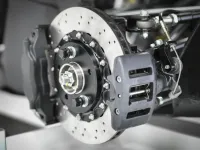
The ABS system constantly monitors the wheel speeds to ensure they rotate at roughly the same rate. In hard braking or on slippery surfaces, the system can modulate hydraulic pressure in the brake circuit to prevent wheel lockup and to keep the vehicle under control.
Key components of the ABS system:
- Wheel speed sensors – detect the rotation speed of each wheel
- ABS control module – processes information from the sensors
- Hydraulic pump – modulates pressure in the braking system
- Solenoid valve – controls the flow of brake fluid
What the ABS warning light means
The ABS uses wheel sensors at each wheel to monitor their rotation. A dedicated computer monitors signals from all four wheels and the position of the brake pedal to ensure vehicle stability and control under all conditions.
In case the computer detects abnormal signals or a loss of signal from any sensor, it will illuminate the ABS warning light to warn the driver of a fault in the system.
Main causes of the ABS warning light turning on
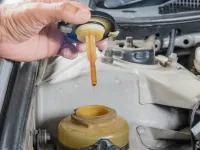
- Low brake fluid level in the reservoir
- Failures in the wheel speed sensors
- Fuses blown in the ABS system
- Issues with the ABS control module
- Damaged or corroded wiring
- Dirt or metal on the reluctor rings of the sensors
In addition to monitoring wheel speed sensors, the computer can trigger ABS lights for other technical reasons. Some ABS systems may cause the light to flash a few times before staying on.
Interpreting codes by blinking
The number of flashes refers to a specific fault code and can help identify the problem. For example, two flashes followed by a pause and then three flashes may indicate a specific issue with the front-right wheel sensor. Check the vehicle’s repair guide or online information to determine what the ABS system is trying to communicate through the flash sequence.
What to do when the ABS light is on
When the ABS light comes on, the first thing you should do is find a safe place to stop the vehicle, turn it off, and then restart it. This reset will cause the computer to re-check all sensors for any anomalies.
Like a home computer, a simple reset can temporarily fix the problem and the light may go off. Unfortunately, more often there is truly something wrong in the system that requires professional identification.
Initial verification steps:
- Turn off and restart the engine – allow the system to reset
- Check brake fluid level – a low level can cause the light to come on
- Check if other warning lights are on – the combination can indicate more serious issues
The best option is to have a certified technician attach a scan tool to the car and check for any error codes stored in the computer’s memory.
Checks you can perform at home
If you have certain tools and mechanical knowledge, there are a few checks you can perform:
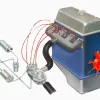
Checking the wheel speed sensors:
- Remove the wheels to inspect the wheel speed sensors and their wiring for any damage
- Inspect the wiring harnesses – look for signs of wear, cuts, or corrosion
- Clean the sensors – dirt and metal deposits can affect operation
Checking the fuses:
- Check the fuse box to ensure the fuse for the ABS system is not blown
- Note: Replacing a blown fuse is only a temporary solution – the fuse will likely blow again if the underlying cause is not identified and resolved
Checking the brake fluid:
- Check the level in the main reservoir
- Check the color and consistency – old fluid can cause problems
- Look for leaks in the braking system
To resolve the issue completely, a professional scan tool will be required to read specific fault codes and perform ABS function tests.
Is it safe to drive with the ABS warning light on?
Note that the vehicle may still be functional even when the ABS warning light is on, but with important limitations.

Conditions under which you can continue driving:
If there are no other warning lights for the braking system along with the ABS, you will still have normal braking capabilities. The traditional braking system will operate, but without anti-lock assistance.
Necessary precautions:
- Avoid hard braking – without ABS, wheels can lock more easily
- Adapt your speed to road conditions – on slippery surfaces, the risk of skidding increases
- Increase following distance – stopping distance may be longer in difficult conditions
- Avoid abrupt maneuvers – vehicle stability may be compromised
When you must stop immediately:
The vehicle must not be driven in the following situations:
- You feel a loss of braking power when the warning light is on
- The brake pedal becomes soft or goes to the floor
- Other warning lights appear (handbrake, ESP, etc.)
- You hear unusual noises when braking
- The vehicle shows instability during braking
Safety recommendations:
- Schedule an urgent check at a specialized service
- Avoid driving in rain or on ice until the issue is resolved
- Inform other drivers in your household about the problem
- Maintain a larger following distance from vehicles ahead
Although you can continue to drive with heightened caution, promptly addressing the issue is essential for your safety and that of other road users. The ABS system can make the difference between avoiding an accident and ending up in a dangerous situation, especially in challenging weather conditions.
Photo credits: andystransmissionservice.ca, bigotires.com, carbrain.com