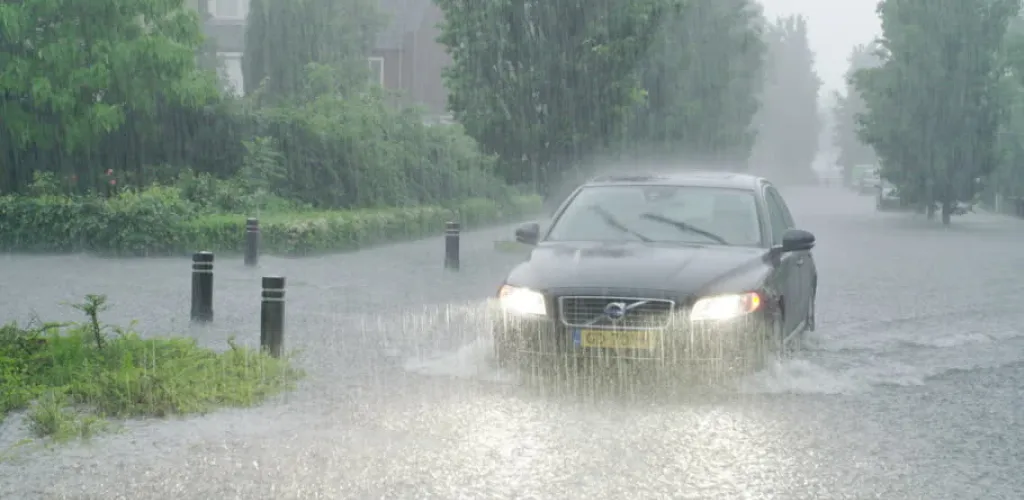
- Activate hazard lights and keep them on throughout the crossing for visibility.
- Assess depth: water above wheel centers risks traction loss; currents and debris add danger.
- Turn off A/C and select first gear to prevent water entering exhaust.
- Drive slowly along the middle of the road; exit gradually and dry brakes.
Driving through flooded areas can become a necessity in extreme situations, especially in Romania where floods are an annual problem. Although the best decision is to avoid these zones, emergency situations can make this option impossible. Understanding the risks and applying the correct techniques can make the difference between a safe crossing and an expensive damage to the vehicle.
Stagnant water on the roadway poses a real danger to any vehicle. The air filter can suck in water if it is mounted too low, causing severe engine damage. In addition, loss of traction and buoyancy of the vehicle are real risks even at depths that seem insignificant.
Assessing and approaching the flooded area
Activating safety systems
Turn on the hazard lights to signal your presence to other road users. The hazard lights should be left on throughout the crossing of the flooded area, providing maximum visibility in low-visibility conditions.
Analyzing the water conditions
Check carefully the depth and characteristics of the water:
- Critical depth: Never exceed the level of the wheel centers. Passenger cars can lose traction and start to float in as little as 30 cm of water
- Larger vehicles: Even SUVs and trucks can be swept away by currents in 60 cm of water
- Currents: Identify if there are strong currents that could destabilize the vehicle
- Floating debris: Look for debris or objects that could damage the body or the vehicle’s systems
If necessary, exit the vehicle to personally assess the water depth, but do so with maximum caution.
Preparing the vehicle systems
Turn off the air conditioning or heating system to prevent damage to the radiator fan when in contact with water. Manually select the first gear or the “Drive 1” position on automatic transmissions to prevent automatic gear shifts, which could push water back through the exhaust system into the cylinders.
Proper crossing technique
Maintaining a steady speed
Drive slowly and steadily, without stops or sudden accelerations. Keep one foot on the accelerator to maintain a constant speed and the other foot ready on the brake for quick control. This helps prevent water from entering the exhaust system due to pressure fluctuations.
Professional tip: Follow the middle of the road where the height is highest and the water depth is lowest, due to the road’s cross slope (camber).
Managing the vehicle’s buoyancy
If the vehicle begins to lose contact with the surface:
- Open the doors immediately to allow water to enter the cabin
- Additional water will weight the vehicle down, allowing the wheels to regain traction
- Instruct passengers to open their doors as well for maximum efficiency
Although this action will damage the interior, it will prevent a complete loss of control.
Exiting the flooded area
Accelerate gradually after completely exiting the water, ensuring the entire vehicle has left the flooded area before stopping. To dry the wet brakes, lightly apply the brake pedal while driving to generate the heat necessary to evaporate the water.

Engine hydrolock procedure
Hydrolock in a flooded area is a critical situation that requires a calm and methodical approach to prevent further damage.
Fundamental safety rules
Do not restart the engine under any circumstances! This action will suck water through the exhaust pipe directly into the cylinders, causing catastrophic damage known as hydrolock. Repair costs can exceed the value of the vehicle.
The best strategy is to wait for the water to recede below the exhaust pipe level before attempting a restart.
Emergency evacuation
If the water level continues to rise:
- Leave the vehicle immediately if it is safe to do so
- Climb onto the car’s roof if the water is too deep to cross
- Call 112 for emergency assistance
- Signal other road users to request help
Post-crossing inspection and repairs
After a successful crossing through a flooded area, a thorough check of the vehicle is mandatory to identify any potential issues.
Checking the engine system
If you have mechanical knowledge, you can perform the following checks:
- Remove the spark plugs to inspect the cylinders
- Check for water in the intake system
- Check fluid levels (engine oil, cooling fluid, brake fluid)
- Inspect air and fuel filters
If you lack the necessary experience, consult a specialized mechanic immediately for a professional inspection.
Addressing water ingress
Water that has entered the cabin requires rapid intervention to prevent mold and corrosion:
- Immediate removal of standing water
- Thorough drying of carpet and upholstery
- Disinfection to remove bacteria and fungi
- Professional cleaning services for optimal results
Specialized auto washes have professional equipment for moisture extraction and removing persistent odors.
Electrical and mechanical checks
Water can affect multiple systems of the vehicle:
- Electrical system: Check the operation of all electronic components
- Braking system: Test brake effectiveness after complete drying
- Transmission: Check the level and quality of transmission oil
- Differentials: Inspect for any water ingress
Preventive measures and final recommendations
Prevention remains the best strategy when it comes to driving through flooded areas. Plan your route to avoid known drainage problem areas and monitor the weather forecast before long trips.
If crossing a flooded area becomes unavoidable, following these procedures can make the difference between a controlled situation and a major emergency. Personal safety must always remain the number one priority, and the risks taken must be weighed realistically against potential benefits.
If the vehicle suffers water damage, contact a professional mechanic immediately. Repairs carried out by specialists will ensure long-term proper operation and prevent future problems caused by corrosion or damage to internal components.