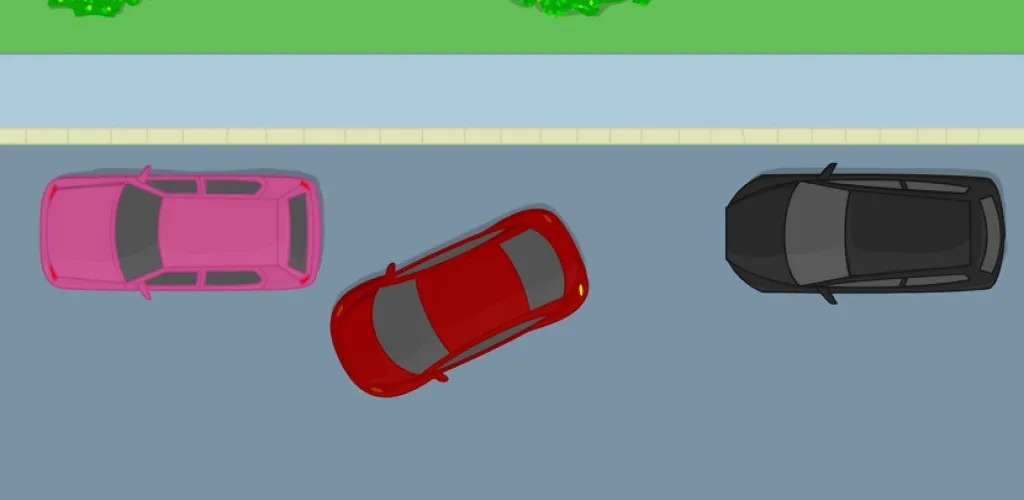
- Signal and ensure space at least 1.5 car lengths (6–7 m for compact).
- Position parallel to target car, ~1 m gap, align rear and overhang 50–100 cm.
- Back up slowly, watch rear wheel pass corner, check surroundings, use right-side mirror.
- Turn right to 40–45°, then straighten and back until windshield corner aligns.
Parallel parking is one of the most challenging maneuvers for many drivers, especially those new to driving. With the increasing number of cars and shrinking parking spaces in major cities, this skill is becoming increasingly important. In this detailed guide, we explain step by step how to perform a perfect parallel parking, providing all the techniques and tips you need to succeed every time.
With methodical practice and correct technique, you will develop the spatial awareness and precision required to park confidently in tight spots.
Preparation for Parking
Signaling Intent
Before you begin the maneuvers, signal your intention to park by using your hazard lights. This safety measure is essential and will prompt the vehicle behind you to give you the space needed for the maneuver.
Assessing Available Space
The first critical step in parallel parking is identifying a suitable space. The fundamental rule: the space should be at least one and a half car lengths longer than your vehicle. For compact cars (3-4 meters), you need a minimum of 6-7 meters of free space. An insufficient space will make the maneuvers extremely difficult or even impossible.
Steps for the Perfect Parallel Parking
Step 1: Correct Initial Positioning
- Position the vehicle parallel to the car beside which you will execute the maneuvers
- Maintain a distance of approximately 1 meter from the reference vehicle — this distance is crucial to have enough space to maneuver
- Essential reference: Align the rear of your car with the rear of the vehicle you will pivot around
- Depending on the size of the vehicle, you should overhang the reference car by 50-100 cm before you begin backing up
Step 2: Starting the Backing Maneuver
- Engage reverse gear and begin moving backward at a slow speed
- Monitor the moment when the rear wheel passes the corner of the vehicle you are pivoting around — this is the cue for the next phase
- Maximum caution: Throughout the movement, continuously check for other vehicles or pedestrians in the area
- Use the right side mirror and look toward the corner of the rear window of the door on the back side for optimal visibility

Step 3: First Wheel Turn
- Identify the moment when the rear of the reference car reaches the midpoint of your rear window
- Turn the steering wheel fully to the right while continuing to back up
- Stop the maneuver when the vehicle reaches an angle of 40-45 degrees relative to the road axis — this angle is optimal to avoid getting stuck in the space
Step 4: Straightening the Steering
- At the 40-45 degree angle, turn the steering wheel to the left to straighten the wheels
- Continue backing until you observe the left rear corner of the reference vehicle align with the right-hand corner of your windshield
- This position indicates you have enough space to finalize the maneuver
Step 5: Finishing the Parking
- Turn the steering wheel maximally to the left and continue backing
- Adjust the position until the vehicle is completely parallel to the curb
- Check the distances to the vehicles in front and behind to avoid contact
Technical Control of the Vehicle
Speed and Clutch Management
Low, controlled speed is the key to success in parallel parking. For manual transmission vehicles, use the clutch to control speed, keeping the engine RPMs low. The entire process should be smooth, yet slow enough to react to any unexpected situations.
Efficient Use of Mirrors
- Right-side mirror gives visibility of the distance to the reference vehicle
- Central rearview mirror lets you monitor traffic behind you
- When you notice the rear wheel approaching the curb, it is time to turn the wheel to position for final alignment
Final Position Adjustment
Space Distribution
Position the vehicle to leave a roughly equal amount of space in front and behind. When space is tight, favor the space in front — this will facilitate exiting, which requires more maneuvering room than entering.
Checking Alignment
Ensure the vehicle is perfectly parallel to the curb and not protruding into the roadway. A distance of 15-20 cm from the curb is optimal — close enough to avoid blocking traffic, but not so close as to risk tire or rim damage.

Common Mistakes and How to Avoid Them
Incorrect Space Assessment
Don’t try to park in spaces that are too small — this common mistake leads to blocks and stress. It is always better to find another spot than risk blocking traffic or damaging vehicles.
Excessive Speed
Rushing the maneuvers is the enemy of parallel parking. Slow speed lets you observe and correct mistakes before they become problematic.
Neglecting Safety Checks
Blind spots can hide other vehicles or pedestrians. Constantly check the area around you and don’t rely solely on mirrors — turning your head to check directly is essential.
Advanced Techniques for Special Situations
Parking on Slopes
On sloped streets, engage the handbrake before exiting the vehicle and orient the wheels toward the curb (downhill) or toward the roadway (uphill) for extra safety.
Difficult Weather Conditions
In rain or snow, reduce speed and increase safety distances. Slippery surfaces require more delicate maneuvers and longer stopping distances.
Modern Driver Assistance Technologies
Parking Assist Systems
Parking sensors emit audible signals as you approach obstacles, providing precise distance warnings. These systems are particularly useful for beginners, but should not replace attention and proper technique.
Rear-View Cameras
Rear cameras provide a clear view of the space behind the vehicle, helping identify obstacles and assess distances. Many modern systems include guide lines that adjust according to the steering angle.
Semi-Automatic Parking Systems
Newer vehicles can be equipped with automatic parking systems that take control of the steering during maneuvers, while the driver controls speed and braking.
Training Plan for Beginners
Safe Practice
- Start in an empty parking lot using cones or other markers to simulate vehicles
- Ask a qualified instructor to guide you in your first attempts
- Practice under varied conditions: day, night, good weather and rainy
- Repeat the exercises until the motions become automatic
Developing Spatial Awareness
Familiarize yourself with the exact dimensions of your vehicle. Measure length, width and height, and practice estimating these dimensions relative to available spaces. This knowledge will help you quickly assess whether a space is suitable.
Legal and Road Etiquette Aspects
Observing Traffic Rules
Parallel parking should be performed without violating traffic rules. Do not park in prohibited spots, do not block entrances, and respect road signs.
Considerations for Other Participants
Minimize the time you block traffic by proper preparation and efficient execution. If you don’t succeed on the first try, allow other vehicles to pass before attempting again.
Parallel parking may seem intimidating at first, but with steady practice and correct techniques, it becomes a routine maneuver. Patience and perseverance are essential — do not get discouraged if your first attempts aren’t perfect. Every experienced driver has gone through the same learning curve. With time, you will develop the spatial intuition and coordination needed to perform this maneuver with confidence and precision in any situation.