- Allied bombs devastated BMW facilities; Eisenach factory seized by Soviets.
- Occupying powers forbade aircraft engines and vehicles, forcing civilian production.
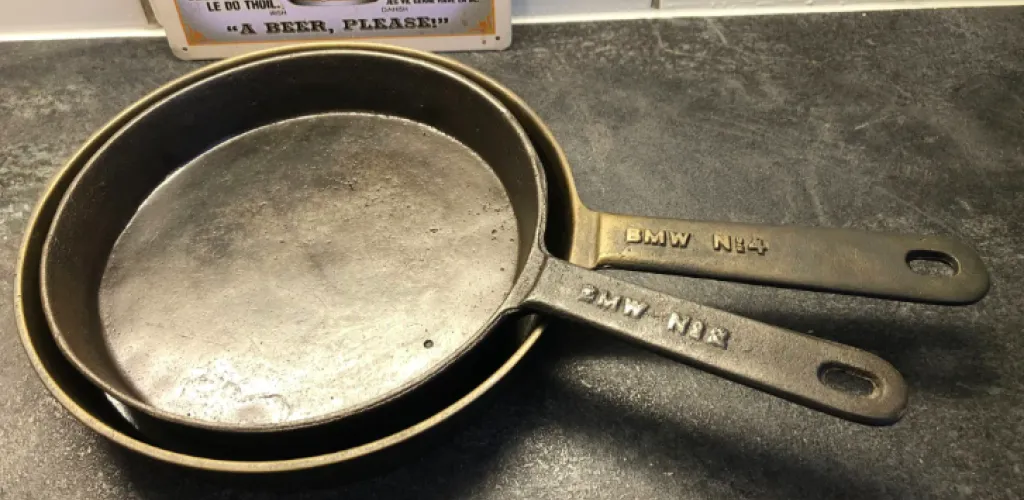
- BMW produced frying pans, pots, kitchen utensils, and metal components.
- Reengineering manufacturing required rethinking processes for kitchenware production.
At the end of World War II, BMW found itself in a dramatic situation. The famous German manufacturer, renowned for its aircraft engines and luxury cars, was forced to reinvent itself to survive. In a remarkable turn of events, the Munich-based company began producing frying pans, pots, and kitchen utensils – a transformation that gave rise to a legendary association in the automotive world.
This transitional period illustrates BMW’s ability to adapt in the face of adversity and marks a fascinating chapter in the history of the global automotive industry.
Postwar devastation and new economic realities
Destruction of BMW’s infrastructure
By the end of the 1945 conflict, BMW faced existential challenges. Allied bombardments had destroyed a large part of the company’s production facilities, especially those in Munich and Allach. The Eisenach factory, the heart of BMW’s motorcycle and automobile production, had been seized by Soviet forces and reorganized under the name Awtowelo AG.
The situation was graver than it appeared at first glance. The machine tools that survived the bombardment had been requisitioned as war reparations, leaving the company effectively without the equipment needed to resume its traditional operations.
Restrictions imposed by the occupying forces
The Allied powers implemented strict measures to prevent rearmament in Germany. BMW was forbidden to produce:
- Aircraft engines (its main wartime activity)
- Motor vehicles of any kind
- Any equipment that could have military applications
These restrictions placed the company in an impossible position, forcing it to urgently find alternatives to maintain operations and avoid mass layoffs.
Survival strategy: From engines to kitchenware
Forced adaptation to the civilian market
During this critical period, BMW’s leadership made the pragmatic decision to diversify production radically. The company began manufacturing a wide range of civilian products, adapting its facilities and technical know‑how to the new market demands.

Among the products manufactured by BMW during this period were:
- High-quality aluminum frying pans and pots
- Pots and cooking vessels for German households
- Kitchen utensils of various kinds
- Sheet metal products for household use
- Metal components for other industries
Technical advantages of BMW in the new production
BMW’s experience with metals and its advanced production technologies proved a crucial advantage. The frying pans and pots produced by the company were known for:
- Superior material quality
- Precise finishes in line with BMW standards
- Exceptional durability compared with competing products
- Ergonomic design inspired by vehicle engineering expertise
Challenges and innovations of the transitional period
Technological adaptation
Transforming an airplane-engine factory into a unit producing kitchen utensils required a complete rethinking of manufacturing processes. BMW engineers had to adapt surviving machine tools to work thin metal sheets instead of the heavy engine components.
This experience proved valuable for the company’s later development, introducing new competencies in:

- Precision machining of lightweight metals
- Stamping and forming techniques
- Quality control for mass production
- Production cost optimization
Maintaining the company culture
Despite the radical shift in focus, BMW managed to preserve its core values:
- Attention to detail characteristic of its aircraft engines
- High standards of quality applied to utensils
- Innovative spirit in finding technical solutions
- Commitment to excellence regardless of the product being manufactured
The road back to the auto industry
First step: Motorcycles
In 1947, restrictions began to relax gradually, and BMW was allowed to resume motorcycle production. The first postwar model, BMW R24, was launched in 1948, marking the company’s return to the world of motorized vehicles.
R24 was a 250cc single-cylinder motorcycle, combining the simplicity demanded by difficult times with BMW’s traditional quality. The success of this model allowed the company to rebuild its confidence and financial resources.
Resuming automobile production
In 1952, BMW took the decisive step toward relaunching automobile production, launching the BMW 501. This luxury sedan, nicknamed the “Barockengel” (the Baroque Angel), signaled the official return of the brand to the premium automotive segment.
BMW 501 featured notable characteristics for its era:
- An 8-cylinder, 2.6-liter engine
- An elegant body style with American stylistic influences
- A luxurious interior with high-quality materials
- Advanced technology by 1950s standards
The legacy of the frying pans era
Lessons for the future
The period during which BMW produced frying pans left a deep imprint on the company’s culture and helped shape its distinctive character:
- Extreme adaptability: the experience proved BMW can reinvent itself completely when required by circumstances
- Quality in every domain: high standards applied to utensils strengthened the belief that excellence must manifest in any product
- Organizational resilience: the ability to endure such a dramatic transformation reinforced team cohesion and created a unique corporate culture
A symbol of a reborn industry
BMW’s frying pans became a symbol of Germany’s industrial capability to rise from the ashes of war and regain a place on global markets. This temporary metamorphosis shows that true industrial greatness lies not only in the products manufactured, but in the ability to adapt and maintain quality standards under any circumstances.
Influence on modern BMW
The lessons from the postwar period continue to shape BMW’s philosophy today:
- Strategic diversification: the BMW Group now includes brands like MINI and Rolls‑Royce
- Adaptation to change: the shift toward electrification and sustainable mobility
- Quality as a priority: high standards applied across all segments
- Continued innovation: a perpetual quest for creative solutions
Thus, the link between BMW and frying pans is not just a humorous anecdote; it is a symbol of a company that demonstrated extraordinary ability to adapt, survive, and prosper in the most challenging circumstances. This unique experience helped shape BMW’s identity as a brand capable of excelling in any field it enters, from aircraft engines to frying pans, and from motorcycles to today’s luxury cars.