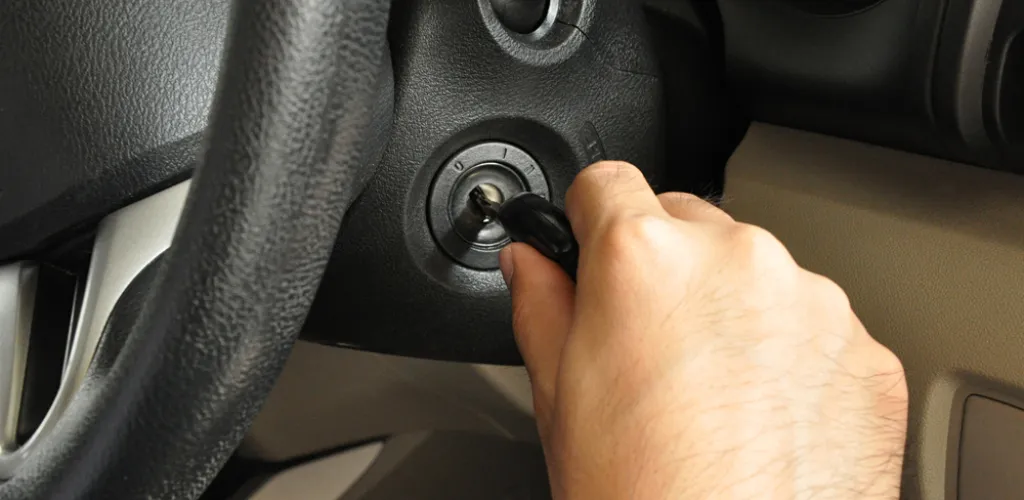
- Dirt, rust, or foreign objects can block the ignition cylinder.
- A steering wheel lock or incorrect gear position may prevent insertion or turning.
- If the key sticks after insertion, wear or damaged pins could be the cause.
- Try turning the key and steering wheel together to free a locked column.
There are moments when we get into our car and, although we have never had starting problems, the key suddenly refuses to enter the ignition. No matter how many positions we try or how hard we pull, the key simply won’t cooperate. The good news is you’re not alone in this frustrating experience, and in most cases the problem can be solved quite simply, without the need for a specialist.
The good news is that you are not alone in this frustrating experience, and in most cases the problem can be resolved quite easily, without needing a specialist.
Main reasons why the key won’t enter the ignition
Motivele pentru care o astfel de defecțiune apare sunt multiple și pot varia de la probleme mecanice simple până la uzură avansată a componentelor. Printre cele mai frecvente cauze se numără:
- The buildup of dirt and dust in the ignition cylinder
- Mechanical jam or deterioration of the cylinder for various reasons
- Wear or deformation of the key over time
- Rusting of the internal components of the lock cylinder
- Small foreign objects lodged in the key slot
- Blocking of the steering wheel anti-theft system
Preliminary checks before drawing conclusions
Primul pas esențial este să eliminăm cauzele care nu au legătură cu cilindrul în sine. Înainte de a presupune că problema este la butucul contactului, verificați cu atenție următoarele elemente:
Gear selector position
În cazul transmisiilor automate, schimbătorul trebuie să fie obligatoriu în poziția P (Parking). Multe mașini moderne au un sistem de siguranță care împiedică introducerea sau rotirea cheii dacă selectorul nu se află în această poziție. La transmisiile manuale, unele modele mai vechi necesită ca schimbătorul să fie în priză sau în punctul mort.
Steering wheel lock
Sistemul antifurt al volanului se activează automat la multe mașini când cheia este scoasă din contact cu volanul într-o anumită poziție. Când volanul este blocat, cilindrul contactului poate deveni și el inaccesibil. Încercați să rotiți volanul alternativ stânga-dreapta în timp ce aplicați o presiune ușoară pe cheie. Această manevră simpla deblocheaza în majoritatea cazurilor atât volanul, cât și cilindrul.
Pedal position
Unele sisteme moderne necesită apăsarea pedalei de frână sau ambreiaj înainte de a permite pornirea motorului. Deși această cerință nu afectează de obicei introducerea cheii, merită verificat în manualul mașinii dacă există astfel de restricții.
Problems after inserting the key
If you manage to insert the key into the cylinder but it won’t turn to start the engine, the fault has a different nature. The cause can be:
- A mechanical blockage caused by dirt or rust
- A foreign object infiltrated into the lock cylinder
- Wear or breakage of a pin inside the cylinder
- Deformation of the key that no longer fits the cylinder pins properly
In this situation, you can try to remedy the issue by turning the key and the steering wheel simultaneously, either in the same direction or in opposite directions. This technique helps realign the internal components and can unlock the cylinder.
Practical solutions for cleaning and maintaining the ignition contact
Cleaning the key
Even if the situation seems unpleasant at first, don’t panic. Many drivers keep their keys in less-than-ideal conditions—in pockets full of coins, in dirty bags or in damp places—which quickly leads to dirt buildup and even rust.
Before anything else, clean the key carefully using:

- A clean, dry cloth for surface dirt
- Isopropyl alcohol for stubborn grease
- An old toothbrush for the grooves
Check if the key is bent or deformed. If you notice damage, you’ll need to obtain a new copy of the key from an authorized service.
Cleaning the ignition cylinder
The ignition cylinder is extremely narrow and sensitive — any residue, even a tiny amount, can cause serious problems. There are two effective cleaning methods:
Method 1: Chemical cleaning
Use a special spray for cleaning electrical contacts or WD-40:
- Spray the product inside the cylinder
- Let the solution act for 2–3 minutes
- Insert and remove the key several times to remove residue
- Wipe off any excess product with a clean cloth
This method is very effective against dirt, grease and superficial rust.
Method 2: Compressed air
Using compressed air is a quick and effective solution:
- Get a can of compressed air (available in electronics stores)
- Direct short bursts of air into the key port
- The high pressure will remove dust, shavings and other fine particles
- Repeat the operation 3–4 times
This technique is ideal for removing solid particles that mechanically block the cylinder.
Repeated insertion/removal of the key
A simple but effective method consists of repeatedly inserting and removing the key from the cylinder. This mechanical process can dislodge residues that block the entry port. Do this slowly and carefully, avoiding excessive force that could damage the internal pins.
When is specialist intervention necessary
If after applying the methods above the problem persists, it may be:
- Advanced wear of the ignition cylinder — internal pins have deteriorated and no longer match the key
- Breakage of an internal component — an internal spring or pin has broken
- Immobilizer/anti-theft system failure — electronic immobilizer does not recognize the key
- Complete lock mechanism blockage — requires complete disassembly of the contact
In these situations, the best solution is to call a professional auto technician or an authorized service. Forcing the cylinder can lead to costly damage and even to breaking the key in the ignition — a much more complicated problem to resolve.
Preventive measures to avoid problems
To prevent these problems from occurring, follow these recommendations:
- Keep the key in a clean and dry place, avoiding contact with coins or metal objects
- Clean the ignition cylinder periodically with compressed air every 6 months
- Avoid inserting foreign objects into the contact port for improvised cleaning
- Use only original keys or high-quality copies made by authorized specialists
- Periodic lubrication with silicone spray or graphite, NOT oil that attracts dirt
- Regularly check the key’s condition and replace it at the first signs of wear or deformation
Preventive maintenance is always cheaper and more convenient than emergency repairs. Spending a few minutes every few months to clean the ignition contact can save you a lot of time and money in the long run.