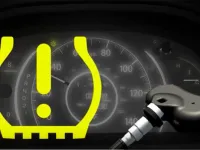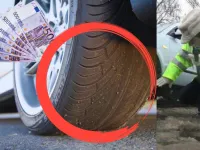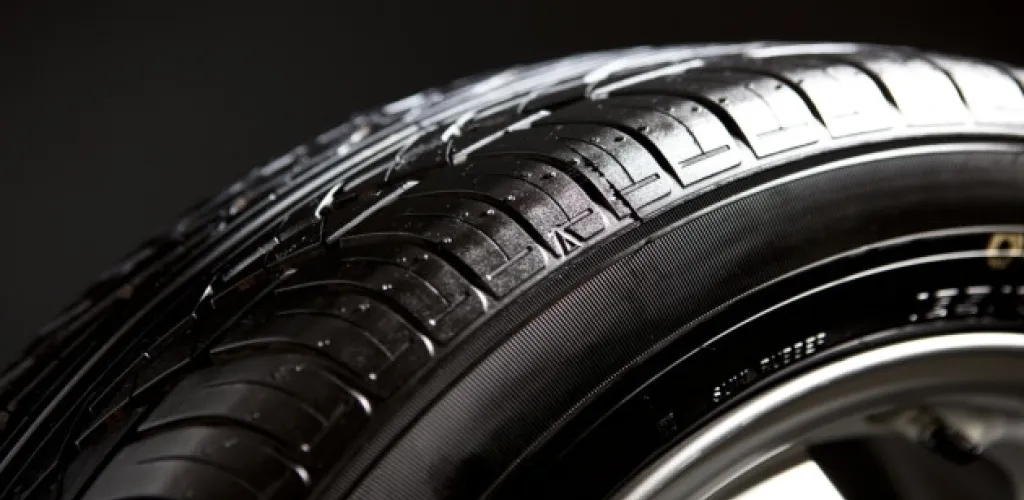
- Underinflated tires cause poor handling, longer braking distances, and higher fuel use.
- Overinflated tires reduce grip and boost blowout risk and center-tread wear.
- Temperature changes lower tire pressure; check monthly and seasonally.
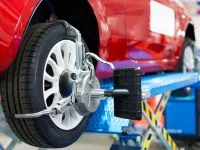
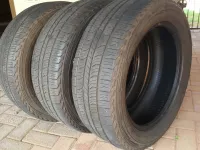
- Uneven wear indicates geometry or suspension issues that compromise safety.
Vehicle safety heavily depends on the condition of your tires. Car tires are the only contact point between the vehicle and the road, and they are vulnerable to punctures and multiple failures that can have serious consequences. Noting bulges, improper wear, or any anomalies requires immediate intervention from a specialist.
Most drivers don’t pay enough attention to tire condition until they face a breakdown on the roadside. For maximum life and safety, rotating tires and periodic checks are essential. Here are the most important tire safety issues every vehicle owner should know.
1. Driving with underinflated tires — a real danger even over short distances
The car is designed to operate optimally only when the tires are inflated to the manufacturer’s specified pressure. Driving with underinflated tires, even over short distances, can have serious consequences.
- Internal structure can deteriorate rapidly and irreversibly
- Vehicle control becomes unpredictable
- Each impact and crack is amplified, making handling harder
- Braking system loses efficiency
- Fuel consumption increases dramatically
Even if the distance seems short, the damage can be permanent and costly.
2. Overinflating tires — risk of blowout and loss of grip
Many drivers deliberately increase tire pressure to reduce rolling resistance and slightly improve fuel efficiency. This practice is extremely dangerous.
- Reduced contact patch with the road
- Drastic drop in grip, especially in wet conditions
- Blowout risk when hitting curbs, potholes or sharp objects
- Accelerated wear in the center of the tread
- Reduced comfort due to poor damping
An overinflated tire becomes rigid and loses its ability to absorb shocks, turning into a “time bomb”.
3. Underinflation — destruction from the inside out
Underinflation is a common problem, especially since [tire pressure] fluctuates naturally with temperature changes. For every 10°C drop, tire pressure falls by about 0.1 bar.

- Excessive wear on the outer edges of the tread
- Overheating of the internal structure
- Increased fuel consumption by up to 3%
- Risk of inner layer separation
- Compromised handling, especially in corners
Check and adjust tire pressure monthly and with each seasonal change.
4. Uneven wear — a warning sign for serious issues
When you notice tires don’t wear evenly or one is significantly more worn than the others, it signals serious vehicle problems.
Uneven tire wear may indicate:
- Geometry problems (toe, camber, wheel alignment)
- Suspension system faults
- Worn wheel bearings
- Faulty dampers
- Incorrect wheel balancing
These issues not only reduce tire life but also severely affect safety and vehicle stability.
5. Tires with insufficient load index — risk of catastrophic failure
Each tire has a load index specified on the sidewall, indicating the maximum weight it can safely support. Using tires with an insufficient load index for the vehicle’s needs can have dramatic consequences.
- Abnormal and accelerated wear
- Blowout risk under load
- Tread separation
- Loss of vehicle control
This issue is common on trailers, trucks, and SUVs that are overloaded.
6. Worn tread — the most critical safety issue
The tread is the part that provides grip with the road. The legal limit in many countries is around 1.6 mm of tread depth, but safety is compromised well before this limit.
Why worn tires are dangerous [signs of worn tires]:
- Braking distance increases by up to 40% on wet roads
- Aquaplaning occurs at much lower speeds
- Grip in corners is drastically reduced
- High-speed stability is compromised
- They cannot be repaired after punctures
Coin test: insert a 1 leu coin into the tread groove. If the crowns are visible, the tire must be replaced urgently.
7. Prolonged use of the spare wheel — a costly mistake
Many drivers use a compact spare wheel (“donut”) for extended periods, ignoring its strict limitations.
Compact spare wheel limits:
- Maximum speed: 80 km/h
- Maximum distance: 80 km
- Temporary use: at most a few days
- Higher pressure: usually around 4.2 bar
Prolonged use can cause:
- Premature wear of the spare wheel
- Transmission damage (on 4WD/AWD vehicles)
- Running out of a spare in case of a new puncture
8. Different tire sizes on AWD/4WD vehicles — costly damage
All-wheel-drive systems are highly sensitive to size differences between tires. Even a difference of only 5 mm in diameter can cause severe damage.
Problems caused by improper sizes:
- Central differential damage
- Premature transmission wear
- ABS/ESP system failure
- Repair costs running into thousands of euros
On AWD/4WD vehicles, tires should be replaced in complete sets or at least on the same axle with identical tires.
9. Improper repairs — risk of blowout
Not all punctures can be repaired safely. The RAR and international standards have strict rules for tire repairs.
Acceptable repairs:
- Punctures in the tread up to 6 mm
- Mandatory use of a plug-patch combination
- Repairs performed only on the inside
Forbidden repairs:
- Punctures on the sidewall
- Holes larger than 6 mm
- Use of only a plug or only a patch
- Repairs on tires with damaged structure
An improper repair can cause sudden pressure loss at high speeds.
10. Objects embedded in the tire — proper assessment of the situation
Finding a nail, screw, or other object embedded in the tire does not automatically mean it’s compromised. The tread is about 10 mm thick, plus internal structural layers.
How to assess the situation:
- Do not remove the object until evaluated by a specialist
- Check the pressure — if it holds, you can drive carefully to a service
- Short objects (under 8 mm) often do not fully penetrate the tire
- Consult an expert to evaluate repair possibilities
If the pressure drops rapidly, stop immediately and use the spare.
Tips for Maintaining Tire Safety
To prevent these problems and maintain maximum safety:
- Check pressure monthly and before long trips
- Visually inspect tires weekly
- Rotate tires every 10,000 km
- Check alignment annually or at signs of uneven wear
- Replace tires in complete sets on AWD vehicles
- Keep a functional spare and check it periodically
Road safety starts with your tires. Never compromise safety for short-term savings — the cost of a failure can be far higher than investing in quality tires and proper maintenance.