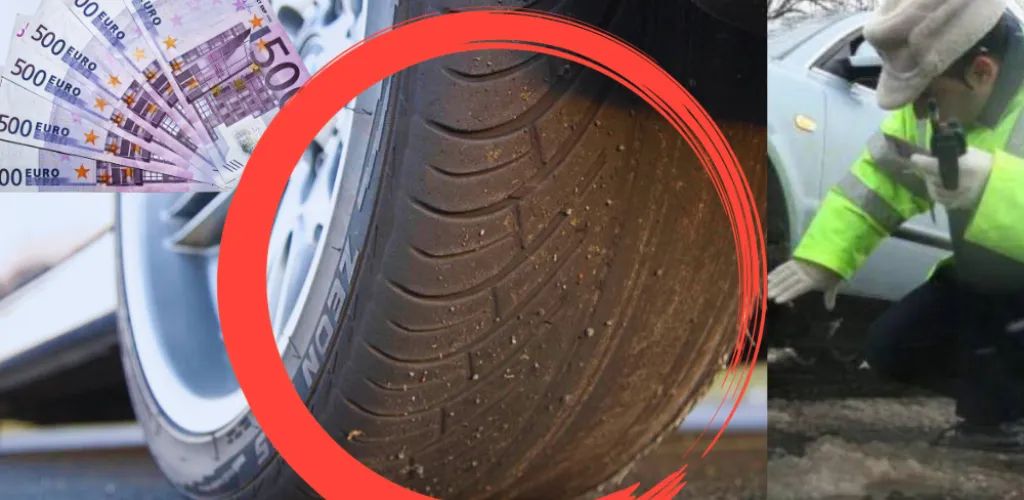
- Romania requires at least 1.6 mm tread depth; violations incur 725 RON fines and seizure
- Tread below 1.6 mm increases braking distance, aquaplaning risk, and loss of traction
- Ways to check tread depth: wear indicators, 1 Leu coin test, calipers, or apps
- Front tires wear more due to traction, braking, steering; misalignment causes uneven wear
The technical condition of the tires mounted on a passenger car is crucial for road safety. Authorities strictly sanction drivers who do not respect the law, applying fines of 725 RON and seizing the vehicle’s registration certificate for tires with a tread depth below 1.6 mm. Excessive wear is not only a violation of the law but also a real danger on the road that can have serious consequences.
The increasing number of accidents on national public roads has compelled authorities to take firm measures. The law regarding mandatory equipment of motor vehicles involved in traffic is strict, with penalties that can reach suspension of the vehicle’s documents.
Importance of Tires in Good Technical Condition
The Role of Tires in Road Safety
Tires perform several vital functions:
- Power transmission: From the engine to the road (acceleration) and from braking to the road (deceleration)
- Maintaining steering: Ensures precise control of the vehicle
- Damping shocks: Protects the suspension and provides comfort
- Supporting the load: Bears the entire weight of the vehicle and its cargo
Legal Requirements for Tires in Romania
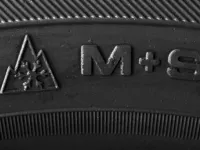
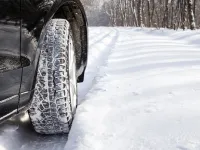
Road traffic legislation applicable on Romanian territory regulates the equipment of passenger cars with tires suitable for each season. Every driver knows that when the cold season arrives, the car must be fitted with winter tires, which provide more stability in snow and ice conditions.
Minimum Legal Tread Depth
The law clearly states that the minimum tread depth must be at least 1.6 mm. This measure is established through rigorous testing, which shows that below this limit:
- Braking distance increases significantly
- The risk of aquaplaning multiplies
- Traction on wet surfaces decreases dramatically
- Vehicle control becomes unpredictable
Methods to Check Tread Depth
Wear indicators: These are ribs embedded perpendicularly in the grooves of the tread. When the tread reaches the level of these indicators, the tire must be replaced.
1 Leu coin test: Insert the coin into the tire groove. If the golden edge is completely visible, the tread is below the legal limit of 1.6 mm.
Caliper measurement: For precise checking, use a caliper or a dedicated tire gauge.
Smartphone apps: Many modern apps can measure tread depth using the phone camera.
Main Causes of Premature and Uneven Wear
Uneven tire wear can indicate serious vehicle issues and significantly reduce driving safety.
Normal Front–Rear Wear
Front tires endure more load due to:
- ** Traction**: In front-wheel-drive vehicles
- ** Braking**: 60-70% of braking force is applied to the front wheels
- ** Steering**: The front wheels steer the vehicle
Misalignment of Wheel Geometry
Problems with wheel geometry cause:
- Edge wear on the outer edge: Excessive positive camber
- Edge wear on the inner edge: Excessive negative camber
- Sawtooth wear: Convergence issues
- Center or edge wear: Pressure-related problems
Suspension and Shock Absorber Issues
Worn shock absorbers cause:
- Uneven wear in patchy areas
- Vibrations and instability at high speeds
- Increased braking distance
- Loss of road contact on bumps
Impact of Incorrect Tire Pressure
Overinflation (above recommended values):
- Accelerated wear in the center of the tread
- Reduced contact patch
- Increased risk of puncture on impact
- Reduced ride comfort
Underinflation (below recommended values):
- Wear on the tire shoulders
- Increased fuel consumption
- Risk of blowouts at high speeds
- Excessive tire heating
Checking Tire Age via the DOT Code
In addition to physical wear, tire age is a crucial safety factor. Rubber degrades over time even without heavy use.
Reading the DOT Code
The DOT code contains essential information:
- The first two digits: week of manufacture
- The last two digits: year of manufacture
- Example: “2318” means week 23 of the year 2018
Recommended Age Limits
- Under 6 years: Optimal performance
- 6–10 years: Regular checks required
- Over 10 years: Replacement mandatory regardless of wear
Signs of Tire Aging
- Fine cracks on the sidewalls
- Discoloration of the rubber (turns brown)
- Loss of elasticity
- Cracks in the tread area
- Bubbles or structural deformations
- Distinct rubber odor associated with aging
Penalties for Nonconforming Tires
Penalties for Insufficient Depth
For tires with a tread depth below 1.6 mm:
- Fine: 725 RON
- Vehicle registration documents seized
- Penalty points: 2 points
- Vehicle detention: until the defect is remedied
Other Related Penalties
- Season-inappropriate tires: 435–870 RON and 3 points
- Tires with visible damage: 580–725 RON and 2 points
- Incorrect pressure affecting safety: 290–435 RON
- Mixing incompatible tires: 435–580 RON
Legal and Practical Consequences
In case of an accident with nonconforming tires:
- The insurer may refuse compensation
- Civil and criminal liability increases
- The fine can double in case of recidivism
- The license may be suspended for 30–90 days
Recommendations for Keeping Tires in Optimal Condition
Regular Inspection Schedule
Monthly:
- Checking pressure (when tires are cold)
- Visual inspection for damage
- Checking for even wear
Every 5,000 km:
- Checking tread depth with a caliper
- Checking wheel balancing
- Inspecting for foreign objects
Semiannually:
- Checking wheel alignment
- Inspecting shock absorbers
- Rotating tires
Rotation Techniques for Even Wear
For front-wheel-drive vehicles:
- Cross-rotation: front-left → rear-right
- Front-right → rear-left
- Rear → front on the same side
For rear-wheel-drive vehicles:
- Rear-left → front-right
- Rear-right → front-left
- Front → rear on the same side
Maintaining Correct Tire Pressure
- Check pressure when tires are cold
- Follow the values in the owner’s manual
- Adjust pressure for extra load
- Don’t forget the spare tire
Tire Storage Tips
Optimal storage conditions:
- Constant temperature (10–25°C)
- Low humidity (below 70%)
- Protected from direct light
- Away from heat sources
- No contact with chemicals
Storage Position:
- Vertical for tires without rims
- Horizontal for tires with rims
- Periodic rotation every 3 months
Choosing the Right Tires
Factors to Consider
- Correct size: according to the manufacturer’s specifications
- Load and speed ratings: at least the original
- Usage season: summer, winter, or all-season
- Driving style: sporty, comfort, or economy
- Road conditions: urban, highway, or mixed
When to Replace Tires
Immediate replacement required:
- Tread depth below 1.6 mm
- Visible structural damage
- Age above 10 years
- Severe uneven wear
- Frequent loss of pressure
Recommended replacement:
- Tread depth below 3 mm (for winter)
- Age above 6 years
- Mild uneven wear
- Reduced performance in wet conditions
Maintaining tires in optimal condition is not only a legal obligation but also an investment in your safety and that of other road users. Wear indicators and simple tests can spare you costly fines and, more importantly, accidents that can have tragic consequences.