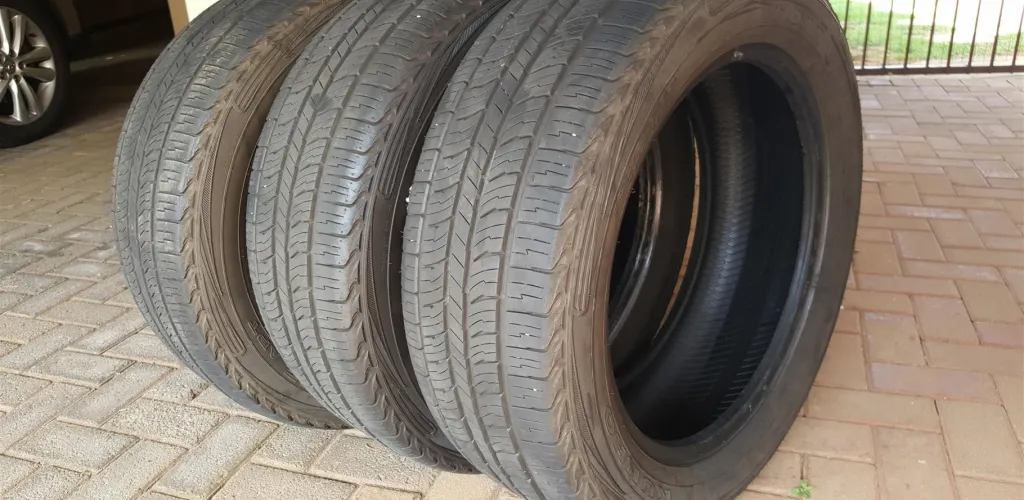
- Uneven tire wear stems from suspension, steering, improper pressure, and misalignment.
- Even 0.2 bar pressure difference can cause noticeable wear.
- Damaged dampers and bushings cause patchy wear due to irregular contact.
- Alignment parameters Toe, Camber, and Caster influence tread wear patterns.
Many drivers wonder why their tires wear prematurely, even though they drive cautiously and follow traffic rules. Uneven tire wear is a common problem that can cost hundreds of lei in unexpected replacements, but it can be anticipated and avoided by understanding the causes and by proper maintenance.
When you notice you need new tires, you’re often surprised and ask how it’s possible that you already have to replace them. Don’t speed. Don’t drive recklessly. Don’t floor the accelerator from a stop at the light and don’t slam on the brakes. So how is it possible that you already need new tires?
Main causes of uneven tire wear
Uneven tire wear can be caused by one or more of these issues at any time. It’s possible that many of these problems have gone unnoticed:
- loose or worn suspension parts
- worn or leaking steering components
- pressure incorectă și neuniformă în anvelope
- unaligned wheels
Suspension system issues
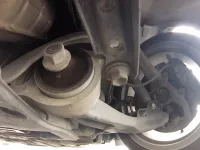
Loose or worn suspension parts, such as a leaking control arm or a broken coil spring, can contribute to uneven tire wear. The suspension’s role is to keep the tire in constant and uniform contact with the road. When components of this system are damaged, forces are no longer distributed evenly across the tire’s contact patch.
Worn dampers allow excessive wheel oscillation, leading to intermittent contact with the road and, consequently, patchy wear. Damaged bushings in the suspension arms permit unwanted wheel movement, affecting its geometry.
Defective steering system
Worn or leaking steering components, such as a loose wheel bearing, worn tie rod end, or excessive play in the steering rack and pinion, mean the tires are not held in the correct angle. This causes separation of tire rubber layers, and excessive friction will wear the tread quickly.
Worn tie rod ends allow uncontrolled changes to the wheel angle during operation, translating to rapid edge wear on the tire. Damaged bearings introduce vibrations that accelerate wear in specific areas.
Incorrect tire pressure
Improper tire pressure will cause excessive wear, even if the difference is as little as 0.2 bar from the specified pressure. This problem is one of the most common and easiest to fix.
Overinflation will wear the center of the tread faster, as the contact patch reduces to a central area. Underinflation will cause rapid wear on the inner and outer shoulders, with the tire deforming excessively at the sidewalls.
Improper wheel alignment
Wheel alignment plays a major role in tire wear. As with worn steering components, if a tire is at the wrong angle, the rubber layers will separate, accelerating wear and making it more noticeable on the affected wheel.
Alignment parameters include:
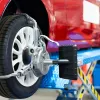
- Toe – the angle of the front wheels relative to the vehicle’s longitudinal axis
- Camber – the tilt of the wheel from vertical
- Caster – the steering axis pivot angle
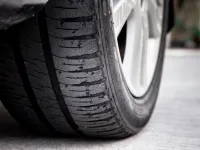
Types of wear and their meaning
Different wear patterns indicate specific problems:
- Edge wear – insufficient tire pressure
- Center wear – excessive tire pressure
- Wear on a single edge – alignment issues (incorrect camber)
- Patch wear – worn shocks or wheel imbalance
- Zigzag wear – steering system or incorrect convergence problems
How can you prevent uneven tire wear?
Routine maintenance can prevent these costly problems:
Regular checks
- Pressure check – check tire pressure monthly and always when the tires are cold
- Visual inspection – examine tires for signs of uneven wear
- Tire rotation – rotate according to the manufacturer’s recommendations (usually at 10,000–15,000 km)
System maintenance
- Check wheel alignment annually or after you’ve hit a deep pothole
- Replace shocks when they start to leak or show signs of wear
- Regularly inspect steering and suspension components
Warning signs
- Vibrations in the steering wheel at high speeds
- The car pulls to one side
- Visible uneven tire wear
- Unusual noises from the wheels
What should you do when wear has already started?
Once uneven tire wear begins, you cannot fully restore what has already worn away, because part of the tread path has already been used.
If you rotate the affected tires and place them in positions less exposed to wear, you may extend their useful life, but this only works if the wear isn’t too severe and if it doesn’t bother your driving. In severe cases, there is only one option: replace the tires.
Before replacement, it’s essential to identify and fix the cause of the uneven wear, otherwise the new tires will suffer the same fate. A professional diagnosis can save hundreds of lei in the long run by preventing premature wear of new tires.
Sursa foto: junkmail.co.za