- Regular tire pressure checks improve safety, handling, wear, and fuel efficiency.
- If flat, pull over safely and head to a tire shop; don’t ignore it.
- Screw method allowed for small tread punctures only; drive under 50 km/h to shop.
- Spare tire: keep if traveling rural; urban drivers may opt for repair kit.
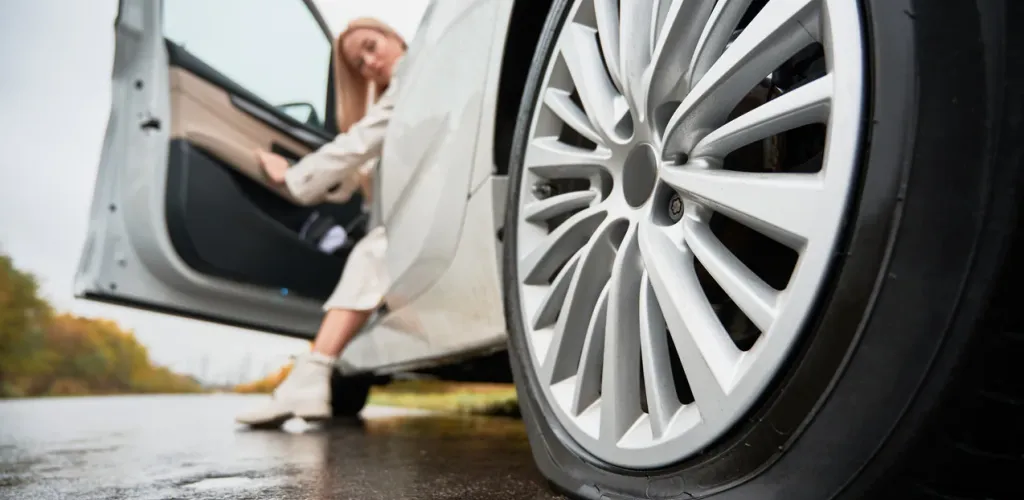
Tires are the only physical link between the car and the road, providing the essential grip for acceleration, braking, and cornering. Whether we’re talking about summer or winter tires, they must be in optimal condition to guarantee safety on the road. Unfortunately, a flat tire is an unpleasant situation that can happen at any time, and not all drivers are prepared to handle it, especially when there is no spare wheel or when it is missing from the vehicle.
Being prepared and knowing the right steps can turn a potential problem into a manageable inconvenience.
Tire maintenance essentials
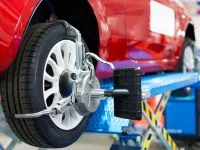
Proper tire maintenance starts with constant monitoring of the tire pressure. The optimal pressure, specified by the manufacturer (usually on a sticker affixed to the door frame or in the car manual), ensures:
- The necessary grip on the road
- Braking distance within the parameters set by the manufacturer
- Uniform tread wear
- Optimal fuel consumption
- Predictable handling in corners
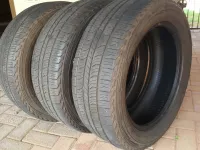
Check the inflation monthly and always before long trips. Incorrect pressure can lead to premature wear, unpredictable vehicle behavior, and even tire blowouts at high speeds.
How to reach a tire shop safely when you have a flat
When you realize you have a flat, the first reaction should be to pull over safely on the emergency shoulder or in a safe area. But what do you do if you don’t have a spare wheel or if changing it isn’t possible at that moment?
Screw method for small punctures
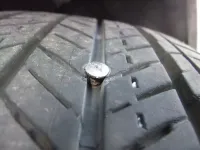
If the tire is not perforated on the sidewall but in the tread area (the belt), there is a temporary solution that can help you reach the nearest tire shop:
- Identify the puncture on the tread
- Take a screw from the toolbox (preferably a thicker one, 4–5 mm in diameter)
- Screw it with force into the hole in the rubber
- The screw acts as a temporary stopper, reducing air loss
- Immediately head toward the nearest tire shop
Important: This method works only for small holes in the central tread area. If the puncture is on the sidewall or the hole is larger than 5–6 mm, the method won’t work. Also, drive at reduced speed (below 50 km/h) and go directly to a tire shop, without detours.

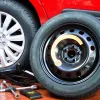
Spare tire: necessity or ballast?
The spare tire weighs between 10–20 kg and takes up valuable space in the trunk. Many drivers feel it isn’t worth keeping it in the car, especially in urban environments where access to auto services is easy. However, this approach carries risks:
Advantages of keeping a spare tire:
- Autonomy in case of a puncture, anywhere
- Time and money savings (no wait for roadside assistance)
- Increased safety on rural roads
- The ability to continue the journey immediately
Disadvantages:
- Extra weight slightly affects fuel consumption
- Takes up trunk space
- Requires periodic tire pressure checks
Recommendation: Keep a spare tire in the car if you frequently travel on rural roads or in isolated areas. For strictly urban driving, you can opt for a tire repair kit or roadside assistance.
Tire repair kit: a modern alternative
Many modern cars no longer come with a spare tire, but with a repair kit that includes:
- An air compressor for inflating tires
- A liquid sealant for small holes
- Instructions for use
This kit can repair punctures up to 6 mm in the tread area, and it is effective for about 80% of tire punctures. The drawback is that it does not work for large cuts, sidewall damage, or defective valves.
Essential defensive driving tips
Emergency braking
In critical situations, when an obstacle appears suddenly in front of the car, straight-line braking is often safer than a sharp evasion maneuver. The ABS system (if the car is equipped) will prevent wheel lockup, allowing you to maintain steering control even during emergency braking. Press the brake pedal with full force and hold the pressure—do not pump the pedal if you have ABS.
Look-ahead vision
An experienced driver doesn’t just look at the road ahead; they constantly scan traffic 10–15 seconds ahead. This technique allows you to:
- Anticipate other road users’ moves
- Have enough time to react
- Avoid sudden braking
- Save fuel through smooth driving
Parking techniques
For parallel parking: Attach a piece of adhesive tape to the left wiper, at a position that, when aligned with the curb line, indicates the perfect distance from the curb.
For reverse parking: Use the rearview mirrors as landmarks. When the curb appears in the lower third of the mirror, you are at the correct distance.
For perpendicular parking: Align the side mirror with the boundary line of the neighboring parking space before starting the maneuver.
Caution around large vehicles
Truck, bus, and other large-vehicle drivers have a much better view of traffic due to their higher position. If you notice such a vehicle braking hard or making an unexpected maneuver, give them space—likely they’ve seen something you can’t yet.
The golden rule for overtaking
Never overtake a vehicle that is braking suddenly without an apparent reason. The driver may be:
- Avoiding an obstacle on the road
- Yielding to a pedestrian
- Avoiding a dangerous pothole
- Reacting to a situation you can’t see yet
Wait to understand the reason for the slowdown before starting to overtake.
What to always have in your car
Whether you have a spare wheel or not, the following items should always be in the trunk:
- Reflective triangles (required: 2 in many countries)
- Reflective vest (one for each occupant)
- A complete, valid first-aid kit
- A functional fire extinguisher
- A flashlight with spare batteries
- A tow rope
- Jump-start cables
- A tire pressure gauge
- An air compressor
- The insurer’s and roadside assistance numbers
Conclusion
Getting a puncture can be stressful, but with the right preparation and knowledge, you can turn a major problem into a minor inconvenience. Whether you choose a spare tire, a repair kit, or the screw-in method in an emergency, the most important thing is to stay calm and prioritize your safety and that of other road users. Regularly check tire condition and pressure, and ensure you have the tools to handle unexpected situations.