- A bulge indicates internal tire damage and warns of possible blowouts.
- Causes include curbs, potholes, underinflation, overloading, aging, and debris.
- Driving with a bulge risks sudden blowouts, loss of steering, and reduced stability.
- If you notice a bulge, stop safely, inspect, and do not drive further.
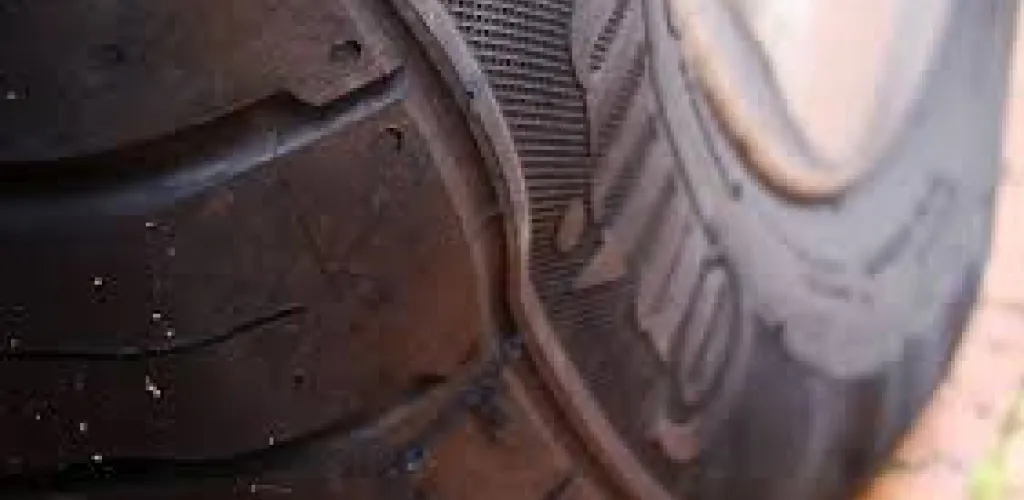
A bulge on the tire surface is one of the warning signs that should never be ignored. This visible deformity indicates damage to the tire’s internal structure and can seriously endanger safety on the road. Unfortunately, many drivers continue to operate with tires in this state, unaware of the immense risks they assume.
Tires are the link between the vehicle and the road, responsible for steering, braking, and stability. Any compromise of their integrity can have dramatic consequences.
What is a tire bulge and why it occurs
Main causes of bulges
-
Curbs
-
Potholes (deep)
-
Sharp stones
-
Road debris
-
Incorrect tire pressure:
- Underinflation causes the tire to deform excessively at contact with hazards
- Overloading the vehicle puts excessive pressure on the tire
- Inadequate pressure checks can lead to gradual damage
-
Tire aging:
- Natural wear of materials
- Exposure to extreme weather conditions
- Improper storage
Mechanism of bulge formation
When the tire’s internal structure is compromised, the pressurized air from inside finds a path to escape toward the outer layers. This air accumulates under the outer rubber layer, creating the characteristic bulge.
The process is progressive – once formed, the bulge will continue to grow under the influence of pressure and road vibrations. The damaged layers can no longer withstand normal rolling forces, making the tire increasingly vulnerable.
Risks of driving with a tire bulge
Tire blowout – the major risk
The greatest danger is a sudden blowout while driving. This can occur without warning and has dramatic consequences:
- Sudden loss of steering control
- Uncontrolled vehicle yaw or drift
- Increased rollover risk, especially at high speeds
- Potential for a chain-reaction accident
Progressive deterioration
Even if a blowout does not occur immediately, the bulge affects:
- Vehicle stability at high speeds
- Handling in corners
- Braking efficiency
- Uneven wear on other tires
Risks at different speeds
Low speeds (under 50 km/h):
- Moderate but present risk
- Vibrations and instability
- Potential for progressive damage
Moderate speeds (50–90 km/h):
- Increased risk of blowout
- Control becomes harder
- Braking distance may be affected
High speeds (over 90 km/h):
- Very high risk of blowout
- Potentially fatal consequences
- Complete loss of control
How to recognize a dangerous bulge
Visual inspection
Regularly check tires for:
- Visible bulges on the sidewall
- Deformations on the tread surface
- Cracks in the bulge area
- Color changes in the rubber
Symptoms while driving
- Unusual vibrations in the steering wheel
- abnormal tire noises
- Instability in a straight line
- Lateral tire sidewall damage visible
What to do when you discover a bulge
Immediate measures
- Stop safely – find the nearest safe place to stop
- Assess the situation – check the size and position of the bulge
- Do not continue driving – even for short distances
- Contact a specialist – call a professional auto service
What NOT to do
- Do not try to “patch” the bulge
- Do not drive thinking it will hold a little longer
- Do not ignore small bulges – they will worsen
- Do not use temporary inflator sprays on the damaged area
When it may be covered by warranty
In rare cases, bulges can be caused by manufacturing defects. These may manifest as:

- Appearing in the first months of use
- Absence of obvious external causes
- Repetitive patterns on several tires from the same batch
In these situations, contact the dealer for a manufacturer warranty evaluation.
Preventing tire bulges
Proper maintenance
- Check tire pressure monthly with a gauge
- Respect the vehicle’s load limits
- Visually inspect tires weekly
- Rotate tires according to the manufacturer’s recommendations
Preventive driving
- Avoid potholes and obstacles whenever possible
- Slow down on rough roads
- Do not hit kerbs with abrupt parking maneuvers
- Use tires with correct specifications for your vehicle
Replacing the damaged tire
A bulge can never be repaired safely. The only solution is a full tire replacement. When replacing, consider:
- Replace in pairs – to maintain balance
- Check alignment – after the impact that caused the damage
- Inspect the other tires – to detect other issues
- Address the root cause – to avoid recurrence
Conclusion
Driving with a tire bulge is never safe, regardless of its size or speed. The risks are too great to ignore, and the cost of a new tire is negligible compared to the consequences of an accident.
Once you notice a tire bulge, the responsible choice is immediate replacement. There are no exceptions or mitigating circumstances—your safety and the safety of others on the road depend on this decision.
Photo credit: repairpal.com, freewayfastfit.co.uk