- Correctly adjusted side mirrors eliminate the blind spot.
- Know your vehicle’s characteristics: transmission type, center of gravity, braking differences.
- Use pivot-point technique and precise references for tight-space parking.
- Cross puddles slowly; avoid hydrolock by maintaining 5–10 km/h and steady throttle.
Every year, the number of people obtaining a driver’s license grows significantly in Romania. While modern cars are safer and easier to drive than ever, there are fundamental aspects that driving schools do not cover in depth. These “secrets” of defensive driving can make the difference between a mediocre driver and a truly competent one.
The following 9 advanced techniques will significantly improve your safety behind the wheel and your driving comfort. They are strategies experienced drivers have learned over the years, but rarely taught in a systematic way.
Optimal side mirror setup to eliminate the blind spot
Side mirrors are your primary safety tools, far more important than the rear-view mirror in most driving situations. They give you visibility of adjacent lanes and dramatically reduce the blind spot—the dangerous area where other vehicles disappear from your sight.
For proper setup, adjust the mirrors so that you see only a small portion of the back of your own car in the inner edge of the mirror. Most drivers set them incorrectly, seeing too much of their own vehicle. When the mirrors are positioned correctly, a vehicle that overtakes you will pass from the rear-view mirror directly into the side mirror, then into your peripheral vision, completely eliminating the blind spot.
Knowledge of the vehicle’s specific characteristics
Each vehicle type has distinct characteristics that influence driving technique. An automatic transmission requires a different approach than a manual one – throttle input is smoother, but you must understand the gear selection logic and avoid keeping your foot on the brake while moving.
An SUV has a higher center of gravity, making it more unstable in fast cornering and more prone to rollover. Front-wheel-drive cars behave differently from rear-wheel-drive ones, especially on slippery surfaces. Braking distance varies significantly with vehicle weight – a loaded minivan requires 30-40% longer stopping distance than a small city car.
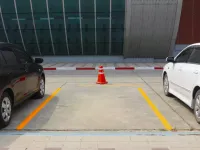
Advanced parking techniques in tight spaces
Efficient urban parking is a crucial skill that can save hours. The basic parallel parking technique relies on precise visual references: when the side mirror aligns with the rear bumper of the car in front, you can begin the entry maneuver.

For parking in very tight spaces, use the pivot point technique – identify the fixed point around which the car rotates and use it as a reference. Also, learn to estimate distances using the mirrors – most modern cars have guidance lines or sensors, but spatial awareness remains fundamental.
Safe navigation through puddles and flooded areas
Treading through puddles is one of the major risk factors for a vehicle’s engine. Water entering the intake can cause catastrophic engine damage through hydrolock – water is incompressible and can bend a rod or even damage the block.
Basic rules for crossing through water:
- Do not exceed 5-10 km/h when driving through water
- Maintain steady throttle to avoid water being sucked into the exhaust
- Do not brake or accelerate abruptly during the crossing
- If water rises above the curb level, don’t take the risk – seek an alternate route
- After crossing, test the brakes with light presses to remove moisture
Reading traffic and anticipating the behavior of other drivers
Professional drivers develop the ability to “read” traffic 10-15 seconds ahead. This means watching not only the car in front of you, but also those ahead of them, tracking the movements of commercial vehicles which have better visibility and may begin slowing or changing lanes earlier.
Trucks and buses are excellent traffic indicators – their drivers see farther and start to slow down or change lanes before others. Also watch pedestrian behavior at crossings – their movements can hint at the intentions of drivers from the opposite direction.
Setting and using the rearview mirror
The central rear-view mirror plays a specific role in the safety equation – it provides an overview of traffic behind you over a long distance. Position it so you can see the entire rear window framed in the mirror, without turning your head.
Most modern mirrors have an anti-glare function (day/night) that reduces glare from rear lights at night. During the day, use the normal position for maximum clarity. At night, switch to anti-glare mode to reduce visual stress.
Correct use of the parking brake in different conditions
[parking brake] is not just for parking – it is a safety tool with multiple applications. On slopes steeper than 5%, always use the parking brake to avoid overloading the transmission.
Special precautions for the cold season:
- At temperatures below -5°C, avoid using the parking brake if the car is on a flat surface
- The cables can freeze, locking the rear wheels
- In winter, prefer first gear or the crawl gear to immobilize the vehicle
In emergency situations, the parking brake can supplement the main braking system, but it must be applied progressively to avoid locking the rear wheels.
Maintaining safe following distance according to conditions
Following distance is not a constant – it varies with speed, weather, and vehicle type. The “3-second rule” is a minimum under ideal conditions: when the car in front passes a fixed reference, you should reach that reference after roughly 3 seconds.
Adjustments for special conditions:
- In rain: double the distance (6 seconds)
- On snow/ice: triple the distance (9 seconds)
- On highways at high speeds: minimum 4-5 seconds
- Behind commercial vehicles: double the distance for visibility
Correct turning technique and wheel positioning
Many accidents occur due to premature turning of the wheel. When waiting to turn left at an intersection, the wheels must remain straight until the turn is executed. If you are rear-ended with the wheels turned, you will be pushed straight into oncoming traffic.
This rule also applies to entering driveways or parking spots. Mentally prepare the maneuver, but execute it only when the road is clear and you have enough space to complete the turn safely.
These techniques may seem complex at first, but once mastered they become automatisms that dramatically improve your safety and comfort behind the wheel. Consistent practice and attention to detail are the keys to developing effective defensive driving.