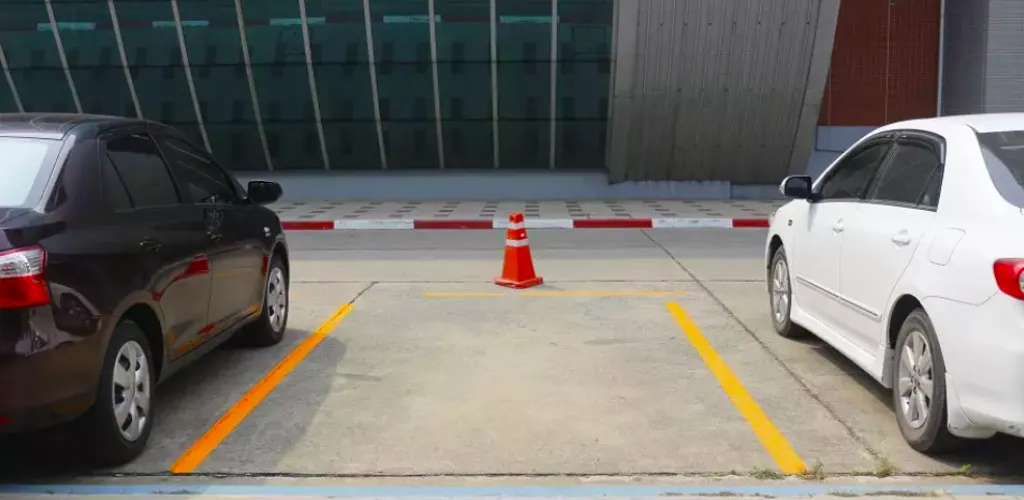
- Nose-in parking is intuitive but requires correct steps and control.
- Choose a space with at least 50–60 cm extra length and no waiting driver.
- Signal early and maintain the turn signal throughout the maneuver.
- It requires a wider turning radius than rear parking.
Nose-in parking is one of the most commonly used methods of vehicle parking, and many drivers consider it easier than side or rear parking. However, to perform it correctly and safely, this maneuver requires attention, coordination, and following essential steps. Whether you are a novice driver or already have experience behind the wheel, understanding nose-in parking technique will save you time and help you avoid uncomfortable situations.
Although it may seem straightforward, nose-in parking involves correctly evaluating the available space, coordinating steering movements, and controlling the vehicle’s speed. Many drivers, especially those just starting out, struggle with proper vehicle positioning and estimating the distance to other parked cars.
Why is the correct nose-in parking technique important?
Nose-in parking has several clear advantages over other methods: it provides better visibility when exiting the space, requires less lateral space, and is more intuitive for most drivers. However, to reap these advantages, you must execute all steps correctly. An important note is that, unlike rear parking where you have better control of the entry angle thanks to the steering system acting on the rear wheels, nose-in parking requires a wider turning radius and more space to maneuver.
Step-by-step guide to nose-in parking
Step 1: Identifying and evaluating the parking space
Before starting the maneuver, it is crucial to choose a suitable parking space. Carefully assess the dimensions of the available space and ensure it is large enough for your car. A ideal parking space should provide at least 50-60 cm of extra space beyond your car’s length.
Check that there are no other drivers waiting for this spot or signaling their intent to park there. Also, ensure that parking in that space is allowed – check signs and road markings, as well as any time restrictions or special conditions.
Step 2: Signaling your intention to park
Once you have identified the ideal parking spot, activate your turn signal in the appropriate direction immediately. This is essential for your safety and for the safety of other road users. Early signaling allows other drivers to anticipate your movements and adjust their speed or trajectory to facilitate your maneuver.
Keep the signal on throughout the parking maneuver. If you notice another vehicle approaching quickly from behind, wait until traffic becomes more fluid before starting the parking maneuver.

Step 3: Proper vehicle positioning before entry
This is a crucial step that differs significantly from rear parking. For nose-in parking, you need a larger gap between your car and the vehicles already parked – about 2.5–3 meters. This distance is necessary because the turning radius for nose-in parking is wider.
The vehicle should be driven slowly and with control. Move forward until your shoulder (or, more precisely, the B-pillar) is aligned with the middle of the parking space you are about to occupy. This initial correct position is essential to ensure an optimal entry angle and a centered position in the space.
Step 4: Executing the entry turn
When you have reached the correct starting position, gently apply the brake to come to a complete stop. Then, with the car stationary or moving very slowly, turn the steering wheel fully toward the parking space – to the maximum, until you reach the end of the steering travel.
Gradually release the brake and carefully press the accelerator. The vehicle will begin to enter the parking space. Maintain a low speed throughout this maneuver – no more than 5–10 km/h. Continuously monitor the distance to adjacent vehicles via the side mirrors.
If you notice that the entry angle is not correct or there is a risk of hitting a neighboring vehicle, stop, reverse to return to the initial position, and retry the maneuver.
Step 5: Centering and final alignment
As you enter the parking space, there will come a moment when you need to straighten the wheels to complete the positioning. Notice when your car becomes parallel to the surrounding vehicles or to the space markings. At that moment, turn the steering wheel in the opposite direction to bring the wheels back to a straight position.
Make sure the distance between your car and the neighboring vehicles is approximately equal on both sides – this means you are well centered in the space. Also check the distance to the curb or to the front boundary of the parking space. Ideally, you should leave about 20–30 cm to the curb to avoid damage to the bumper or suspension system.
If you sense you are not well positioned, you can make minor adjustments by reversing slightly and moving forward with the wheel turned in the appropriate direction.
Step 6: Securing the vehicle after parking
Once you have finished positioning, it is time to secure the car correctly. The steps depend on the type of transmission:
For automatic transmissions:
- Fully depress the brake pedal
- Move the selector to the P (Park) position
- Engage the parking brake for extra safety
- Turn off the engine and remove the key or press the stop button
For manual transmissions:
- Press the clutch and brake pedals
- Shift into first gear (on uphill slopes) or reverse (on downhill slopes)
- On flat surfaces, you can leave it in any gear
- Fully engage the parking brake
- Gradually release the pedals and stop the engine
In the case of inclined surfaces, as with modern vehicles, it is advisable to also turn the wheels toward the curb for maximum safety against accidental movement.
Common mistakes in nose-in parking
Insufficient distance in front of parked cars
Many drivers try to enter the space by positioning themselves too close to already parked vehicles. This leads to a too-narrow entry angle and increases the risk of touching nearby cars. Always maintain the 2.5–3 meters as required.
Too much speed during maneuvers
Parking should always be performed at a low speed. Excess speed reduces reaction time and precision. Use only light touches of the accelerator pedal.
Neglecting checking blind spots
During parking, it is essential to constantly check through the mirrors and, where possible, turn your head. Blind spots can hide pedestrians, cyclists, or other obstacles.
Turning the steering wheel with the car fully stopped
Although possible, turning the wheel with the vehicle completely stationary places extra stress on the steering system and tires. It is preferable to turn the wheel while the car is moving slowly.
Tips to improve your nose-in parking technique
Practice in open spaces
If you are a beginner or want to refine your technique, start practicing in an empty parking lot, such as a supermarket lot. You can use cones or other markers to simulate parked cars.
Use available technology
Modern cars are equipped with parking aids: rearview camera, parking sensors, guiding lines on the screen, and even automated parking systems. Use them, but don’t become dependent on them – fundamental skills remain important.
Adapt to your vehicle’s dimensions
Every car has different dimensions and turning radius. Take time to learn your vehicle’s peculiarities – where the corners are, the exact width, how the steering responds.
Be patient and don’t rush
It’s better to spend a few extra minutes to perform a parking maneuver correctly than to risk damage. If the first attempt doesn’t succeed, back up and try again.
Nose-in parking vs. rear parking
Each method has its own advantages and disadvantages:
Nose-in parking:
- Easier for beginners
- Quicker and safer exit from the space
- Better visibility during exit
- Requires more lateral space
- Less precise for tight spaces
Rear parking:
- Better control of the entry angle
- Suitable for tighter spaces
- Safer for long-term parking
- Requires more practice and experience
- Exit more difficult, especially on busy streets
Safety considerations
Proper parking is not only about fitting the car into a space, but also about doing so safely:
- Always check that you are not blocking access for other vehicles or sidewalks
- Respect legal minimum distances from intersections, crosswalks, or hydrants
- Do not park in spaces reserved for people with disabilities without authorization
- Ensure the car is properly secured before leaving
- On steep slopes, consider turning the wheels toward the curb as an additional safety measure
Conclusion
Nose-in parking is a fundamental skill every driver should master. While it may seem simple, correct execution requires practice, attention, and respect for basic rules. By following the steps described in this guide and avoiding common mistakes, you will be able to perform this maneuver with confidence and safety.
Remember that experience comes with time. Each successful parking session enhances your spatial awareness and improves your coordination. Do not be discouraged if you encounter difficulties at first – even experienced drivers started somewhere. Regular practice, patience, and attention to detail are the keys to mastering the art of nose-in parking.