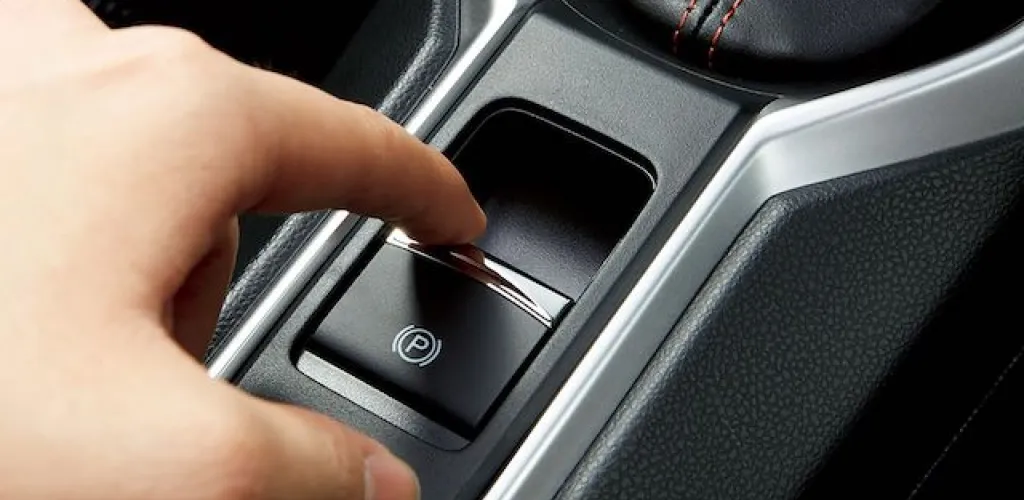
- Electric parking brakes save space and improve cabin aesthetics
- Not suitable as an emergency brake; speed limits and ECU protection apply
- Battery discharge can lock brakes; requires battery recharge, jump-start, or roadside help
- Repairs are costly: diagnostics 100-200 RON; actuator 800-1500 RON
Electric parking brakes have become standard in most new cars, replacing the traditional hand lever to save space and streamline the cabin design. While this system appears as a simple aesthetic change—the lever replaced by a button—this technology brings both advantages and challenges that can challenge vehicle owners.
Advantages of the electric parking brake
- Space saving: Removing the lever allows designers to optimize space in the central console
- Improved aesthetics: The modern, clean look of the cabin
- Increased reliability: The electronic system is more precise and consistent
- Ease of use: A simple button replaces the physical effort
- Enhanced safety: Integration with the vehicle’s safety systems
Main failures of the electric parking brake
Limitations of use as an emergency brake
Contrary to the expectations of many drivers, most cars do not allow using the electric parking brake while moving. Although theoretically it should replace the “emergency brake,” the technical reality is different:
- Speed restrictions: The system auto-disables at speeds over 5-10 km/h
- Electronic protection: The vehicle’s ECU blocks activation to prevent damage
- Premium exceptions: Only some luxury models allow controlled use as an emergency brake
In critical situations when the main brakes no longer work, drivers must resort to other methods: engine braking, using the engine brake or a gradual stop.
Dependence on the electrical system – the battery discharge problem
The most common and problematic scenario occurs when the vehicle battery is completely discharged. This fault creates a technical paradox:
Problems caused:
- The brake remains locked in the engaged position
- Inability to deactivate manually
- The vehicle cannot be pushed or towed
- The need to replace or recharge the battery to unlock
Emergency solutions:
- Using portable external batteries (jump starter)
- Connecting to another vehicle to start the engine
- Calling road assistance services
- In extreme cases, partial disassembly for mechanical unlocking
Complexity of repairs and maintenance
The electric parking brake system requires a much more sophisticated approach for maintenance and repair:
Equipment needed:
- Advanced OBD-II diagnostic interface
- Software specific to the vehicle make
- Specialized tools for electromechanical components
- Knowledge of automotive electronics
Service procedure:
- Electronic diagnosis: Checking error codes via the computer
- Disabling the system: Putting it into “service mode” via software
- Mechanical intervention: Replacing defective components
- Recalibration: Resetting and programming the system
- Final testing: Verifying full functionality
Costs associated with repairs
Repairs to the electric braking system are significantly more expensive than to mechanical systems:
- Diagnosis: 100-200 RON
- Actuator replacement: 800-1500 RON
- Wiring repairs: 300-600 RON
- Software recalibration: 200-400 RON
Preventive measures and recommendations
To avoid issues with the electric parking brake:
Regular maintenance:
- Periodic battery check
- Monthly system functionality testing
- Service according to the manufacturer’s schedule
Correct usage:
- Avoid repeated activation/deactivation in a short time
- Do not force the system when there are signs of failure
- Follow the owner’s manual recommendations
Emergency preparedness:
- Keep a jump starter in the vehicle
- Know the emergency unlock procedure specific to the model
- Have contacts for an authorized service
Conclusion
Although the electric parking brake represents an important technological advancement, owners must understand its limitations and the specific requirements of this system. Awareness of potential problems and available solutions can prevent unpleasant situations and reduce costs in the long term. Investing in proper maintenance and emergency equipment is essential for a safe, trouble-free experience with this modern technology.