- Distraction and inattention are leading causes; pull over if needed.
- Excessive speed drastically increases stopping distance and impact energy.
- Alcohol impairs reaction time, vision, and coordination; use a sober driver or transport.
- Adverse weather, especially rain, raises aquaplaning risk; reduce speed by 20-30%.
Road accidents are a tragic reality faced by millions of drivers around the world. Being involved in a crash can have devastating consequences—from serious injuries to loss of life. Understanding the main causes of these events and adopting a preventive driving approach can make the difference between a safe trip and tragedy.
Although many of these causes may seem obvious to seasoned drivers, ongoing education for all road users—from teenagers who just got their license to veterans with decades of experience—remains essential for road safety.
Distraction — the main cause of modern accidents
Driver inattention has become one of the leading causes of accidents worldwide. A moment of inattention - whether you’re on the phone, texting, or eating behind the wheel - can turn an ordinary trip into a tragedy.
The effects of distractions on reaction time are dramatic. When eyes are not focused on the road, the brain cannot process visual information correctly to anticipate and avoid hazards. To stay safe, keep your phone on Do Not Disturb and pull over to a safe area if you need to resolve something urgent.
Excessive speed — the crude math of physics
Speeding remains one of the main causes of severe crashes. When you exceed the legal limit by 30-40 km/h (or more), you’re not just committing a violation—you’re fundamentally changing the physics of safety.
At high speeds, braking distance increases exponentially, not linearly. For example, at 50 km/h the stopping distance is about 25 meters; at 80 km/h it becomes over 50 meters. Additionally, kinetic energy (and thus the impact force) is calculated by E = ½mv², meaning a 50% increase in speed implies a doubling of energy involved in the impact.
Alcohol consumption — compromising the nervous system

Alcohol behind the wheel is not just a legal issue but a safety hazard. Even small amounts of alcohol affect:

- Reaction time (increases by 10-15% at 0.5‰)
- Peripheral vision and the ability to estimate distances
- Motor-sensory coordination
- Quick decision-making abilities
The simple solution: always designate a driver who hasn’t consumed any alcohol or use alternatives such as a taxi or public transport.
Aggressive and reckless driving
Drivers who adopt a chaotic driving style—brake changes without signaling, dangerous overtakings, failure to maintain a safe following distance—create a domino effect in traffic. This behavior not only endangers others, but greatly reduces the time available to react in critical situations.
Adverse weather conditions
Rain and aquaplaning
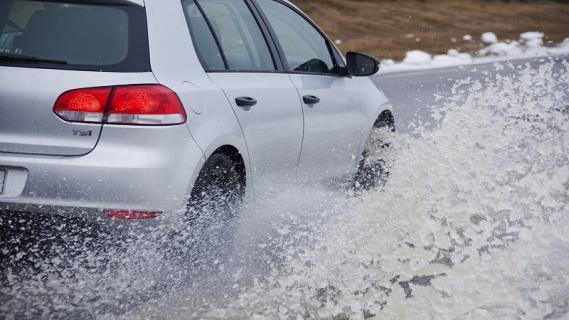
Rain dramatically changes grip conditions. When the water layer on the road exceeds the tire tread depth, aquaplaning occurs—the phenomenon where the rubber loses contact with the asphalt and the vehicle “floats” on the water.
To prevent aquaplaning:
- Reduce speed by 20-30% compared to normal conditions
- Avoid abrupt braking and acceleration
- Regularly check tire tread depth (minimum 1.6 mm)
Snow and ice

The coefficient of grip on ice can drop to as low as 0.1–0.15 (vs 0.7–0.8 on dry asphalt), meaning braking distance increases 5–7 times. Snow can hide ice patches and potholes, creating unpleasant surprises for suspension and steering.
Fog — zero visibility
Dense fog can reduce visibility to under 10 meters, making hazard anticipation impossible. In such conditions, fog lights are not optional accessories but a vital necessity.
Technical problems and vehicle failures
Factory defects
Modern cars have thousands of components, and any of them can exhibit manufacturing defects. Braking, steering, or suspension systems with defects can cause serious crashes even with experienced drivers.
Tire blowouts

A tire blowout at high speed can render the vehicle uncontrollable. Main causes include:
- Incorrect tire pressure (underinflation or overinflation)
- Uneven wear
- Sidewall damage
- Old age of the tire
In case of a blowout, do not brake hard and do not violently turn the wheel — maintain a firm grip on the wheel and slow down gradually.
Human factor in accidents
Running red lights
Ignoring traffic signals often leads to frontal or side collisions at high speeds. Statistics show that 90% of intersection crashes are due to failure to obey traffic signals.
Lane changes without ensuring safety
The blind spots of mirrors are zones where other vehicles can be invisible. A proper check includes:
- Checking rear-view mirrors
- Checking side mirrors
- Turning the head to eliminate blind spots
- Signaling at least 3 seconds before a maneuver
Maintaining a safe following distance
Rule of thumb: a distance equal to the length of one car for every 30 km/h. At 90 km/h, the optimal distance is about 3 car lengths (circa 12–15 meters). This rule accounts for human reaction time (0.8–1.2 seconds) plus the actual braking distance.
Special category: vulnerable drivers
Young and inexperienced drivers
Lipsa de experiență se traduce prin:
- Inability to anticipate risky situations
- Overestimation of one’s own abilities
- Tendency to take unnecessary risks
- Longer reaction time in new situations
Night driving

At night, the risk of an accident doubles due to:
- Reduced visibility (even with headlights on)
- Fatigue accumulated during the day
- The presence of drivers under the influence of alcohol
- Difficulty estimating speed and distances
Fatigue at the wheel
Fatigue affects:
- Reaction time (increases by 50% when tired)
- Concentration
- Peripheral vision
- Decision-making abilities
Alarm signs include frequent yawning, tired eyes, and unintended deviation from the lane.
Dangers in the environment
Potholes on the road
Potholes on streets are not only a comfort issue but a safety concern. At high speeds, hitting a pothole can:
- Deteriorate suspensions and wheel geometry
- Cause tire blowouts
- Cause loss of steering control
Wild animals on the road
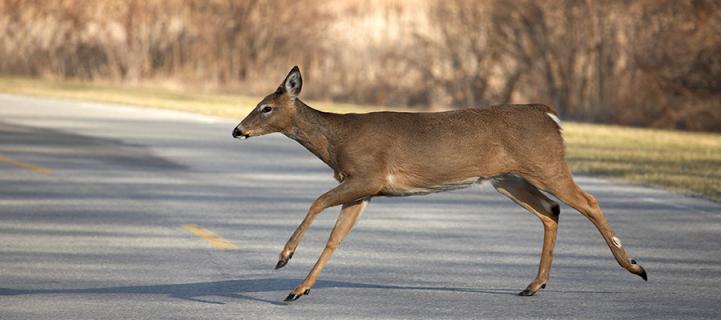
In Romania, collisions with wildlife (roe deer, wild boar, bears) are frequent on roads through forested areas. The most dangerous period is dusk and dawn when animals are more active.
Dangerous curves
The physics of curves involves centrifugal force, which increases with the square of speed. A curve navigated safely at 60 km/h can become deadly at 80 km/h because of this exponential progression.
Driving under the influence of substances
Drugs at the wheel
Both illegal drugs and prescribed medications can affect:
- Reflexes and reaction time
- Perception of space and time
- Concentration
- Motor-sensory coordination
Some medications for allergies, anxiety, or pain can have effects similar to alcohol.
Aggressiveness in traffic

Road rage can turn vehicles into weapons. Aggressive behaviours include:
- Dangerous overtaking out of spite
- Abrupt stops in front of other drivers
- Obscene gestures and curses
- Pursuing other vehicles
Emotional state directly affects safe driving ability.
Ignoring traffic signals
Traffic signs are not suggestions but vital rules based on:
- Traffic and safety studies
- Road geometry characteristics
- Local accident statistics
- Specific visibility and grip conditions
Preventing accidents — a systemic approach
Reducing the risk of accidents requires a holistic approach:
Vehicle maintenance:
- Periodic checks of vital systems
- Timely replacement of worn tires
- Proper functioning of lighting systems
- Correct wheel alignment
Continuous education:
- Defensive driving courses
- Keeping up to date with traffic regulations
- Understanding new technologies in vehicles
Personal responsibility:
- Honest self-assessment of one’s own abilities
- Respect for age- or health-imposed limits
- Adapting driving style to conditions
Road accidents are largely preventable through education, responsibility, and respect for traffic rules. Every driver has the power to contribute to a safer road environment, and life—yours and others—always has absolute priority over any other consideration.