- Romania still favors manual transmissions, but automatic sales are gradually rising.
- Automatic gearboxes require oil changes about 10,000 km later than manuals.
- Fuel economy differs by at most 1%; CVTs can be more efficient.
- Manuals are cheaper and simpler; automatics prioritize comfort and safety.
Choosing between an automatic car and a manual transmission remains a key decision for any car buyer. While Romania still favors manual transmissions, automatic transmission technology has evolved dramatically in recent years, eliminating many traditional drawbacks and opening new opportunities for drivers.
Automotive specialists confirm that automatic transmission cars in Romania are still far below manual ones in sales, but the trend is gradually changing as myths are debunked and prices become more accessible.
Myths about maintenance of automatic transmissions
Oil change - real differences between automatics and manuals
One of the most widespread myths concerns the frequency of oil changes. The reality is that the difference is not dramatic - an automatic gearbox requires oil changes at intervals only about 10,000 km longer than a manual one.
We should understand that even for cars with manual transmissions, an oil change in the gearbox is essential for optimal operation. Neglecting this operation can lead to premature failure of any type of transmission.
Fuel consumption - real differences in 2024
Modern automatic transmissions vs classic technologies
The myth that automatics consume significantly more fuel stems from older technologies. In reality, the difference in fuel consumption between a modern automatic and a manual is at most 1%, and in many cases automatics with advanced technology can be even more efficient.
CVT systems are particularly efficient, adapting continuously to driving conditions to keep the engine in the optimal operating range.
CVT technology and economy mode
Automatic gearboxes today come with multiple drive modes:
- Economic mode - optimizes consumption by keeping revs lower
- Normal mode - balances performance with efficiency
- Sport mode - prioritizes response and acceleration
These settings allow the gearbox to adapt to driving style and traffic conditions.
Advantages of manual transmission
Costs and accessibility
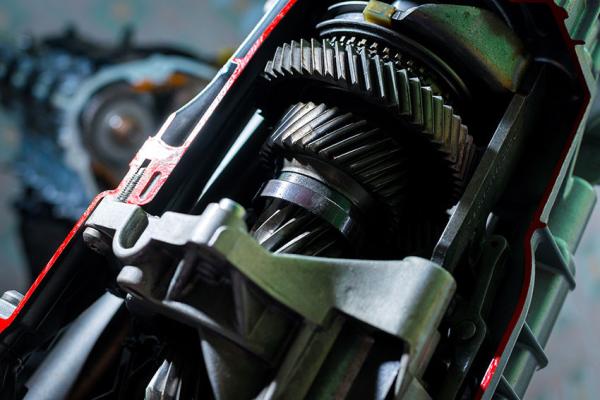
Manual transmission still offers a few concrete advantages:
- Lower purchase price - cars come standard with manual gearbox
- Lower maintenance costs - simpler mechanism means cheaper repairs
- Availability of parts - components easier to find and replace
- Direct control - the driver decides the exact moment and manner of gear changes
Repairs and service
Repairing a manual gearbox is generally simpler and cheaper. The main wear items are:
- Clutch kit (over 1,000 lei) for full replacement
- Synchronizers
- Bearings
- Transmission oil
Advantages of modern automatic transmissions
Comfort and safety
Automatic gearboxes offer significant benefits in urban traffic:
- Improved control - both hands free on the steering wheel
- Reduced fatigue - eliminates the need to press the clutch
- Safe hill starts - reduced risk of stalling
- Smooth operation - no shocks when changing gears
Superior performance
Modern automatics, especially those with dual clutch, have reached performance levels that surpass manual gearboxes:

- Shifting speed - transitions between gears in milliseconds
- Automatic optimization - selecting the ideal gear for each situation
- Increased durability - absence of traditional clutch wear

Reliability - myth vs reality
The American example
In the United States, where nine out of ten cars are automatic, drivers experience no major issues. This demonstrates that the reliability of automatic transmissions is comparable to that of manuals, provided proper maintenance.
Critical components of automatic transmissions
When problems occur in an automatic transmission, they can be related to:
- Torque converter – the component that replaces the mechanical clutch
- Transmission cooling system – essential for preventing overheating
- Transmission computer – controls all electronic operations
- Shift lever – interface between the driver and the gearbox
- Electrical system – sensors and actuators
Real costs of ownership
Long-term analysis
Contrary to popular belief, an automatic gearbox can have lower maintenance costs in the long term:
- No clutch kit – saving over 1,000 lei on each replacement
- Reduced engine wear – consistently optimized operation
- Increased durability – modern technology offers superior reliability
Purchase prices in 2024
If a few years ago the price gap was significant, today most manufacturers offer the automatic at the same price or for a small additional amount. Many premium brands no longer market cars with manual transmissions.
Emerging technologies
Hybrid and electric systems
The electrification shift accelerates the adoption of automatic transmissions because:
- Hybrid cars require complex power management
- Electric vehicles use single-gear transmissions
- Mild-hybrid systems optimize efficiency through automated control
Conclusion
Technological evolution has eliminated most of the traditional drawbacks of automatic gearboxes. Superior performance, similar or lower fuel consumption, and increased comfort make automatic transmissions a more and more logical choice for most drivers.
Although in Romania the number of skeptical drivers toward automatics remains high, the global trend and demonstrated advantages suggest that the future belongs to automated transmissions. The final choice depends on personal preferences, budget, and driving style.
Photo sources: carfromjapan.com, ratelab.ca, carfax.eu