- AEB uses radar, cameras, LiDAR, and ultrasonics to detect obstacles.
- There are brake assist and full autonomous braking systems, some with GPS risk prediction.
- The system can alert, pretension seatbelts, brake assist, or brake automatically.
- Limitations include false detections and performance affected by speed and conditions.
Vehicle technology is evolving rapidly, and one of the most important safety innovations is the automatic braking system. In an era where driver distraction at the wheel is increasingly common, these systems represent a crucial barrier between a moment of inattention and a serious accident.
The automatic braking system combines advanced sensors with the vehicle’s braking system to detect and prevent collisions. While most of these systems do not eliminate the risk of an accident entirely, they significantly reduce impact speed, thereby minimizing the severity of collisions.
What is the automatic braking system (AEB)
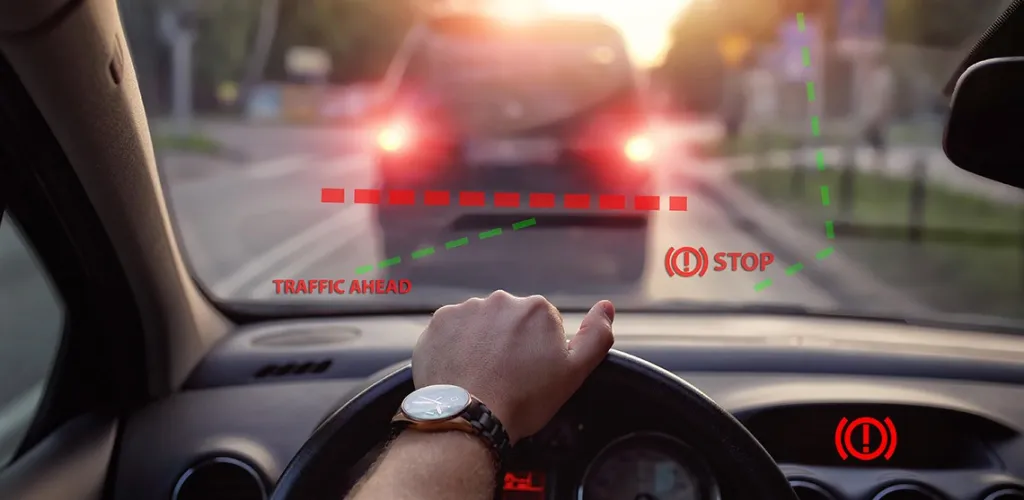
The Automatic Emergency Braking (AEB) system is a safety technology that constantly monitors the space in front of the vehicle. Using a combination of sensors, the system can detect vehicles, pedestrians, or other obstacles and can automatically apply the brakes if the driver does not react in time.
There are two main types of systems:
- Brake assist systems: provide extra braking force if they detect the driver is braking, but not hard enough
- Full braking systems: can activate the brakes fully autonomously, without driver intervention
It’s important to know that not all systems operate under the same conditions. Some are optimized for high speeds (above 30-50 km/h), while others are designed specifically for urban traffic at low speeds.
How the technology works
Each automaker has developed its own system, but the basic principles remain similar. The operating process involves the following steps:
Obstacle detection
The system uses a combination of technologies to “see” what is happening in front of the vehicle:
- Radar sensors: detect objects and measure distance and relative speed
- Video cameras: identify the type of obstacle (vehicle, pedestrian, cyclist)
- Laser sensors (LIDAR): provide very precise distance measurements
- Ultrasonic sensors: used mainly at low speeds
Calculating collision risk
After detecting an obstacle, the system calculates:
- Your vehicle speed
- The speed and direction of the obstacle
- The time remaining until a possible collision
- The required stopping distance
Activating the system
Depending on the severity of the situation, the system can:
- Alert: visual and audible warnings to capture the driver’s attention
- Seatbelt pretensioning: preparing safety systems
- Brake assist: amplifying the braking force applied by the driver
- Automatic braking: fully activating the brakes
Some advanced systems also integrate GPS data to anticipate curves or high-risk zones.
Limitations and challenges of the system
Although the technology is impressive, automatic braking systems have limitations:

False detections
Older systems can misinterpret:
- Bridges or structures above the road
- Reflective metal plates
- Extreme weather conditions (heavy rain, snow)
- Vehicles that change lanes abruptly
Speed limitations
Most systems have an optimal operating window:
- City systems: 5-50 km/h
- Highway systems: 30-200 km/h
- Some do not operate below a certain minimum speed
Environmental factors
Performance can be affected by:
- Reduced visibility
- Sensors dirty or obstructed
- Roads with steep grades
- Surfaces with low traction
Safety benefits
Studies show that autonomous braking systems significantly reduce:
- Rear-end collisions by 38-40%
- Pedestrian accidents by 20-25%
- The severity of accidents that still occur
Even if you don’t prevent the accident entirely, reducing speed by just 10-20 km/h can make the difference between minor injuries and serious injuries or death.
Integration with other safety systems
Adaptive cruise control

Adaptive cruise control uses the same sensors to:
- Maintain a safe following distance from the vehicle ahead
- Automatically adjust speed in traffic
- Bring the vehicle to a complete stop when necessary
- Resume automatically when traffic flows again
Pre-crash systems
These systems prepare the vehicle for impact by:
- Seatbelt pretensioning
- Adjusting seat positions
- Activating protection systems
- Closing windows
Lane keeping assist
Combined with lane keeping, the system can:
- Detect if the driver has fallen asleep
- Correct the vehicle’s trajectory
- Activate braking if the vehicle leaves the road
Types of systems by manufacturer
Mercedes-Benz – PRE-SAFE
- First pre-crash system in the industry (2002)
- Integration with active suspension systems
- Pedestrian and cyclist detection
BMW – Driving Assistant
- Operates up to 210 km/h
- Detects vehicles and pedestrians
- Integration with navigation system
Toyota – Safety Sense
- Standard on most new models
- Night detection with infrared
- Blind-spot warning system
Volvo – City Safety
- Pioneer in urban automatic braking
- Detection of large animals
- Works in all lighting conditions
Cost and availability
Automatic braking systems are increasingly affordable:
- Premium cars: standard from factory on most models
- Mid-range cars: optional or in safety packages
- Entry-level cars: available on higher-trim versions
The cost as an option varies between 800-2000 euros, depending on system complexity.
Maintenance and calibration
For optimal operation, the system requires:
Regular maintenance
- Regular sensor cleaning
- Checking wheel alignment
- Brake system inspection
Calibration after repairs
- After windshield replacement
- After accidents, even minor
- After suspension modifications
Warning indicators
- Dashboard warning lights
- Error messages
- Reduced system performance
The future of the technology
Upcoming developments include:
- 5G integration for vehicle-to-vehicle communication
- Improved detection through artificial intelligence
- Prediction of pedestrians’ and cyclists’ behavior
- Coordination with intelligent infrastructure
Conclusion
The automatic braking system is one of the most important safety technologies developed in recent years. While it does not replace careful and responsible driving, it provides a crucial safety net in critical moments.
Investment in this technology pays off through added safety and potentially lower insurance costs. More importantly, it can make the difference between life and death in moments of inattention or emergencies.
If you are shopping for a new car, the automatic braking system should be on your priority list, alongside other modern safety features.