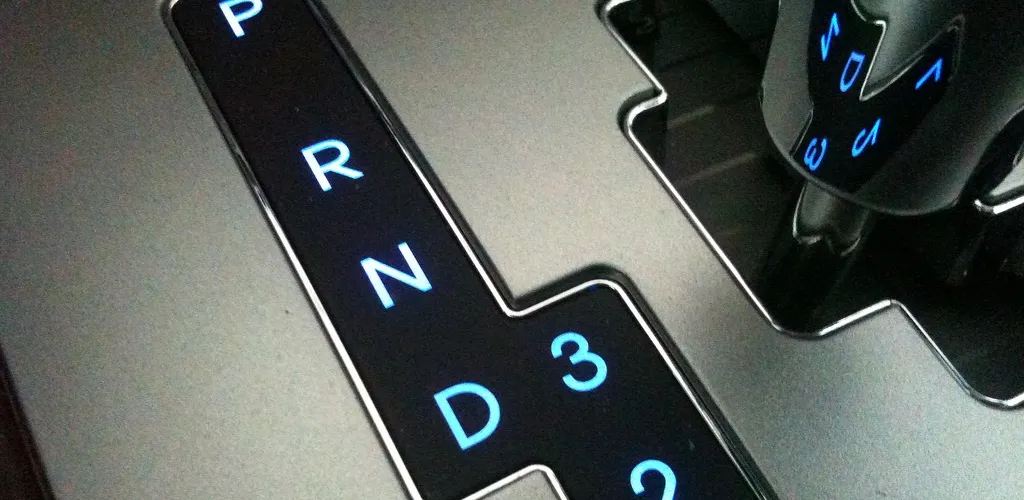
- Stop correctly: brake fully, engage parking brake, shift to P only after full stop
- Start and move off: brake, release parking brake, start engine, shift to D/R, smooth acceleration
- Automatics offer comfort and efficiency; with proper maintenance they last longer
- They require a different driving style from manuals to prevent damage
The Romanian automotive market is undergoing a clear transition. Although manual transmission cars still dominate numerically, more drivers are opting for the comfort and efficiency of automatic gearboxes. In Western Europe, this shift happened years ago, and Romania is following the same trend. However, the lack of a solid culture around driving automatic transmissions can lead to costly mistakes. Here are the essential rules every driver should follow to protect the automatic gearbox and maximize the vehicle’s lifespan.
Modern automatic gearboxes offer greater comfort, smoother gear changes, and potentially lower maintenance costs over time, provided they are properly maintained. They also deliver longer life when well cared for and typically provide optimized fuel consumption compared to many manual transmissions. The key is to understand that an automatic box requires a different driving style than a manual. Following the rules below will ensure the transmission operates at its best.
Myths and Realities about Automatic Transmissions
Among Romanian drivers there are a few preconceived notions about automatic cars: they are harder to drive, more prone to failures, and more expensive to maintain. The reality completely refutes these ideas. Modern automatics offer:
- Increased comfort at the wheel, eliminating the need for continuous clutch operation
- Superior performance through optimized gear changes
- Lower long-term maintenance costs
- Longer life, with proper maintenance
- Optimized fuel consumption compared to many manual transmissions
The key is to understand that an automatic gearbox requires a different driving style than a manual. Adhering to the rules below will ensure the transmission operates optimally.
Correct procedure for stopping and starting the vehicle
How to stop the car correctly
The correct stopping sequence is crucial for protecting the transmission:
- Press the brake pedal fully until the vehicle is completely stationary
- Engage the electronic parking brake (or pull the parking brake lever)
- Move the shifter to the P (Parking) position only after the car has come to a complete stop
In the P position, a metal pin mechanically locks the transmission. If you shift into P while the car is still moving, even minimally, this pin can be damaged or broken, leading to major transmission damage. Repair costs can reach thousands of euros.
How to start and move off correctly from a standstill
The starting procedure follows the reverse order:

- Get into the car and close the doors
- Press the brake pedal (most vehicles will not start the engine without this step)
- Deactivate the parking brake
- Start the engine
- With your foot still on the brake, shift to D (Drive) for forward motion or R (Reverse) for backward motion
- Gradually release the brake and smoothly accelerate
Modern safety systems prevent engine start if the shifter is not in P or N, and prevent taking out of P without pressing the brake—measures to protect against human error.
Neutral position — when and how to use it
Why you should avoid N while driving
While a manual transmission allows you to take the lever out of gear into Neutral, in automatic transmissions the situation is completely different. Never move the lever to N (Neutral) while the car is in motion.
The technical reason is clear: all gear changes in an automatic transmission are hydraulic. The hydraulic system operates at pressures that depend directly on engine speed. For gear shifts to occur correctly and without damage, the engine must be idling, ensuring the minimum pressure needed in the circuit.
If you shift while moving:
- The hydraulic components of the gearbox are subjected to extreme pressures
- Component wear accelerates dramatically
- There is a risk of major transmission damage
When it is permissible to use Neutral
Neutral has specific and legitimate uses:
- When you are stopped in traffic for longer periods (see below)
- At automatic car washes, when the car is rolled on rollers
- During servicing or diagnostic situations
- For towing the vehicle over very short distances (check the manual for specifications)
Shifts between D and R — patience saves the gearbox
The golden rule: come to a complete stop before shifting
Every driver has faced a situation needing multiple shifts between D (Drive) and R (Reverse) in a tight space. In a hurry, the temptation is to quickly switch between the two positions. This is one of the most damaging practices for an automatic gearbox.
Absolute rule: the vehicle must be completely stopped before any change between D and R.
When you shift from D to R or vice versa while the car is still moving:
- The hydraulic system is exposed to extreme pressures and abrupt reversals
- Friction discs inside the gearbox suffer accelerated wear
- Mechanical components can be irreparably damaged
- You risk complete transmission failure
Correct maneuver technique
For maneuvers in tight spaces:
- Gradually accelerate in the desired direction
- Press the brake and bring the vehicle to a complete stop
- Wait 1-2 seconds for full stabilization
- Shift to the desired position (D or R)
- Gradually accelerate again
Yes, the process takes a few extra seconds. But those seconds can mean the difference between a gearbox lasting 200,000 km and one needing major repairs at 80,000 km. A new or rebuilt gearbox can cost between 2,000 and 10,000 euros, depending on the model.
Engine braking — why it doesn’t work the same as with manuals
Fundamental differences
Many modern automatics offer a manual or sequential mode, allowing the driver to select gears manually. This has created confusion that you can use the automatic transmission exactly like a manual for engine braking. The reality is more nuanced.
With a manual transmission, downshifting on a descent provides significant engine braking, saving the discs and pads. With an automatic transmission, the mechanism is different:
- The torque converter (replacing the classic clutch) does not transmit brake force directly
- Engine braking efficiency is much lower
- RPMs rise significantly, but actual braking is minimal
- The gearbox and engine components are stressed more than the potential benefit
When and how to brake correctly
For normal slowing:
- Use only the brake pedal
- Modern braking systems are optimized for this purpose
- Discs and pads are far cheaper to replace than a transmission
For long descents:
- You can use the manual/sequential mode to limit the maximum speed
- Do not rely on engine braking; instead limit acceleration
- Continue to use the brake pedal as the primary control method
In emergencies:
- The priority is the brake pedal
- Engine braking can offer a small additional aid
- Do not compensate for faulty brakes with engine braking
Neutral instead of D when stopped — saves the gearbox and fuel
Why the gearbox wears when you stay in D with the brake pressed
If you have driven an automatic car, you have likely noticed the “creep” phenomenon — when the selector is in D and you lift off the brake, the car starts moving slowly on its own. This is a normal feature of torque-converter automatics.
The problem arises when you stay stopped in traffic or at a red light:
- With the shifter in D, the torque converter transmits power to the wheels
- You press the brake to hold the car in place
- The result is a constant tug-of-war between the engine pushing forward and the brake holding back
- The transmission and engine are under continuous stress
- Brake discs wear prematurely
- Fuel consumption increases
Benefits of Neutral at stops
When you move the shifter to N while stopped:
- Relieves tension from the gearbox and engine
- Reduces wear on the braking system
- Decreases fuel consumption (up to 5-10% in heavy urban traffic)
- Reduces emissions
- Increases comfort — you no longer need to maintain constant brake pressure
Practical rule
- For stops under 10-15 seconds: stay in D with the brake pressed
- For longer stops (long traffic lights, queues): shift to N and use the handbrake if necessary
- On downhill descents: stay in D with the brake pressed; do not use Neutral
This simple practice can significantly extend transmission life and reduce the vehicle’s operating costs.
Do not force a cold engine — optimal temperature is essential
Why the first minutes after starting are critical
All fluids in a vehicle — engine oil, transmission fluid (ATF), differential fluid — are formulated to operate at specific temperatures, typically around 80-100°C. At these temperatures, their viscosity is optimal for:
- Efficient lubrication of metallic components
- Protection against wear
- Heat dissipation
- Effective power transmission (in the case of ATF)
When the engine and transmission are cold (ambient temperature):
- The oil is much more viscous and flows slowly
- Metallic components have larger clearances due to cold contraction
- Lubrication is insufficient
- Friction and wear increase dramatically
- The automatic transmission shifts at higher RPM to compensate
Impact of aggressive driving on a cold engine
If you push the accelerator immediately after starting:
- Gear shifts occur at higher RPM
- Transmission components are subjected to extreme stresses without adequate lubrication
- Fuel consumption increases significantly
- Pollutant emissions are much higher
- Wear can be equivalent to hundreds of kilometers of normal driving
Correct warm-up procedure
To protect the engine and the transmission:
-
First 1-2 minutes: let the engine idle
- In extreme cold (below -10°C): 2-3 minutes
- At normal temperatures: 1-2 minutes are sufficient
- Modern engines do not require long warm-ups
-
Next 5-10 km: drive moderately
- Keep RPM below 2,500-3,000
- Avoid sudden accelerations
- Do not push to the maximum speed
- For diesel engines, avoid heavy loads until 70-80°C
-
After reaching the optimal temperature: you can drive normally
- Temperature gauge shows normal operating range
- Typically after 10-15 minutes of moderate driving
This routine may seem simple, but repeating it daily during ownership can mean tens of thousands of additional problem-free kilometers.
Preventive maintenance — the key to longevity
Regular transmission fluid changes
Although many automatics are marketed as “lifetime transmission fluid,” service industry experience says otherwise. Regular ATF changes can dramatically extend the life of the gearbox:
- At 60,000-80,000 km for normal driving
- At 40,000-60,000 km for severe conditions (city driving, towing, extreme temperatures)
- Use only the fluid specified by the manufacturer
- Prefer a full flush rather than only topping up
Other maintenance aspects
- Check transmission fluid level according to the manual
- Be vigilant for fluid leaks (reddish stains under the car)
- Listen for unusual noises or vibrations
- Notice sudden or delayed gear changes
- At any suspicious symptom, consult a specialist
Conclusion
Modern automatic gearboxes are complex and sophisticated systems designed for comfort and performance. However, their durability directly depends on how they are used. Following these simple rules can mean the difference between a transmission that works impeccably for 300,000 km and one that requires costly repairs midway.
Remember the basics: come to a complete stop before any D–R changes, do not use Neutral while moving, allow the engine to warm up before demanding high performance, and use Neutral when stopped for longer periods. Once internalized, these habits become automatic and will protect your investment while ensuring a pleasant driving experience in the long term.