- Used tires save 50-70% but demand rigorous safety checks.
- Verify age with DOT code; do not buy tires older than six years.
- Tread depth: minimum legal 1.6 mm; safer thresholds 3-4 mm; ideal 5-6 mm.
- Inspect sidewalls and wear indicators; use a depth gauge or coin method.
Tires are one of the most critical components for your vehicle’s safety. Given that maintenance costs can be substantial, many drivers consider used tires as a cost-effective alternative to new tires. However, an ill-considered choice can compromise safety and lead to additional expenses in the long term.
On the used-tire market there are thousands of tires in excellent condition that can deliver outstanding performance for years. The key to success lies in knowing the evaluation criteria and verification techniques to identify tires that are worth the investment.
Advantages of Used Tires
- Substantial savings: Cost reductions up to 50-70% compared to new tires
- Wide variety: Access to a wide range of brands, sizes, and tire types
- Positive ecological impact: Contribution to circular economy through product recycling
- Immediate availability: Ability to quickly find the desired size
However, to benefit from these advantages without compromising safety, it is essential to follow a rigorous evaluation process.
Checking Tire Age: The First Critical Step
Decoding the DOT Code
Tire age is the determining factor in assessing the safety of a used tire. Regardless of exterior appearance, never choose tires older than 6 years, as the rubber compound degrades over time and the internal structure can be compromised.
Process of identifying the age:
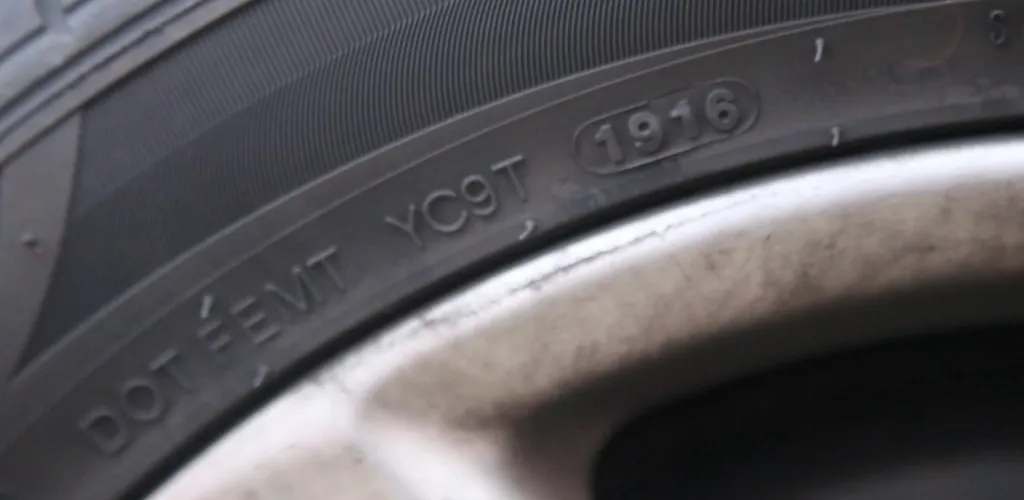
- Locate the DOT code on the tire sidewall (usually on the inner side)
- For tires manufactured after the year 2000: the last four digits represent the week and year of manufacture
- Practical example: “4521” means week 45 of 2021
- For tires manufactured before 2000: only 3 digits (avoid these models)

Effects of Aging on Performance
Aging over time affects:
- The flexibility of the rubber compound
- Grip on wet surfaces
- Resistance to cracking
- Ability to dissipate heat
Tread Depth Assessment: The Safety Criterion
Methods of Precise Measurement
Tread depth is directly related to the tire’s ability to evacuate water and maintain grip:
- Measuring with specialized tools:
- Use a tire tread depth gauge
- Measure at multiple points around the tire’s circumference
- Check both central channels and the side channels
- Coin method (approximate):
- Insert a 1-leu coin into the tread grooves
- If the number on the coin is fully visible, the tire needs replacement
- Wear indicators:
- Identify the tread wear bars
- When the tread surface reaches these indicators, replacement is urgent

Safety Reference Values
- Minimum legal: 1.6 mm (but not recommended for purchase)
- Safety threshold: minimum 3 mm for summer tires
- Winter tires: minimum 4 mm for optimal performance
- Ideal for second-hand: 5-6 mm or more
Detailed Visual Inspection: Identifying Defects
Sidewalls
The sidewalls are among the most vulnerable to damage and aging:
Critical defects to avoid:
- Bubbles or bulges: Indicate delamination of inner plies (explosion risk)
- Deep cracks: Sign of advanced rubber aging
- Cuts: May compromise structural integrity
- Deformations: Result of impacts or improper inflation
- Oil spots: May indicate chemical degradation of the rubber
Tread Analysis
Points to monitor:
- Uneven wear: Indicates suspension, steering, or balancing problems
- Center wear: Excessive tire pressure
- Edge wear: Underinflation or incorrect geometry
- Sawtooth wear: Problems with shocks or wheel alignment

Acceptable vs. Unacceptable Defects
Minor defects acceptable:
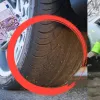
- Surface scratches on sidewalls
- Uniform wear with adequate depth
- Small discolorations without cracks
Major defects to reject:
- Any bulges or bulging
- Cracks deeper than 2 mm
- Metal objects embedded in the structure
- Visible previous repairs
Importance of Brand and Model
Tire Manufacturers Hierarchy
Premium category:
- Michelin, Continental, Bridgestone, Pirelli
- Advanced technologies, superior durability
- Safety performance demonstrated in independent tests
Mid-range category:
- Goodyear, Dunlop, Hankook, Kumho, Yokohama
- Balanced quality-price ratio
- Solid performance for everyday use
Budget category:
- Firestone, General Tire, Uniroyal
- Economical options with basic performance

Technologies That Make a Difference
Premium tires offer:
- Rubber compounds with superior performance
- Casings optimized for durability
- Tread designs for efficient water evacuation
- Technologies for reducing noise and fuel consumption
Advanced Technical Checks
Flexibility Test
A simple yet revealing test of the rubber compound:
- Gently press the tire sidewall with a finger
- The rubber should yield slightly and rebound to its original shape
- Excessive stiffness indicates advanced aging
- Lack of elasticity compromises grip and safety
Checking Homogeneity of the Set
For optimal performance and safety:
- Brand and model: Identical on the same axle (legally mandatory)
- Wear difference: Maximum 2 mm between tires on the same axle
- Dimensions: Strictly identical (width, profile, diameter)
- Speed and load indices: At least those specified by the manufacturer
Tire History
Key questions for the seller:
- What is the reason for selling?
- How were the tires stored?
- Have they ever been repaired?
- What type of vehicle were they used on?
- What was the previous owner’s driving style?
Smart Purchase Strategies
Recommended Sources for Purchase
Safe options:
- Authorized auto service centers with warranty
- Dealers specializing in used tires
- Online platforms with rating and review systems
- Manufacturers offering buy-back programs
Sources to avoid:
- Casual sellers without experience
- Tires from accident-damaged vehicles
- Suspicious deals with prices well below market
- Tires without pre-purchase inspection possibility
Negotiating the Price
Factors that influence value:
- Remaining tread depth (most important)
- Tire age (depreciation over time)
- Brand and model prestige
- Rarity of the requested size
- Seasonality (summer vs. winter)
Negotiation techniques:
- Ask for a discount when buying a full set
- Compare prices from at least three suppliers
- Check if mounting and balancing are included
- Negotiate a warranty for hidden defects
Optimal Maintenance of Used Tires
Regular Monitoring
Weekly schedule:
- Check tire pressure (including the spare tire)
- Visual inspection for embedded objects
- Observe for uneven wear
Monthly program:
- Measure tread depth at multiple points
- Check for cracks or new damage
- Check balancing (vibrations in the steering wheel)
Techniques to Extend Tire Life
Tire rotation:
- Every 8,000-10,000 km for even wear
- Rotation pattern depending on drive type
- Document positions to track wear
Wheel alignment:
- Annual check at a specialized service
- Immediate correction of alignment issues
- Direct impact on even wear
Driving style:
- Avoid abrupt acceleration and braking
- Moderate speeds in corners
- Avoid obstacles (curbs, potholes)
Situations to Avoid Used Tires
Scenarios Requiring New Tires
High usage:
- Traveling more than 30,000 km/year
- Commercial or taxi driving
- Frequent long-distance trips
Special conditions:
- Need for sporty performance
- Regular off-road driving
- Areas with extreme weather conditions
Safety considerations:
- Lack of experience evaluating tires
- Inability to perform professional checks
- Budget for quality new tires
Legal Regulations and Implications
Romanian Tire Legislation
Mandatory requirements:
- Minimum tread depth of 1.6 mm for tread blocks
- Same-type tires on the same axle
- Prohibition of mixed radial-diagonal construction
- Compliance with speed and load indices
Penalties for non-compliance:
- Fine: 580-1,160 lei
- Penalty points: 4-6 points
- Possible retention of the vehicle registration certificate
- Civil liability in case of an accident
Urgent Replacement Signals
Immediate danger indicators:
- Visible exposed steel wires in the casing
- Circular cracks on sidewalls
- Repeated loss of pressure
- Constant steering wheel vibrations
- Abnormal road noise
- Steering difficulties
Buying used tires can be a smart strategy to optimize vehicle maintenance costs, provided you follow a rigorous evaluation process. Technical knowledge, inspection experience, and choosing reliable suppliers are key elements for a successful decision.
There must always be a balance between the savings achieved and the level of safety. Used tires can be an excellent solution for many drivers, but they should never compromise road safety. If you have doubts about a tire’s condition or lack the necessary experience to evaluate, consulting a specialist is always advisable.
Investing in knowledge and thorough checks will pay off in years of safe and economical operation of the chosen tires.