- Regular tire wear checks boost safety, braking, water evacuation, and winter performance.
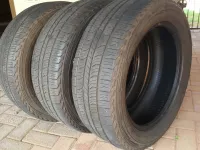
- Visual inspection: stop on flat surface, turn wheel, check uniformity and tread sides.
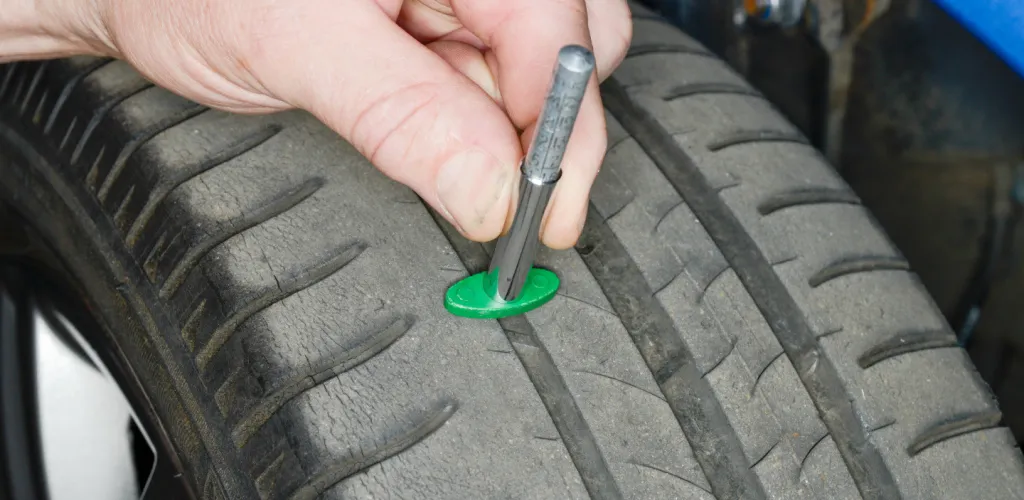
- Caliper method measures depth; new tires 9–11 mm, replace at 3–4 mm.
- Wear indicators show when tread depth is below 1.6 mm; replace.
Checking tire wear is one of the most important maintenance operations every driver should perform regularly. Tire wear directly affects safety and vehicle performance, and periodic checks can prevent dangerous situations on the road.
The wear level of tires determines their performance in all driving conditions. Worn tires affect everything from braking grip to cornering stability.
Why tire wear checks are important
A worn tire not only sounds loud or looks ugly—the consequences are much more serious:
- Braking performance: Stopping distance increases significantly
- Water evacuation: Increased risk of aquaplaning
- Comfort: Vibrations and noise during driving
- Safety: Risk of tire blowout
- Winter performance: A worn tire is almost useless on snow or ice
The only part of the tire that contacts the road is the tread. This tread is essentially a rubber strip with grooves cut into its surface, designed to evacuate water and maintain grip.
Understanding the structure of the tread
The tread height is essential for your safety. A low profile reduces grip, and in winter, vehicle control becomes less precise. In some countries, it is illegal to drive with tires worn below a certain threshold.
Visual inspection method
You can check tire wear yourself with the following steps:
- Stop the car on a flat surface
- Turn the steering wheel to the maximum to access the full surface of the tire
- Check if the wear is uniform or uneven
- Inspect both sides of the tread (left and right)
A severely worn tire on the inside or outside of the tread should raise an alarm—this may indicate issues with wheel geometry, incorrect pressure, or suspension problems.

Caliper measurement - the precise method
The most precise method is to measure the tread depth:
- Use a manual or digital caliper
- Insert the caliper into the deepest grooves
- Take measurements at several points for a complete picture
- Note the values obtained

Reference values for tread depth:
- New tire: 9-11 mm tread depth
- Safety limit: 5 mm (at which point you should look for other tires)
- Legal limit: 1.6 mm (in Romania)
- Safety recommendation: Replacement at 3-4 mm
Wear-indicator method - quick check without tools
If you don’t have a caliper, you can easily tell if the tire is ready for replacement. All modern tires have wear indicators:
- Location: Located at 3 or 4 points inside the tread grooves
- Appearance: Small pieces of rubber protruding
- Interpretation: When these indicators are reached, the tread depth is less than 1.6 mm
How to identify wear indicators:
- Look for small symbols on the tire sidewall (triangle, TWI logo)
- Follow the direction of these symbols toward the tread
- In that point you will find the wear bars
- If the rubber is at the same level as these bars, the tire must be replaced immediately
Coin method - the popular trick
A popular, though less precise, method is using a coin:
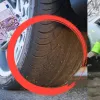
- Insert a 1-leu coin into the tire groove
- If the top of the coin’s crest is visible, the depth is below 2 mm
- This method provides only an approximation, not an exact measurement
Warning signals - when to replace tires immediately
Uneven wear:
- Edge wear: Underinflated tires
- Center wear: Overinflated tires
- Wear on a single edge: Wheel geometry issues
- Wear in “streaks”: Suspension or shock absorber problems
Visible signs of damage:
- Cracks in the sidewall
- Bulges or deformations
- Visible rubber powder
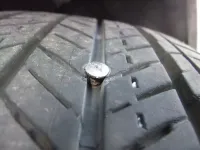
- Sharp objects embedded in the tire
- Tread tears
Frequency of checks
For optimal safety, check tire wear:
- Monthly: For high usage
- Every 2-3 months: For normal usage
- Before long trips: Mandatory
- At the change of season: Spring and autumn
- After an incident: After hitting a pothole, curb, etc.
Consequences of driving with worn tires
Safety aspects:
- Braking distance can increase by up to 40%
- Aquaplaning risk increases exponentially
- Vehicle control in adverse conditions becomes unpredictable
- Tire blowout risk increases significantly
Legal and financial aspects:
- Fines and penalty points for tires below the legal limit
- Insurance may refuse compensation in case of an accident
- Fuel consumption increases
- Suspension repair costs may be higher
Tips to extend tire life
- Keep the correct pressure - check monthly
- Rotate tires at 10,000-15,000 km
- Check wheel alignment annually
- Avoid abrupt accelerations and braking
- Do not overload the vehicle
- Avoid aggressive driving
Regular inspection of tire wear is not only a safety measure but also a smart economic practice. Early detection of problems can save lives and prevent substantial repair costs. Remember that tires are the only link between your vehicle and the road — investing in their safety is investing in your safety.
Photo sources: driving.co.uk, protyre.co.uk