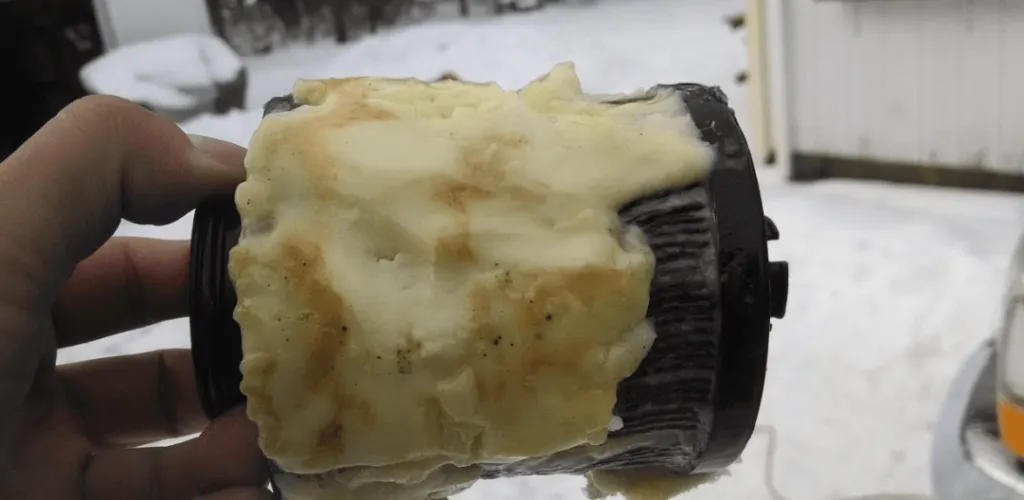
- Diesel gelation forms waxy blocks, clogging fuel filters and stopping fuel flow
- Water in diesel freezes and templates wax crystals, accelerating gelation
- Gelation begins around -5°C to -10°C; full gelation around -15°C to -20°C
- Fuel additives lower gel point and improve low-temperature fuel flow
Diesel engines have dominated the automotive market for the past two decades due to low maintenance costs, better fuel economy, and superior durability compared with gasoline engines. Despite these advantages, diesel-powered cars face a winter-specific challenge: diesel gelation.
This issue can completely block the fuel-supply system, leaving drivers in uncomfortable situations. Let’s analyze in detail what happens to diesel at low temperatures and how we can prevent this situation.
Composition and Types of Diesel
Just like gasoline has an octane rating, diesel is characterized by the cetane number, indicating the fuel’s auto-ignition capability. At any gas station you’ll find standard or premium diesel, the difference being made by adding additives to the fuel composition.
In many countries there are two types of diesel: one called on-road, intended for road-going vehicles, and one defined as off-road, with lower quality, generally used on construction sites. In Romania, off-road diesel cannot be purchased from ordinary gas stations.
The key difference between gasoline and diesel lies in the range of components that make up the two blends. Diesel molecules are much larger and pack more densely, making them very dense. Diesel is generally about 10% heavier than gasoline, providing a higher energy content.
Why Diesel Gelation Occurs in the Tank
When external temperatures drop significantly, the bonds between diesel molecules become much more rigid and begin to link strongly. This process continues until the diesel forms sheets that link to each other, and the fluid becomes more viscous.
These sheets take the shape of small waxy blocks, and over time, if this amount increases, they can quickly clog fuel filters and prevent proper fuel flow. In critical situations, the fuel freezes and blocks the filters completely, preventing it from reaching the engine’s combustion chamber.

The Role of Water in the Gelation Process
The term gelation describes automotive equipment that becomes nonfunctional in cold environments. Water molecules in diesel freeze and actively contribute to the formation of wax plates, effectively acting as the template on which these semi-solid components will take shape.
At What Temperatures Does the Problem Occur
Diesel begins to lose its fluidity at approximately -5°C to -10°C, depending on the quality and type of fuel. The complete gelation process can occur at temperatures of -15°C to -20°C, depending on specific conditions.
Methods to Prevent Gelation
As with any other situation that can cause damage to a vehicle, prevention is the easiest way to combat engine blockage.
Fuel Additives
There are numerous fuel additives on the market that are affordable and can be used in winter to prevent fuel gelation. These additives:

- Lower the gel point
- Improve fluidity at low temperatures
- Protect the fuel system
- Prevent wax crystal formation
Using Premium Diesel in Winter
Premium diesel already contains additives that improve low-temperature behavior. This investment pays off by avoiding expensive fuel-system problems.
Solutions for Diesel That Has Already Gelled
Mixing with Premium Fuel
If you find yourself in the unfortunate situation where the fuel has already started to gel, act urgently before the problem worsens. The only workable option is to mix the existing fuel in the tank with new high-quality fuel.
Keep in mind that when fuel begins to gel, you will need an equivalent amount of premium fuel to create an effective blend.
Heating the Fuel
Heating the fuel in the tank will melt the wax sheets created and restore the normal physico-chemical properties of diesel. However, in advanced gelation or large fuel quantities, this will require a lot of time and a strong heat source to achieve.
Integrated Heating Systems
Normally, cars are equipped with a dedicated element near the fuel-filter area that keeps the fuel at a temperature that prevents gelation. In extremely cold conditions, this may be overwhelmed and the fuel filter will be affected quickly.
Replacing the Fuel Filter
In many cases you will also need to replace the fuel filter to ensure the fuel circuit continues to operate properly. Filters clogged with wax cannot be cleaned effectively and must be replaced.
Recommendations for the Cold Season
- Use anti-gel additives in advance, before critical temperatures appear
- Keep the tank as full as possible to reduce water condensation
- Park the car in sheltered spots when possible
- Use premium diesel in winter for extra protection
- Check the fuel-filter heating system
Diesel engines require maintenance year-round, but especially in winter, when the gelation process can occur easily and block the engine. With proper preventive measures you can avoid these problems and enjoy the advantages of a diesel engine even in the harshest winter conditions.