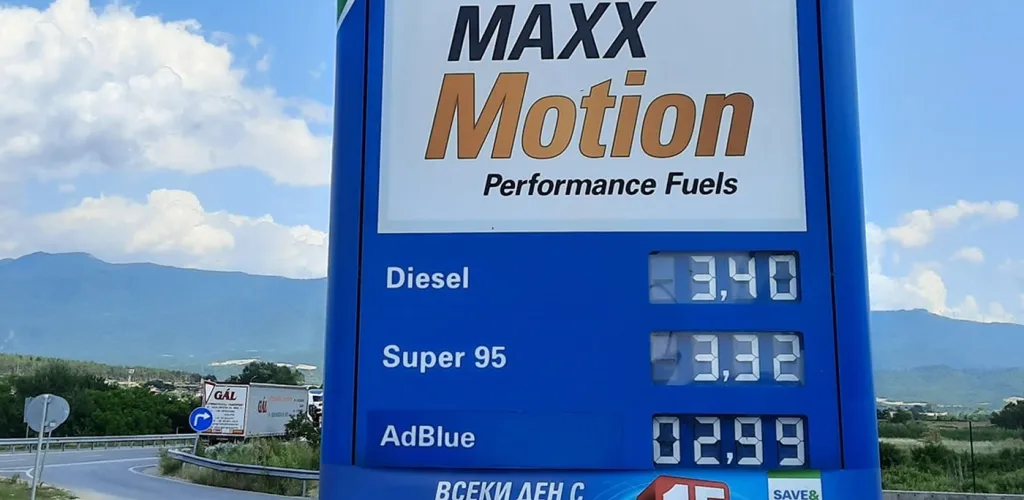
- Diesel at 3.4 BGN/L and gasoline at 3.32 BGN/L in Bulgaria (Kulata OMV).
- Romanian savings depend on current prices and exchange rates at travel time.
- European fuel crisis looms: rising demand, market tensions, potential shortages; Brent near 117 USD.
- Worth fueling in Bulgaria depends on the actual price gap when fueling.
Across the Balkans, Romanian travelers often weigh the savings of fueling in Bulgaria or Greece during summer trips. But do the potential fuel-cost savings justify fueling beyond the border? This article analyzes current prices and the regional fuel-market context to help you decide.
For many Romanians heading on vacation to Bulgaria or Greece in the summer, fueling in Bulgaria can seem like an attractive way to save. But is it really worth fueling beyond the border? We analyze current prices and the regional fuel-market context.
Current fuel prices in Bulgaria
Those who have already crossed the border have shared information about the rates at Bulgarian fueling stations. Here is the current situation at the OMV station on the A3 in Kulata, the first major fueling point after crossing the border:
Diesel: 3.4 leva per liter (about 8.59 RON at the rate 1 leva = 2.53 RON)
Gasoline: 3.32 leva per liter (about 8.39 RON)
To evaluate whether it’s worth fueling in Bulgaria, you need to compare these prices with those in Romania at the time of your trip. Savings can vary with exchange-rate fluctuations and price differences between the two countries at the time.
Economic context - European fuel crisis
Rising fuel prices are not isolated; they are part of a broader crisis affecting Europe. According to Fatih Birol, executive director of the International Energy Agency (IEA), this summer is expected to bring a significant fuel-market crisis.

Factors contributing to the crisis
The current crisis is driven by several converging factors:
- Rising fuel demand during the vacation season
- Tensions and disagreements in the international oil market
- Anticipated shortfalls across all fuel types: diesel, gasoline, and jet kerosene
- Simultaneous pressures on natural gas and electricity markets
Experts believe this could be the most severe and prolonged fuel crisis to date, with cascading effects across multiple sectors of the economy.
Oil price evolution on international markets
Brent crude recently reached around 117 USD per barrel, approaching historic highs. This rise directly affects pump prices, as well as costs in the food and industrial sectors.
Historic peak and geopolitical context
The all-time high for Brent crude was 139.13 USD per barrel, recorded in early March, as Russia invaded Ukraine. This event triggered major shocks on global energy markets.

Outlook for the coming period
Investors and financial analysts are concerned about the market’s evolution in the coming months:
- European officials are seeking ways to reduce dependence on Russian oil
- The proposed oil embargo will exert additional pressure on prices
- Analysts anticipate a continued upward trend rather than a decline
- The stability of the petroleum products market remains uncertain in the medium term
Conclusion - Is it worth fueling in Bulgaria?
Deciding to fuel in Bulgaria depends on several factors:
- The effective price difference at the time of your trip
- The RON-lev exchange rate
- Your vehicle’s tank capacity and fuel consumption
- The distance to the first convenient station after the border
In the current context of high fuel prices across the region, price differences can be marginal. Carefully calculate potential savings and also consider factors such as fuel quality and the convenience of the stop.