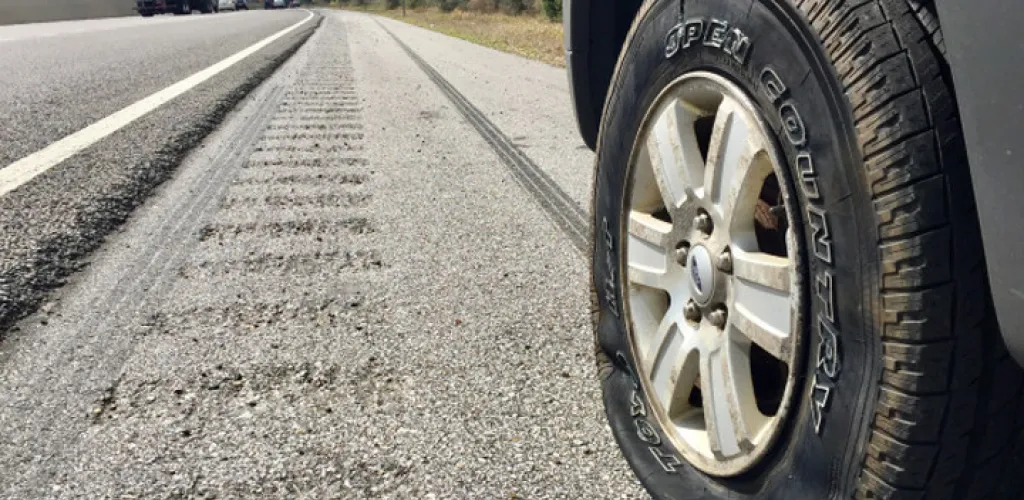
- Driving on a flat tire risks loss of control and longer braking.
- If some air remains, drive to a workshop with stops every 2 km.
- Fully flat tires require towing or using a spare; do not drive.
- Partial air loss allows up to 50 km at 50 km/h; otherwise stop.
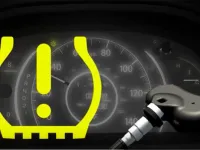
The situation is familiar to many drivers: you’re on the road and the tire pressure indicator light on the dashboard comes on. Your heart pounds and your eyes scan toward the roadside. The shoulder is narrow and doesn’t look like the safest spot. A road sign shows the next stop in 6 km.
What do you do? Do you keep going and risk damaging the tire even more? Or pull onto the shoulder and call for towing?
How far is too far?
Risks of driving on a flat
- Loss of control: The deflated tire reduces grip on the road
- Braking distance: It increases considerably, especially on wet pavement
- Stability: The car may pull to one side and become hard to control
- Suspension overload: The suspension system suffers due to the lack of damping
When it’s safe to drive cautiously
If it still has a bit of air or you can find a way to top up a tire that is slowly losing air, you might be safe to reach a workshop or a tire shop. If you choose to drive there, stop every 2 km to check the tire pressure. If it has completely gone flat, do not drive; call a tow service to take you further or install the spare tire.
What happens to the tire if you drive on a flat?
When you drive on a flat, the rim puts intense pressure on the tire, pinching it between the rim and the road. The effects are multiple and costly:
Tire structure damage
- Inner lining: Tears, making repair impossible
- Sidewalls: Irreversibly damaged due to friction with the asphalt
- Steel cords: Break in the tire’s structure, compromising its integrity
- Tread: Wears unevenly and can develop flat spots
Rim risks
On top of that there’s the possibility that the tire could come off the rim and severely damage the rim. Alloy rim repairs can cost hundreds of euros, and in some cases the rim must be replaced entirely.
Impact on the car’s systems
- Suspension system: Suffers from shocks transmitted directly
- Bearings: Are overloaded due to uneven weight distribution
- Steering system: May be affected if you drive on a flat for a long time
Safety rules for driving on a flat
Maximum recommended distance
- Fully flat: 0 km – stop immediately
- Partial air loss: Maximum 50 km at a speed of 50 km/h
- Slow leak: Check the tire pressure every 10–15 km
Driving speed
- Do not exceed 50 km/h
- Avoid sudden braking
- Take turns slowly and progressively
- Increase the distance to the vehicle in front
When to call for towing
Drive on a flat only to get out of danger, such as when you’re on a highway without a shoulder. In the following situations, call a tow immediately:
- The tire has completely lost air pressure
- You hear metallic noises from the wheel area
- The car vibrates strongly or pulls excessively to one side
- You don’t have a functional spare wheel
- You’re on a busy road
Remember that your safety and that of other road users is more important than the cost of a tow or a new tire.

Photo sources: istockphotos.com, carmudi.com.ph, brookfieldtowing.com