- Patch-plug is the proper repair and can hold air indefinitely.
- After repair, speed rating isn’t guaranteed; avoid very high speeds.
- Most shops cap repairs at three per tire; replace if exceeded.
- Replace instead of repair for sidewall/shoulder punctures, large holes, or damage.
Many drivers wonder whether it is safe to drive with a repaired tire and for how long. While a properly repaired tire can be as safe as a new one, there are important differences between repair types and the limitations you need to know for your safety on the road.
You got it! You repaired the punctured tire before it was damaged any further. The technician repaired it, mounted it, and now you’re back on the road. Then a thought disrupts your mind. How far can you drive with the tire like this? Is it safe to drive the car with a repaired tire?
Types of repairs for a punctured tire
There are three common ways to repair a tire:
- A patch over the hole made by the puncture on the inside of the tire
- A textile plug through the puncture hole
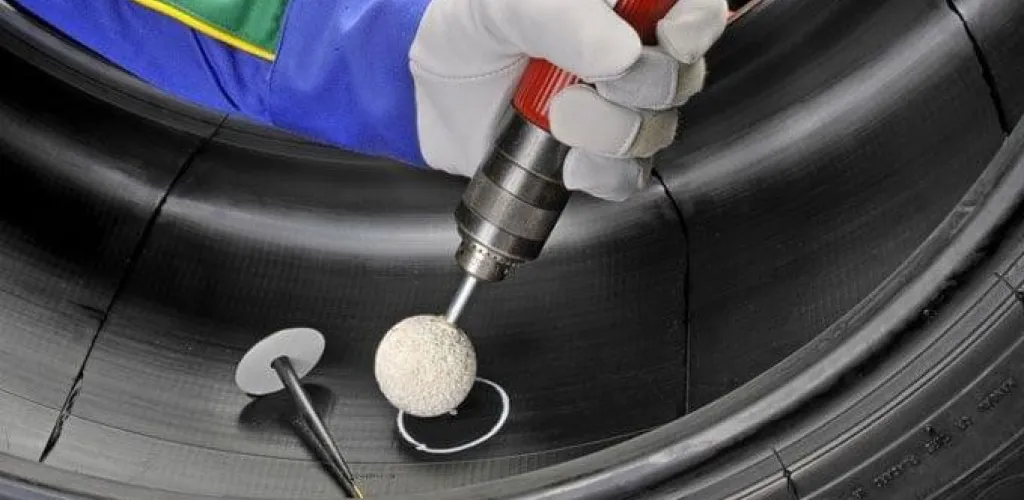
- A patch-plug combination that covers the puncture from the inside and seals it through it
The only proper repair is a patch-plug combination. A patch or an independent plug is a temporary repair and the tire should be repaired properly as soon as possible or replaced.
Why the patch-plug repair is important
The patch-plug repair is considered standard in the industry because:
- Seals the hole completely from both the inside and the exterior
- Maintains the tire’s structural integrity
- Prevents moisture and dirt ingress
- Provides long-term durability
How long can I drive on my patched tire?
A proper patch-plug repair results in a tire capable of holding air indefinitely, as long as you do not incur another puncture. It is safe to drive the vehicle as long as the tire remains sound.
Important limitations of repaired tires
The main consideration is that tire manufacturers no longer guarantee the speed rating on a repaired tire, so a strong car with a repaired tire is not likely a good idea for very high speeds.

This means that:
- If the tire originally had a speed rating of V (240 km/h), after repair it is no longer guaranteed for those extreme speeds
- For normal urban and extra-urban driving, the repaired tire remains safe
- It is recommended to avoid very high speeds and aggressive driving
How many repairs can a tire have
As a rule, most shops will not patch a tire more than three times. If the proper repair for one puncture overlaps with another repair or if the tire has already been repaired three times, you should replace the worn tire.
When should the tire be replaced instead of repaired
There are situations when a repair is not possible or not recommended:
- The puncture is on the sidewall or shoulder (only the tread belt can be repaired)
- The hole diameter is greater than 6 mm
- The tire has been driven on flat (internal damage)
- There are multiple punctures in the same area
- The tire has cracks or structural damage
Safety tips for repaired tires
- Regular checks: Check the pressure in repaired tires more often, ideally weekly
- Visual monitoring: Look for any signs of damage or deformation in the repaired area
- Speed limitations: Avoid extreme speeds and aggressive driving
- Tire rotation: Place the repaired tire on the rear axle for extra safety
A professionally repaired tire using the patch-plug method can last as long as a normal tire, provided you respect the speed limits and regular checks. The important thing is to choose a trusted auto service that uses quality materials and repair techniques.

Source: groupon.com, michelin.com.au