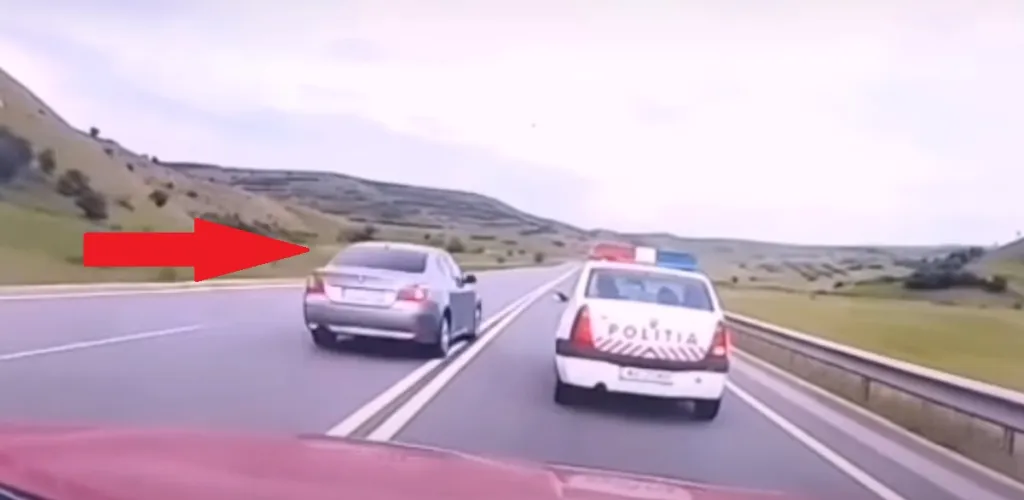
- Overtaking a police car under the limit is legal if safe and within speed limit.
- In many EU countries, police drive left; drivers overtake, with cameras deterring fines.
- Romania lags due to hesitation; some officers violate rules; prudence remains common.
Any Romanian driver has faced this awkward moment: you’re driving and in front of you there is a police car moving at 5-10 km/h below the legal speed limit. Although overtaking would be perfectly legal, many drivers hesitate to execute it, fearing possible consequences. But what does the law actually say, and how does it work in other European countries?
Current Situation in Romania
In Romanian traffic, the presence of a police vehicle traveling below the speed limit often creates lines of cars behind it. Most drivers prefer to stay safely behind the police car, even if it is moving at 80 km/h in a 90 km/h zone.
This hesitation comes from a fear, justified or not, of potential sanctions. Even when overtaking would occur within legal limits, many drivers feel uncomfortable and think twice before attempting the maneuver. Ironically, such situations seem to occur most often when we are in a rush.
It’s no secret that there are cases where police cars have flagrantly violated the Traffic Code. However, many police officers drive conscientiously and respect the regulations, which sometimes leads to situations where they travel below the maximum permitted speed.
How it works in EU countries
In stark contrast to Romania, in many Western countries the mindset is completely different. Police cars do not create queues behind them, and drivers do not hesitate to overtake when they have the opportunity.
Fundamental differences in approach
In these states, the police typically drive in the leftmost lane, while the rest of the vehicles pass with speed on the overtaking lanes, quickly letting the police car fall behind. This raises the natural question: why don’t drivers there fear fines?
Modernized surveillance system
The answer is simple and logical. In developed countries there are efficient camera systems that monitor traffic and automatically sanction drivers who break the rules. Thus, the police can focus on ensuring road safety and urgent interventions, not on issuing speeding tickets.
Even if a police car is equipped with radar, it is practically impossible to stop and fine dozens of drivers who sped past it. In the worst case, they might stop just one, but this is technically challenging — you cannot stop cars that are already in front of you and you cannot randomly select a vehicle from traffic.
What you need to know about legal overtaking
From a legal standpoint, overtaking a police car that is traveling below the speed limit is perfectly permitted, as long as:
- Overtaking is done within the maximum speed limit
- The conditions for a safe overtaking are met (good visibility, no continuous lane markings, permitted zone)
- No other provisions of the Traffic Code are violated
However, in the Romanian context, where mentality and traffic control systems differ from Western countries, prudence may be justified. It is possible that a driver is the only one attempting the overtaking, or that the police car is deliberately traveling at a reduced speed to identify potential violators.
Conclusion
Although you legally have the right to overtake a police car traveling under the speed limit, the reality in Romania makes many drivers view this maneuver with circumspection. Until the traffic-monitoring system is modernized and the mindset evolves toward European standards, each driver must decide for themselves whether the time saved justifies the risk.
In any case, obeying traffic laws and driving defensively remain the most important aspects of a safe trip, regardless of the vehicles in front of or behind you.
Photo source: promotor.ro