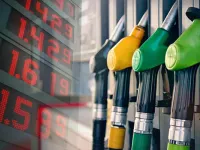
- Premium costs about 18–20% more than standard fuel.
- Higher octane (98–100 RON) prevents knocking in high-compression and turbo engines.
- If the manual says minimum or premium-only, don’t economize.
- Luxury and sports cars gain power with premium; others may not.
The price difference between standard fuel and premium can be significant — usually 18–20% higher for premium variants.
Many drivers wonder whether this extra investment is really worth it, especially when a mechanic recommends premium fuel. The answer largely depends on your engine’s technical characteristics and how it is designed to operate.
What Octane Rating Means and Why It Matters
The octane rating is the most important difference between standard and premium fuel. Standard gasoline typically has an octane rating of 93–95 RON, while premium variants sit between 98–100 RON.
The octane rating measures the fuel’s resistance to auto-ignition under pressure. The higher the number, the more resistant the fuel is to knocking at higher compression in the combustion chamber. Premature ignition — known as engine knock or detonation — can cause significant long-term damage to engine components, affecting pistons, connecting rods, and the cylinder head.
High-compression engines
If your engine has a compression ratio above 10:1, it is designed to run on higher-octane gasoline. Using standard gasoline can lead to knocking and reduced performance.
Powerful turbocharged engines
Sports and performance cars equipped with powerful turbochargers generate high pressures in the combustion chamber. They require premium fuel to run optimally and to prevent detonation.
Manufacturer specifications
If the car’s manual or the fuel cap clearly states “RON 98 minimum” or “Premium fuel only,” then that is a clear indicator you should not economize on fuel.

Luxury and sports cars
Premium and sports vehicles are optimized for high-octane fuel. Using premium allows the ECU to access more aggressive maps, delivering more power and torque.
When You Really Need Premium Fuel
- High-compression engines — If your engine has a compression ratio above 10:1, it is designed to run on higher-octane gasoline. Using standard gasoline can lead to knocking and reduced performance.
- Powerful turbocharged engines — Sports and performance cars with strong turbochargers generate high pressures in the combustion chamber. They require premium fuel to run optimally and to prevent detonation.
- Manufacturer specifications — If the manual or fuel cap says “RON 98 minimum” or “Premium fuel only,” this is a clear indicator not to economize.
- Luxury and sports cars — These vehicles are optimized for high-octane fuel, enabling more aggressive engine maps and greater power.
When You Don’t Need Premium Fuel
- If the manufacturer specifies that standard gasoline is acceptable
- For naturally aspirated engines with moderate compression ratio
- For cars with less than 300 hp (only from the internal combustion engine, without electric assistance)
- When the car’s manual says “recommended” rather than “required” for premium fuel
In these cases, using premium gasoline will not bring real benefits. The engine won’t be faster, fuel economy won’t drop dramatically, and performance will remain as is. It is a common misconception to think that simply using premium fuel will transform your car — the benefits appear only if the engine is designed to take advantage of them.
Modern Engine Protection Against Inadequate Fuel
Modern engines are equipped with knock sensors and advanced ECU systems that constantly monitor cylinder pressure. If you use fuel with a lower octane rating than optimal but still within an acceptable range, the ECU can auto-adjust:
- Retards ignition timing to prevent knocking
- Reduces turbocharger boost pressure
- Alters the air-fuel ratio
- Limits the maximum available power
These adjustments mean you’ll notice:

- Reduced performance (slower acceleration, lower top speed)
- Slightly higher fuel consumption
- Higher pollutant emissions
But engine safety will be maintained. Older cars lacking these protective technologies are more vulnerable to damage from inadequate fuel.
A Better Alternative: Fuel Additives
Rather than paying premium fuel when it isn’t needed, a more cost-efficient option is periodic use of high-quality fuel additives.
Benefits of additives:
- Cleans carbon deposits from combustion chambers, valves, and injectors
- Optimizes fuel burning
- Improves fuel economy
- Reduces pollutant emissions
- Protects the fuel injection system
- Prevents corrosion in the system
The periodic use of a quality additive costs significantly less than the price difference between standard and premium fuel. Plus, the benefits to engine cleanliness are more tangible.
How to use additives correctly:
- Choose products from reputable brands
- Follow the dosage recommended by the manufacturer
- Use them periodically, not constantly (usually every 3,000–5,000 km)
- Add the additive before refueling for optimal mixing
Special Situations and Practical Recommendations
For luxury and performance cars
If you drive a premium vehicle, higher-quality fuel helps highlight the car’s special characteristics. The investment pays off to enjoy the full technical potential.
For older cars
Older vehicles, lacking modern engine management systems, are more sensitive to fuel quality. If you have a classic or older car, using higher-octane fuel can prevent problems.
In mountainous areas
At high altitudes, where the air is thinner, the combustion chamber pressure is lower, reducing the risk of detonation. In these conditions, you can use fuel with a slightly lower octane rating.
When you’re not sure
If you have doubts about which fuel to use, consult the car’s manual or ask a trusted mechanic. Do not make decisions based on myths or technically unsupported advice.
Conclusion
Using premium fuel makes sense only when your engine is designed to benefit from it — i.e., for sports cars, luxury cars, or powerful turbocharged engines. For most ordinary vehicles, standard gasoline is perfectly adequate and does not justify the extra 18–20% cost.
Instead of consistently spending on premium fuel with no real benefits, invest in high-quality additives used periodically. These offer tangible benefits to engine health at a much lower cost.
Simple rule: if your car has more than 300 hp from the gasoline engine and the manufacturer strongly requires or recommends premium fuel, then use it. Below this limit, for normal naturally aspirated engines, standard gasoline is the sensible choice.