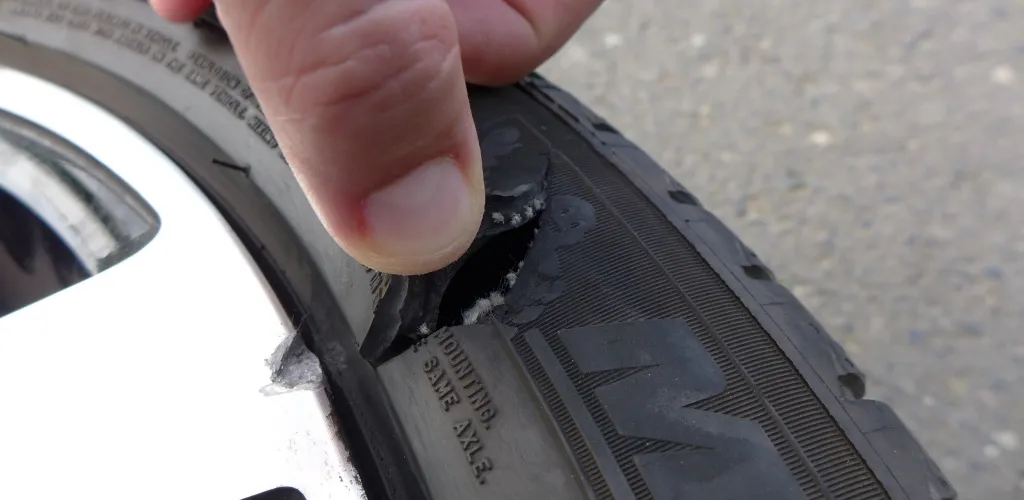
- Punctures mainly come from road hazards: nails, glass, curbs, potholes; drive defensively.
- Romanian road conditions increase flats; slow down and check tire pressure regularly.
- Do not drive long on a punctured or spare tire; repair locally.
- Aggressive driving increases wear and puncture risk from acceleration, braking, and cornering.
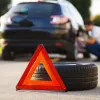
A flat tire can turn a routine day into a nightmare, especially when you’re in a hurry or have a busy schedule. Whether you’re on the way to work or on vacation with the family, an unexpected puncture can disrupt plans and put you in uncomfortable situations. Although many puncture causes cannot be controlled completely, there are preventive measures that can significantly reduce the risk of ending up with a deflated tire.
If a puncture does occur, avoid driving long distances on the spare tire or on a deflated tire, as this can cause additional damage to the vehicle. Seek immediate local tire repair. For example, if you’re passing through Brașov and discover you have a puncture, contact tire vulcanization in Brașov instead of risking driving to your destination in that state.
Main causes of tire punctures
Hazardous road obstacles
Many tire punctures result from contact with sharp objects found on the road surface. These include:
- Metal objects: nails, screws, metal shards, wires
- Broken glass: from bottles, headlights, or windows
- Infrastructure elements: curbs, tram tracks, railway rails
- Road surface defects: deep potholes, abrupt bumps
- Sharp stones or construction debris
To avoid these hazards, follow defensive driving principles and maintain a speed that allows you to react in time. When crossing tram tracks or rails, slow down to a minimum and try to cross perpendicular to the rail.
Poor road conditions in Romania
The road infrastructure in Romania poses significant challenges for drivers. Potholes, irregularities, and deteriorated surfaces not only affect ride comfort but can cause:
- Instant flats from the violent impact of the wheel with the edge of a pothole
- Damage to rims and tire deformation
- Uneven wear of the tread
- Suspension and steering system problems
To minimize risks on poor road surfaces:
- Significantly reduce speed when you encounter deteriorated sections
- Maintain a safe following distance to have time to observe obstacles
- Avoid potholes when possible, without endangering traffic
- Regularly check tire pressure, as underinflated tires are more vulnerable to impact
For example, if you are passing through Brașov and discover you have a puncture, contact tire vulcanization in Brașov instead of risking driving to your destination in that state.

Factors accelerating tire wear
Aggressive driving style
The way you drive directly affects tire life and the risk of a puncture. Behaviors that prematurely wear tires include:
-
Accelerations and abrupt braking
- Strong launches subject tires to high mechanical stress
- Violent braking generates excessive heat and uneven wear
- Increased temperature weakens the rubber structure
-
Cornering at excessively high speeds
- Extreme lateral forces can deform the tire
- Risk of deformation of the internal structure
- Accelerated wear on the shoulder of the tire
-
Ignoring technical limits
- Exceeding the speed and load indices specified by the manufacturer
- Driving on unsuitable surfaces (city tires off-road)
Dangerous parking maneuvers
Incorrect parking can cause instant damage to tires:
-
Rolling onto curbs
- Always pull in first gear at low revs
- Avoid very high curbs that can dislodge the tire from the rim
- Check the height and condition of the curb edge before maneuvering
-
Incorrect positioning
- Maintain a safe distance from sharp edges
- Avoid parking near construction materials or debris
- Check the parking area for dangerous objects
Efficient preventive measures
Proper maintenance
- Check tire pressure monthly: underinflated tires overheat and are vulnerable to punctures
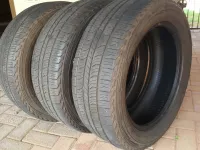
- Regular visual inspection: look for uneven wear, cracks, or embedded objects
- Tire rotation: perform rotation every 10,000 km for even wear
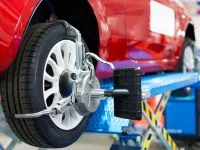
- Alignment and balancing: check these parameters annually
Choosing the right tires
Investing in higher-quality tires can prevent many punctures:
- Robust construction: premium tires have a stronger internal structure
- Advanced compounds: modern rubber formulations offer greater puncture resistance
- Tread design: profiles optimized for ejecting small objects
Defensive driving
- Adaptive speed to conditions: slow down in high-risk areas
- Hazard anticipation: continuous scanning of the road
- Avoiding dangerous zones: detour around construction sites and debris
Although many causes of punctures are unpredictable—such as nails on asphalt that are nearly invisible due to its color—applying these preventive measures can significantly reduce the likelihood of ending up with a deflated tire. Investing in higher-quality tires and adopting a prudent driving style is the best safeguard against unexpected flats.