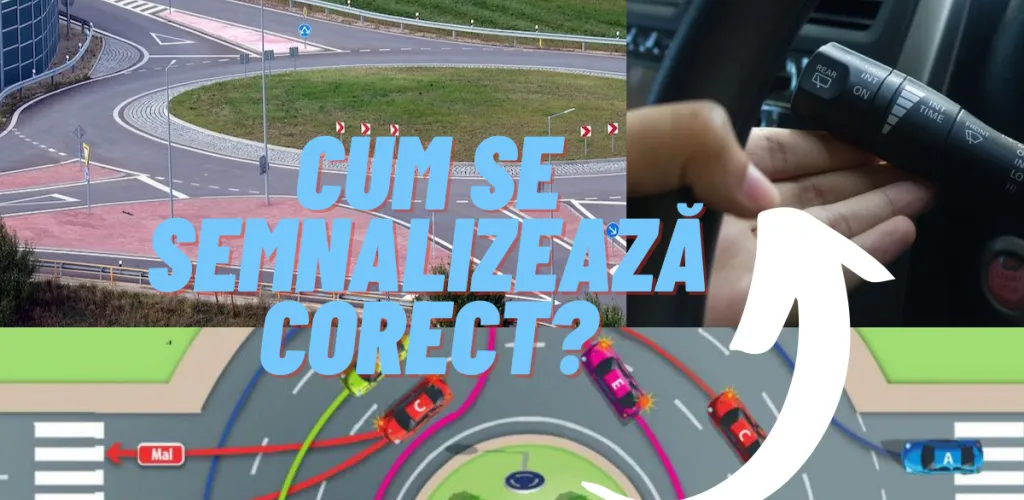
- Romania has no roundabout-specific signaling rules; signal only when exiting.
- Outer lane: exit first; signal early, stay at edge.
- Inner lane: continue straight; signal only at exit; third exit needs left at entry, exit.
- Experts advise signaling more to improve communication and safety.
Roundabouts in Romania remain a constant source of confusion for many drivers, fueling heated online debates and numerous road accidents. Unfortunately, the lack of clear regulation and the fact that even police officers are not always sure how to resolve road incidents at these intersections create an atmosphere of uncertainty. There is even talk of changing the definition of roundabouts at the parliamentary level, which demonstrates the complexity of the issue.
Most accidents at roundabouts are caused by either ignorance of the basic rules or ignoring road signs and road markings. To understand better how to drive safely, let’s examine the current rules and recommended practices.
Current signaling legislation
In Romania there are no special regulations for signaling at roundabouts. Legally, the driver is required to signal only when exiting the roundabout, when changing direction. This is the only clearly defined obligation provided by law.
However, from a road safety perspective, this minimalist approach is not sufficient. Practice shows that more detailed signaling significantly contributes to traffic flow and reduces the risk of accidents.
Unwritten rules recommended
For traffic on the outer lane
- Exit at the first road on the right: Signal your intent to exit in good time, stay on the edge of the road and leave the roundabout at the first opportunity
- Continue on the main road: Do not signal at entry, only at exit to indicate the change of direction
For traffic on the inner lane
- Continue ahead: Do not signal at entry to the roundabout, only at exit to indicate your intention to leave the roundabout
- Complete or partial rotation: Signal left at entry if you will exit starting with the third exit, then signal again at the actual exit
The importance of respecting markings and indicators
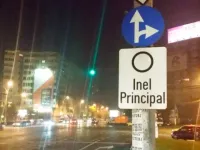
Roundabouts are classified as controlled intersections, which means that drivers are legally obliged to respect:
- Road signs - provide information about permitted directions
- Road markings - delineate lanes and indicate recommended routes
- Traffic light signaling - where present
- The instructions of the traffic controller - when present
Disregarding these elements is one of the main causes of roundabout accidents, some with tragic consequences.
The role of the roundabout in traffic
Roundabouts were designed to achieve two main objectives:

- Traffic flow - elimination of dead times from traffic lights
- Reduction of congestion - maintaining a steady flow of vehicles
Unfortunately, common driver mistakes often turn these intersections into bottlenecks, counteracting the purpose for which they were created.
Recommendations for safe driving
In the current context of incomplete legislation, experts recommend applying the principle “better more than less” when signaling. This preventive approach offers several benefits:
- Clear communication - other road users understand your intentions
- Improved flow - reducing hesitation and bottlenecks
- Increased safety - reducing the risk of collisions
Practical tips for drivers
- Study the roundabout configuration before entering — observe the number of lanes and indicated directions
- Respect the markings — do not change lanes inside the roundabout if markings prohibit it
- Anticipate movements — watch indicators of other vehicles to adapt your behavior
- Maintain a safe following distance — at roundabouts is essential due to frequent maneuvers
In conclusion, until Romanian road law clarifies roundabouts, adhering to unwritten rules and basic defensive driving principles remain the best tools for safe and efficient circulation.