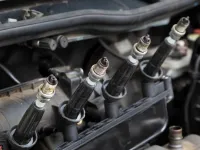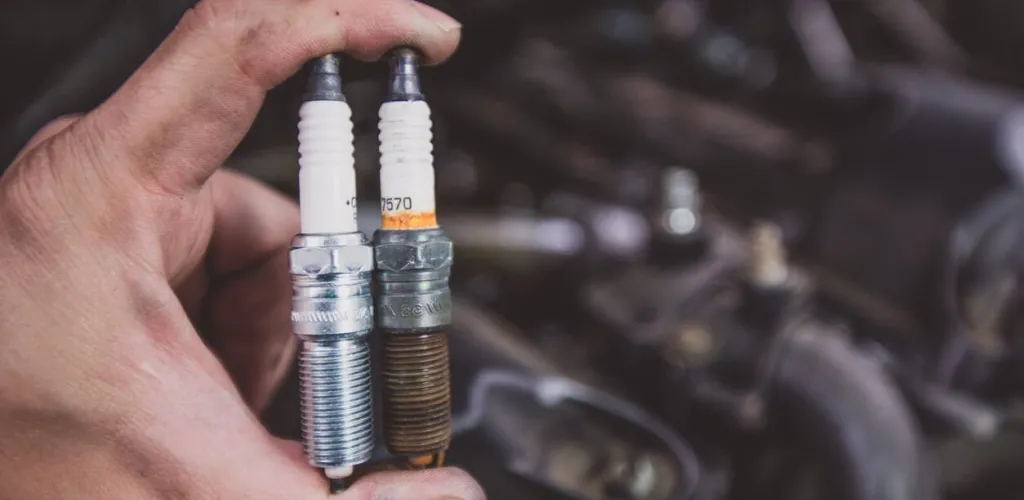
- Spark plugs must match the engine’s specific parameters for optimal ignition.
- Wrong plugs can cause failure to start or significantly reduced performance.
- Incompatible dimensions include wrong thread size, length, or wrench size.
- Issues include threads not engaging, loose plugs, or dropping into the cylinder.
Maintaining a vehicle properly is the responsibility of every driver, and the longevity of the engine depends directly on the quality of maintenance work. A crucial aspect, though often neglected, is the correct selection and maintenance of spark plugs.
You probably haven’t thought much about these small components hidden in the engine, unseen in daily activity. Yet their importance is enormous. When a spark plug no longer functions properly, the air–fuel mixture does not ignite within optimal parameters, and the consequences are immediate - the engine either refuses to start or runs at significantly reduced performance.
The essential role of spark plugs in engine operation
Any gasoline internal combustion engine needs spark plugs to transform the chemical energy of the fuel into mechanical energy. It is imperative to identify and install the correct plugs so the engine can run at optimal parameters and develop maximum power.
Spark plugs are connected to the ignition system by high‑tension cables and are mounted either side‑mounted or on top of the cylinder head, depending on the configuration. To better understand what a spark plug does, think of it as the trigger that starts the combustion process - similar to a match that lights the fire.
How it works
- Turning the key in the ignition or pressing the start button activates the starter
- An electric voltage of about 12V comes from the battery to the ignition coil
- The ignition coil converts this voltage into 15,000-40,000V
- The high voltage is distributed to the spark plugs via the ignition cables
- The plugs generate the spark that ignites the compressed air–fuel mixture in the cylinders
- The combustion of the mixture creates a rapid expansion of gases that push the piston
- The piston movement is converted to rotation by the connecting rod and crankshaft
- The process repeats continuously, ensuring engine operation
Clear signs that you have installed the wrong spark plugs
There is a persistent myth that some spark plugs are universally applicable to most brands and models. The reality is completely different - every engine requires specific plugs with precise parameters. The following signs can warn you that you’ve made a wrong choice:
Incompatible dimensions and mounting issues
The most evident indicator is physical incompatibility. If the spark plugs do not have the correct thread (M12, M14 or M18), the correct thread length, or the proper wrench size, immediate problems will appear:
- The thread won’t engage properly - the plug either won’t enter the bore or tightens too easily
- Incorrect plug length - if too short, the spark may not ignite the mixture efficiently; if too long, it can strike the piston and cause severe damage
- Spark plugs loosen during operation - engine vibrations can gradually loosen a wrongly mounted plug
- Risk of dropping into the cylinder - a loose spark plug can fall completely into the combustion chamber, causing catastrophic engine damage
If a spark plug detaches during operation, you will hear a distinct metallic clank followed by a sudden engine stop. In these critical situations, the vehicle becomes inoperable and requires emergency technical assistance.
Reduced engine performance
One of the first indicators of improper spark plugs is sluggish acceleration. If you press the accelerator and the engine response is slow or hesitant, the plugs could be the cause. Other problematic manifestations:
Misfiring - when the spark does not occur at the correct moment or with the necessary intensity, the fuel does not burn completely in the corresponding cylinder. You will feel jerks of the engine and a distinct “puff” or popping sound at the exhaust.
Difficult starts - the engine cranks longer before starting or starts with difficulty, especially in the morning or after long stops. It may require several attempts to reach idle.
Unplanned stalling - the engine can stall suddenly while idling or in traffic, posing a safety risk to the driver.

Excessive vibrations - when one or more cylinders do not operate properly due to the wrong plugs, the engine develops abnormal vibrations that transmit through the vehicle.
Increased fuel consumption - incomplete burning means some fuel is wasted, resulting in 15-30% higher consumption.
Black soot in the exhaust - incomplete combustion produces soot that is emitted through the exhaust pipe, indicating faulty combustion.
Incorrect thermal characteristics
Each spark plug has a specific thermal value, marked on the ceramic body. The thermal value indicates the plug’s ability to dissipate heat from the combustion chamber. A wrong choice can have serious consequences:
Too cold plugs (too high thermal rating) - they do not reach the optimal operating temperature and become covered with carbon deposits. Result: hard starts, higher consumption, rough idle.
Too hot plugs (too low thermal rating) - they overheat and can cause pre-ignition (hot spots). Symptoms: engine knocking, power loss, risk of electrode melting and piston damage.
Ignition and combustion problems
When the correct spark plugs are installed, the vehicle burns fuel with efficiency close to 90% or more. With incorrect or faulty plugs, efficiency drops dramatically, and the engine may refuse to start altogether.
Repeated unsuccessful starting attempts can lead to engine flooding – fuel accumulates in the cylinders without igniting, soaking the plugs and making starting even harder. In these cases, let the engine sit for a few minutes to evaporate the excess fuel.
How to identify and choose the correct spark plugs
Choosing the right spark plugs requires attention to several crucial technical parameters:
Consult official sources
Owner’s manual - The vehicle manufacturer specifies exactly the type of spark plugs required, including:
- Original part number
- Electrode gap (spark gap) – typically between 0.6-1.1 mm
- Recommended temperature rating
- Electrode type (copper, platinum, iridium)
- Recommended replacement interval
Engine bay label - many vehicles carry a label under the hood specifying the exact plug type.
Use specialized resources
Most auto parts suppliers offer online catalogs or in-store resources where you can identify the right spark plugs by entering:
- The exact make and model of the vehicle
- Year of manufacture
- Engine code (e.g. 1.6 TDI CAYC)
- Engine power in HP or kW
- Fuel type and fuel system
- Vehicle VIN for precise identification
Understand spark plug coding
Each spark plug manufacturer (NGK, Denso, Bosch, Champion) uses its own coding system. For example, at NGK:
- The first letter indicates thread size (B=14mm, C=10mm)
- The second letter indicates the heat range (lower letter = hotter temperature)
- The next characters indicate thread length, electrode type, etc.
Example: NGK BKR6E – B(14mm), K(copper), R(resistor), 6(medium heat range), E(gap 19mm)
Check physical compatibility
Before installation, verify:
- Center electrode condition - should not be worn, melted, or covered in deposits
- Side electrode - should be straight and at the correct gap
- Thread - clean, undamaged, no signs of cross-threading
- Ceramic insulator - free of cracks or chips
- Electrode gap - check with a gauge and adjust only if necessary
Types of spark plugs and their characteristics
Copper electrode plugs
The simplest and cheapest, with a lifespan of about 20,000-30,000 km. The electrodes wear faster, but they conduct electricity well. Recommended for older engines or standard performance.
Platinum electrode plugs
Offer greater durability (60,000-80,000 km) due to superior corrosion resistance of platinum. Higher cost, but replacement interval is roughly double that of copper plugs.
Iridium electrode plugs
Top of the line, with a lifespan of 100,000-120,000 km. Iridium has the highest melting point (2,450°C) and allows for much thinner electrodes, resulting in a stronger spark and more efficient burning. They are mandatory for modern direct-injected engines and turbochargers.
Multi‑electrode side electrodes
Have 2-4 side electrodes that extend life and ensure ignition even if one electrode wears. Recommended for high‑demand engines or vehicles covering long distances.
Lifespan and replacement intervals
The lifespan of spark plugs varies significantly depending on several factors:
Factors influencing longevity
Plug type:
- Copper: 20,000-30,000 km
- Platinum: 60,000-80,000 km
- Iridium: 100,000-120,000 km
- Double Iridium/Platinum: up to 160,000 km
Operating conditions:
- Urban short trips wear plugs faster than highway driving
- Heavy traffic with frequent starts/stops reduces lifespan
- Towing or sporty driving places more demand on plugs
Fuel quality:
- Poor-quality gasoline leaves more deposits
- Fuel additives can affect electrodes
- Water in the fuel causes corrosion
Engine condition:
- Oil consumption coats plugs with deposits
- Worn piston rings allow oil into the combustion chamber
- Leaking valves leave unburned fuel on the plugs
Clear signs that spark plugs need replacement
During startup:
- The engine cranks longer before starting
- Needs pedal depression to start
- Inconsistent starts – sometimes on the first try, others after multiple attempts
While running:
- Irregular or fluctuating idle (rpm between 600-900)
- Abnormal vibrations felt in the steering wheel or body
- Noticeable loss of power when accelerating
- Hesitations or “gaps” in power delivery
- Increased fuel consumption by 15-30% over normal
In the exhaust:
- Thick black smoke on acceleration
- Strong gasoline smell that isn’t burnt
- Abnormal noises (humming or popping)
Visual inspection:
- Worn electrodes with rounded edges
- Excessive electrode gap (usually over 1.3 mm)
- Black and oily carbon deposits
- White-gray insulator color (overheating)
- Melted or deformed electrodes
Severe consequences of using the wrong spark plugs
Even if you manage to force-fit incorrect plugs, short- and long-term consequences can be devastating for the engine:
Immediate mechanical damage
Piston damage - a spark plug that is too long can contact the piston at top dead center, causing:
- Piston crown breakage
- Permanent piston deformation
- Need to replace the piston–connecting rod–cylinder assembly
- Repair costs from €2,000-€5,000
Thread damage - installing a plug with the wrong thread can:
- Completely ruin the head’s thread
- Require repair with helicoil inserts (€500-€800 per plug)
- In severe cases, require cylinder head replacement (€3,000-€8,000)
Loss of compression - an incorrectly installed plug allows gas leaks:
- Power reduced by up to 25% on the affected cylinder
- Additional load on other cylinders
- Burning hot gases on the damaged thread
Performance and reliability problems
Chronic hard starting - the engine becomes harder to start, especially:
- In the morning when cold
- After long stops
- In high humidity conditions
Constant misfiring - one or more cylinders do not run correctly:
- Excessive vibrations that damage engine mounts
- Uneven wear of engine components
- Risk of catalytic converter damage due to unburned fuel
Severe power loss - the engine no longer reaches nominal parameters:
- Inability to overtake or climb grades
- Reduced top speed by 20-40 km/h
- Doubling of acceleration times
Increased fuel consumption and pollution
Excessive fuel consumption - incomplete burning leads to:
- 20-40% higher gasoline consumption
- Extra costs of hundreds of euros per year
- Unburned gasoline reaching the exhaust system
Higher pollutant emissions - the vehicle no longer meets environmental norms:
- Failure of the vehicle inspection due to excessive emissions
- Fines for pollution in restricted zones
- Major contribution to air pollution
Catalytic converter damage - the most expensive long-term effect:
- Unburned fuel reaches the catalytic converter
- It can ignite inside the converter, reaching extreme temperatures (over 1,000°C)
- Ceramic substrate can melt and clog
- Replacing the catalytic converter costs €1,500-€4,000
- Loss of the catalytic converter means automatic failure at the vehicle inspection
Fuel system wear
Injectors clog - unburned fuel and carbon deposits:
- Block fine injector orifices
- Ultrasonic cleaning required (€300-€500)
- In severe cases, injector replacement (€150-€300 per injector)
Fuel pump overload - misfiring engine operation:
- Adds load on the pump
- Reduces pump life by up to 50%
- Pump replacement costs €400-€1,200
Accelerated engine wear
In the long term, using incorrect spark plugs accelerates overall wear:
- Incomplete combustion produces more residues
- Residues deposit on valves, cylinder walls, and rings
- Engine oil becomes contaminated with soot more quickly
- Oil change intervals should be shortened
- Engine life may drop by 30-50%
Essential recommendations for spark plug maintenance
At purchase and installation
- Buy only spark plugs recommended by the manufacturer - avoid experiments with unauthorized “equivalents”
- Double-check the part code before purchasing
- Always buy a complete set - don’t replace only the defective plugs
- Keep the receipt and packaging in case defective products need returning
- Visually inspect the plugs before installation - look for cracks, chips, or deformed electrodes
During installation
- Clean the area around the plugs before removing them to prevent contamination
- Use a torque wrench - over-tightening damages the thread and the insulator
- M14 plugs: 20-30 Nm
- M12 plugs: 15-20 Nm
- M10 plugs: 10-15 Nm
- Check the electrode gap with a proper gauge - adjust only the side electrode
- Apply a minimal amount of anti-seize spray on the threads (not on the electrodes!)
- Tighten by hand until you feel the gasket seat, then use the wrench
- Never force a plug that doesn’t go in easily - verify you have the correct model
During periodic maintenance
- Follow service intervals – do not delay replacing worn plugs
- Visually inspect plugs at every oil change
- Check wiring and ignition coils - degraded components affect plugs
- Monitor the symptoms above - intervene promptly at the first signs
- Keep a replacement log - note mileage and plug type installed
When to call a specialist
- You lack mechanical experience - incorrect installation can have serious consequences
- Engine configuration is complex - V6, V8, or boxer layouts require special tools
- Plugs are hard to access - many modern engines require removing manifolds, hoses, etc.
- Problems arise after replacement - misfires, difficult starts may indicate other issues
- Doubts about the correct type - professional diagnosis prevents costly mistakes
Frequently asked questions about spark plugs
Can I use more expensive spark plugs than those recommended?
Yes, but with important caveats. Switching from copper to iridium plugs is usually beneficial – you’ll gain longer life and slightly improved efficiency. However, you must respect all other parameters: heat rating, dimensions, and electrode gap. Not all engines benefit significantly from premium plugs.
How often should spark plugs be checked?
Visual inspection is recommended every 20,000 km or once a year. Checks include:
- Removing and inspecting electrode wear
- Cleaning light carbon deposits with a wire brush
- Checking and adjusting electrode gap
- Reinstalling with the correct torque
However, on modern engines with long-life iridium plugs, intervention may not be necessary until the replacement interval.
Can worn spark plugs be cleaned and reused?
It depends on the wear level. If electrodes are only lightly coated with carbon deposits and not significantly worn, cleaning with a wire brush and adjusting the gap can extend life by 10,000-20,000 km. If electrodes are rounded, worn, or the gap exceeds about 1.5 mm, replacement is mandatory.
Why should all spark plugs be replaced at the same time?
Even if only one or two plugs appear defective, replacing the entire set ensures:
- Uniform performance across all cylinders
- Balanced combustion and minimal vibrations
- Lower long-term costs (labor savings)
- Confidence that all plugs share similar wear and remaining life
Modern engines are highly sensitive to cylinder imbalances - one old spark plug on a cylinder and new ones on others can cause vibrations and drivability issues.
Conclusion
Although small and seemingly insignificant, spark plugs play a vital role in the operation of a gasoline engine. Without a proper spark at the right moment, your engine is little more than a heavy piece of metal.
Wrong spark plug choices or neglecting timely replacement can lead to cascading consequences - from simple inconveniences like hard starts and higher consumption to catastrophic engine damage that costs thousands in repairs.
Investing in the right plugs, of good quality, and replacing them according to the recommended intervals is one of the simplest and most cost‑effective maintenance measures you can take. The cost of a premium set of plugs (€20-€60 per plug, roughly €100-€300 for a full set) is negligible compared with the potential damages (€2,000-€10,000) they can prevent.
If you notice any of the described symptoms - hard starts, increased consumption, misfires, or vibrations - don’t delay checking and replacing the spark plugs. A simple 30-60 minute service can prevent major problems and protect your engine. Follow the manufacturer’s recommendations, use quality parts, and your engine will reward you with consistent performance and long-term reliability.