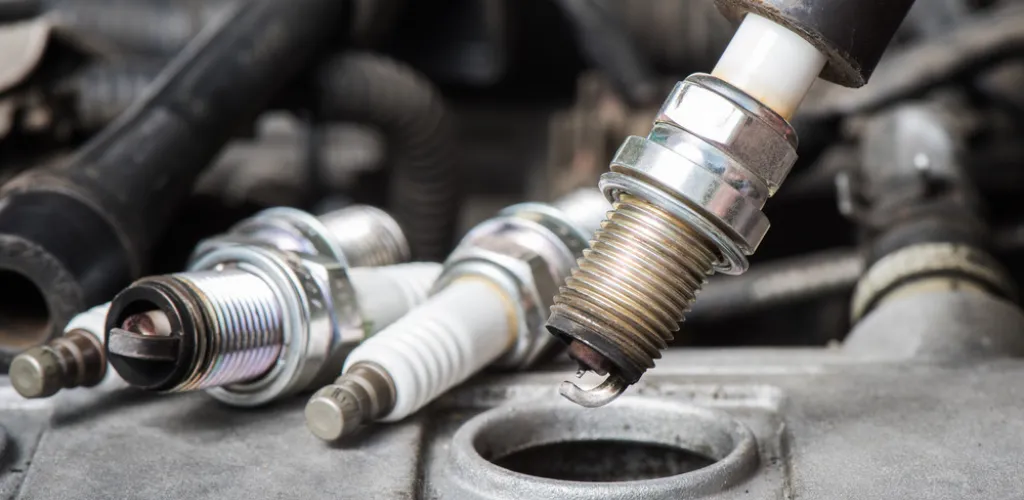
- Spark plugs indicate engine health; dirty or damaged plugs cause misfires and fuel loss.
- Healthy plugs show brown/gray deposits, signaling optimal combustion and correct air/fuel mix.
- Common conditions include carbonized, oil-fouled, fuel-fouled, and burnt plugs with causes.
- Spark plug inspection is an accessible preventive diagnostic to detect multiple engine issues.
Spark plugs are the heart of the combustion process in any internal combustion engine, from cars and lawn tractors to ATVs and boats. These seemingly simple components are, in fact, small technical marvels that capture high-voltage electricity at one end and generate a precise spark at the other.
The spark produced by the spark plug ignites the air/fuel mixture in the combustion chamber, creating the controlled explosion that generates the power needed for the engine to run. Without functional spark plugs, the engine simply cannot start. For this reason, the condition of the spark plugs provides extremely valuable information about the overall health of the engine.
When the spark plugs are dirty, worn, or damaged, the effects are felt immediately: increased fuel consumption, slow acceleration, engine misfires, and difficulty starting the engine. Therefore, regular examination of the spark plugs can prevent costly problems and provide valuable diagnostics.
Checking engine performance through spark plug analysis
Inspecting spark plugs is one of the most accessible and effective methods to assess the engine’s condition. This check can be done as part of preventive maintenance or when you suspect something isn’t working properly with the engine.
By simply analyzing the appearance of a spark plug, an experienced mechanic can identify issues such as:
- Incorrect air/fuel mixture
- Lubrication system problems
- [engine overheating]
- Internal component wear
- [air filter]

- Oil deposits
Spark plug in normal condition A healthy spark plug shows brown or gray deposits on the side electrode. This indicates optimal combustion and a correct air/fuel mixture. If the plug looks like this, it can be reinstalled without issues.
Carbonized spark plug Black, dry soot on the electrodes and on the tip of the insulator signals a carbonized spark plug. Primary causes include:

- [air filter] -> [air filter]
- Air/fuel mixture too rich
- Vehicle unused for a long period
- Injection system problems
Oil deposits When the electrode is black and shows oily deposits, and the tip of the insulator is also coated with oil, it indicates a serious sealing issue. The oil can enter the cylinders through:
- Worn piston rings
- Damaged valve guides
- Defective head gaskets
- Crankcase ventilation system problems
Identifying and addressing the source of the leak is crucial before replacing the spark plug.
Fuel-fouled spark plug A fuel-fouled spark plug typically results from flooding the engine. This happens when:
- Trying to start the engine multiple times without success
- Cold-start system doesn’t function correctly
- Temperature sensor problem
The spark plugs can be dry or left to dry naturally before another start attempt.
Burnt spark plug Blisters on the insulator tip, melted electrodes, or white deposits are clear signs of a spark plug operating at too high temperatures. Possible causes:
- Engine overheating
- Incorrect heat range
- Spark plug with inadequate electrical resistance
- Incorrect ignition timing advance
- Air/fuel mixture too lean
When should the spark plug be replaced permanently
Signs of irreversible wear
Worn and eroded electrodes When the electrodes show advanced wear and erosion, the spark plug has surpassed its useful life. The gap between the electrodes becomes too wide, affecting spark quality and thus combustion.
Mechanically damaged electrodes Broken, bent, or flattened electrodes typically indicate:
- Installing spark plugs with incorrect thread length
- Contact with the piston due to a plug that is too long
- Internal mechanical problems of the engine
A spark plug that is too long can cause major engine damage, just as one that is too short may not provide optimal ignition.
Replacement intervals
Dependent on the type of spark plug and operating conditions:
- Standard spark plugs: 15,000-30,000 km
- Platinum-electrode spark plugs: 60,000-100,000 km
- Iridium-electrode spark plugs: 80,000-120,000 km
Choosing replacement spark plugs
When replacing worn spark plugs, consult the vehicle manual for exact specifications:
- Correct heat range
- Thread length
- Electrode type
- Electrical resistance
Your mechanic may recommend stepping up to higher-performance spark plugs, which offer:
- Increased durability
- More efficient ignition
- Better resistance to deposits
- Improved performance at extreme temperatures
Regular spark plug inspection not only prevents costly problems but also provides a valuable window into the engine’s overall health. By understanding the signs spark plugs leave, vehicle owners can identify issues early and take necessary steps to maintain optimum engine performance.