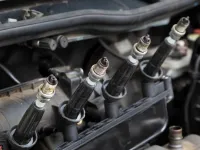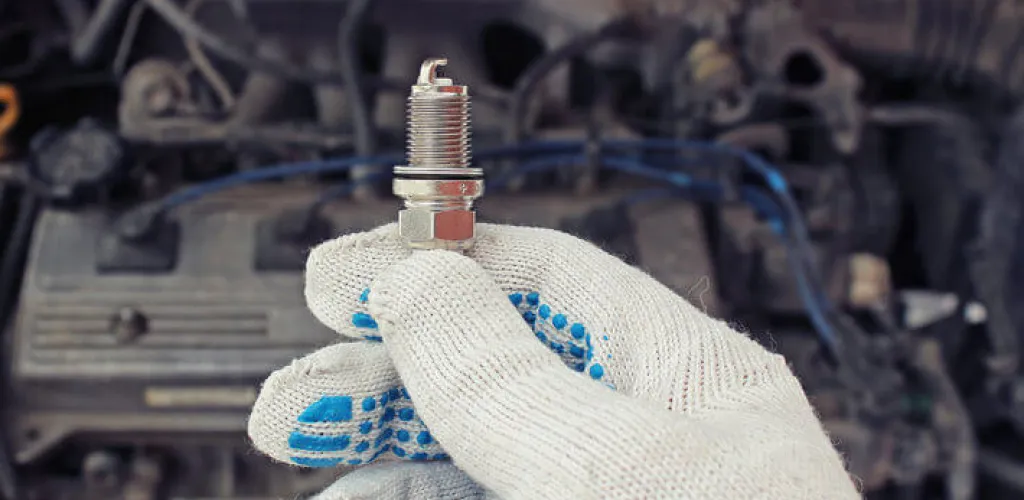
- Spark plugs wear over time; normal life is about 20,000 km.
- Wear rate is about 0.10-0.15 mm per 10,000 km.
- Misfires occur when electrodes wear, gaps widen, or carbon builds up.
- Iridium extends life; it’s the hardest metal with the highest melting point.
Spark plugs are essential components of the ignition system, playing a crucial role in the engine’s smooth operation. When these parts do not function perfectly, a range of symptoms and even serious engine issues can occur. Unfortunately, spark plugs wear over time and require periodic replacement. Understanding spark plug lifespan and the causes of wear is essential for maintaining the performance of modern engines.
Central electrode wear — the main cause of degradation
Factors influencing electrode wear
- Melting point of the electrode material
- Resistance to corrosion and heat
- Hardness of the material used
- Thermal conductivity for heat dissipation
Modern electrode materials
To reduce wear, manufacturers use special alloys:
- Nickel – provides good corrosion resistance
- Platinum – noble material with superior durability
- Iridium – the hardest metal with the highest melting point
These alloys substantially extend the electrode’s life, allowing it to withstand the extreme conditions in the combustion chamber.
Wear rate under normal conditions
Wear varies depending on engine type and usage, but for standard spark plugs, the average wear rate is about 0.10-0.15 mm per 10,000 km. This wear may seem insignificant, but even small differences in the electrode gap distance can dramatically affect engine performance.
Important note: Driving with spark plugs having worn electrodes can damage the ignition coil. Replacing spark plugs on time helps prevent additional repair costs.
Why misfires occur?
Engine misfires happen when one or more cylinders do not receive the spark needed to ignite the air-fuel mixture. The main causes include:
- Defective ignition coil
- Worn or dirty spark plug
- Electrode gap too large
- Carbon deposits on the electrodes
Misfire mechanism
When the air-fuel mixture does not burn, the primary cause is a lack of spark from the electrodes. This phenomenon occurs when the voltage generated by the ignition coil becomes smaller than the voltage required for the spark plug to produce a strong spark.
As the electrode gap grows due to wear, a higher voltage is required for the spark to jump between the electrodes. When this voltage exceeds the coil’s capability, misfires occur.
Optimal timing for spark plug replacement
Signs that spark plugs need replacement
Electrode wear gradually increases the gap between them. When this gap exceeds the manufacturer’s specified limits, spark plug performance drops dramatically:
- Engine power noticeably decreases
- Fuel consumption increases
- Emissions rise
- The engine may experience vibration
- The engine may have difficult starts
Practical lifespan
A spark plug’s lifespan can be defined as the number of kilometers driven before the plug starts to misfire. In practice, it is recommended to replace spark plugs every 20,000 km for normal plugs, before they deteriorate completely.
Risks of delaying replacement
In addition to the listed symptoms, worn spark plugs can also damage the car’s catalytic converter. The cost of repairing the catalytic converter can be many times higher than the cost of a new set of spark plugs, making preventive replacement a smart investment.

Lifespan of iridium spark plugs
Types of iridium spark plugs
There are two main categories:
Iridium spark plugs with standard lifespan
These plugs have roughly the same lifespan as a regular plug — about 20,000 km. They can be identified by codes starting with the letter “I”:
- IXU22C
- IXUH22
- IK20
- IQ20
- IW20
- ITV20
- IKH20
Long-life iridium spark plugs
These premium plugs can run up to 100,000 km, representing a long-term investment. They are identified by codes starting with the letters “S”, “Z”, “F”, “D”, and “V”:
- VXU22
- VXUH22
- FK20HR11
- SXU20HPR9
- ZXU20HCR8
- DK20PR-D13
Advantages of iridium spark plugs
- Superior durability – lasts longer against wear
- Consistent performance – maintains optimal parameters longer
- Fuel efficiency – more efficient ignition of the mixture
- Emissions reduction – more complete combustion
- Long-term savings – though they have a higher upfront cost, cost per kilometer is lower
Choosing the right type
For high-mileage vehicles or heavy use, long-life iridium plugs are the best option. For cars with regular maintenance and moderate mileage, standard plugs can be sufficient, provided replacement intervals are respected.