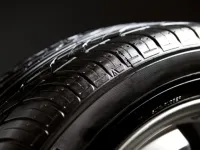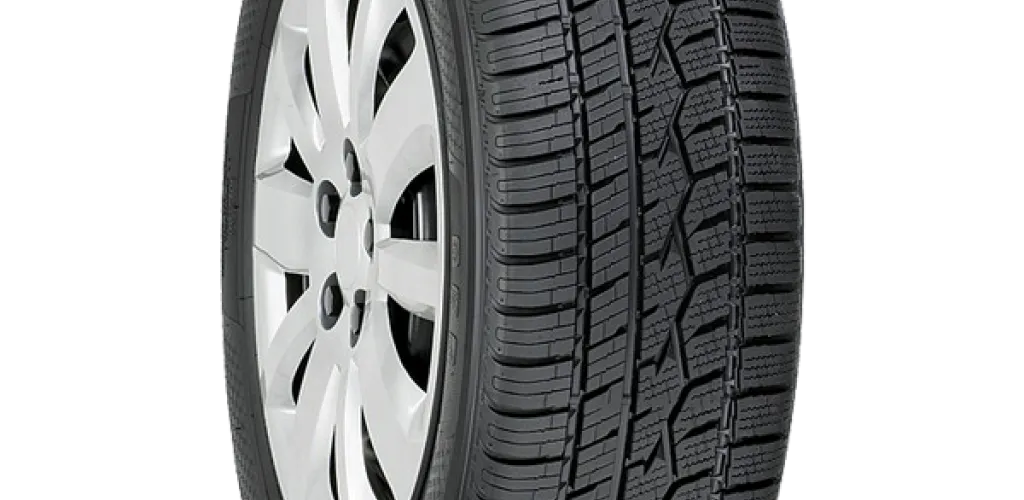
- Decoding tire markings helps pick safe, compatible tires (size, load, speed, date).
- Choose tires based on vehicle specs and compatible wheel size.
- Performance factors define quality: noise, wet grip, rolling resistance.
- Premium to budget tiers; choose by climate: summer, winter, all-season.
Choosing a set of tires for a passenger car may seem straightforward at first glance, but the reality is much more complex. This decision involves multiple considerations: road safety, the variety of tire types available, and the financial investment, which can vary considerably based on the driver’s needs and preferences.
Before focusing on slick and semi-slick tires, it’s essential to understand the information printed on the tire’s outer surface and the selection criteria for a product that suits your vehicle.
Decoding the information on the tire

1. Tire size - expressed in standard format (e.g., 205/55R16)
2. Load index - maximum load capacity
3. Speed rating - maximum safe speed
4. Tire model - commercial designation by the manufacturer
5. Information about component materials - internal structure of the tire

6. ECE approval - compliance with European safety standards
7. “Outside” indicator - the side that must be mounted outward
8. Maximum permissible pressure - limit for safe operation
9. Country of manufacture - location where the tire was produced
10. Manufacturer - brand responsible for the product
11. Wear indicators - marks showing when the tire needs replacement
12. DOT code - manufacturing date (e.g., DOT 2515 means week 25 of 2015)
Key factors in tire selection

Buying a set of tires is a significant investment that rests on the following key factors:
Type and vehicle specifications
Automotive manufacturers select tire specifications for each model to offer an optimal compromise for most drivers. When replacing, it is crucial to respect the wheel dimensions and choose tires compatible with the vehicle’s technical characteristics.
Standardized performance
Three main categories define a tire’s quality:
- Noise class - impact on driving comfort due to noise
- Wet grip - braking performance on wet surfaces
- Rolling resistance - influence on fuel economy
Price and quality segmentation
The tire market is divided into three distinct segments:
Premium: Michelin, Dunlop, Pirelli, Goodyear, Nokian, Continental - tires with advanced technologies and superior performance
Mid-range: Toyo, Firestone, Kumho, BF Goodrich, Hankook, Vredestein, Semperit, Nexen, Falken, Kleber, Fulda, Sava, General Tire, Barum - balanced price-quality ratio
Budget: Tigar and Taurus (Michelin), Debica (Goodyear), Kingstar (Hankook), Viking (Continental) - affordable options with proven technologies
Adapting to climatic conditions
Selection should consider:
- Summer tires - optimized for high temperatures
- Winter tires - special compound for low temperatures
- All-season - compromise for year-round use
Driving style and usage type
Each driver has specific needs:
- Economic vs. sporty driving
- Urban roads vs. highways
- Occasional vs. intensive use
- Preferences for comfort vs. performance
For vehicles intended for competitions or track use, the equation changes radically, requiring specialized tires: slick or semi-slick.
Slick tires: maximum dry performance

A brief history of development
The first slick tires were developed in the early 1950s by M&H Tires, initially for drag racing. The technological breakthrough continued in 1966 when Dunlop released the CR70, and in Formula 1, Firestone introduced this tire type in 1971 at the Spanish Grand Prix.
Technical operating principle
Slick tires are designed exclusively for competition and are prohibited on public roads. Their defining feature is a completely smooth tread band, without grooves or sipes. This configuration maximizes the contact patch with the asphalt, offering:
- Maximum grip on dry surfaces
- Optimal power transmission to the wheels
- Increased stability in fast corners
- Precise steering response
Limitations and risks
In rain, slick tires become extremely dangerous because they cannot evacuate water from under the tread, quickly leading to hydroplaning. For this reason, their use is strictly regulated.
Competition-recognized models
- Toyo Proxes RR - a reference in circuit racing
- Avon Tech R / Tech RA - used in multiple racing series
- Hoosier A3S03 / R3S03 - standard in American autocross
- Hoosier A3S04 / R3S04 - for endurance racing
- Kumho Ecsta S700 / W700 - a competitive option for amateurs
- Hoosier A3S05 / R3S05 - hard-compound for long sessions
- Hoosier A6 / R6 - top performance for qualifying times
Semi-slick tires: the smart compromise

Concept and use
Semi-slick tires represent an ingenious solution for automotive enthusiasts seeking high performance on track and on public roads. They combine the advantages of slicks with the safety required for legal street use.
Distinctive technical characteristics
Semi-slicks are characterized by:
- Minimal grooves - enough to evacuate water
- Softer compound than standard tires
- Street-legal homologation - complies with safety regulations
- High dry performance but inferior to pure slicks
Representative market models
- Kumho Ecsta V70A - balance between price and performance
- Toyo Proxes R1-R - advanced technology for track-day use
- Toyo Proxes R888 - benchmark in the semi-slick category
- Nankang NS-2R - affordable option for beginners
- Michelin Pilot Sport Cup - French excellence in the premium segment
- Pirelli P Zero Corsa - F1 heritage
- Yokohama A048 - Japanese compound for maximum performance
Limitations in daily use
Despite their versatility, semi-slick tires have drawbacks for everyday use:
- Longer braking distance compared to conventional tires, according to TÜV SÜD tests
- Higher price than standard tires
- Warm-up time required for optimal grip
- Faster wear with intensive use
- Higher noise at high speeds
- Reduced performance in cold temperatures
Recommendations for choosing the right tires
For track use
- Slick tires for official competitions and maximum performance
- Semi-slick tires for track days and amateur events
- Consider operating temperature and session duration
For mixed use
- Semi-slick tires for experienced enthusiasts only
- Assess the frequency of circuit use versus street use
- Budget for frequent replacements
For strictly on-road use
- Avoid semi-slick tires for maximum safety
- Choose sport tires from the premium segment for higher performance
The final decision on the tire type should faithfully reflect the user’s real needs, always prioritizing safety over pure performance. Consulting a tire specialist can provide valuable insights for the optimal choice.
Photo sources: anvelopelider.ro, anvelodrom.ro, e-pneu.ro, bimmerworld.com, toyotires