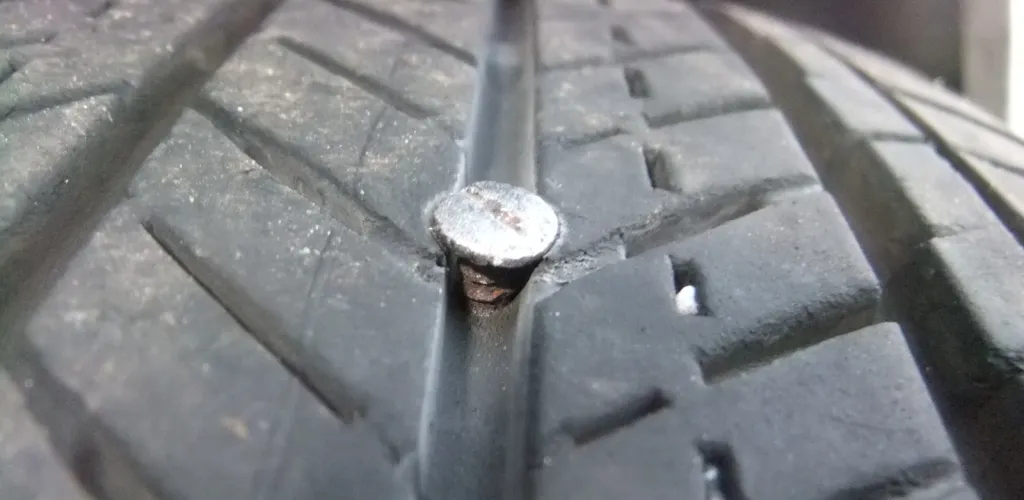
- Screw length, trajectory, and sealing determine puncture risk.
- First, check tire pressure with a gauge and follow the door label.
- If significantly low, stop, use spare if trained, call service, and avoid driving.
- Professional repair uses plug, inner patch, and anti-corrosion treatment.
Discovering a screw embedded in your car tire can be an unpleasant and worrying experience. This situation is more common than you think and can happen to any driver, regardless of experience behind the wheel. While the initial instinct may be panic, it is important to know that not all cases require drastic immediate measures.
However, driving with a screw in the tire presents risks and requires special attention. Understanding the correct procedure to follow in this situation can help you avoid more serious consequences and make the right decisions for your safety and the vehicle.
Initial assessment: not all screws cause immediate deflation
Contrary to popular belief, the presence of a screw in [tire] does not automatically mean it will deflate. The existence of a puncture depends on several factors:
- Screw length: If the screw is short, it may not penetrate all layers of the tire
- Penetration trajectory: Some screws may penetrate obliquely, avoiding critical zones
- Sealing capacity: The rubber may seal naturally around the foreign object
These situations can create a false sense of security, but it is essential not to ignore the issue.
Checking tire pressure - the first crucial step
The first thing to do when you discover a screw in the tire is to check [tire pressure]. This is a practice you should do regularly anyway.
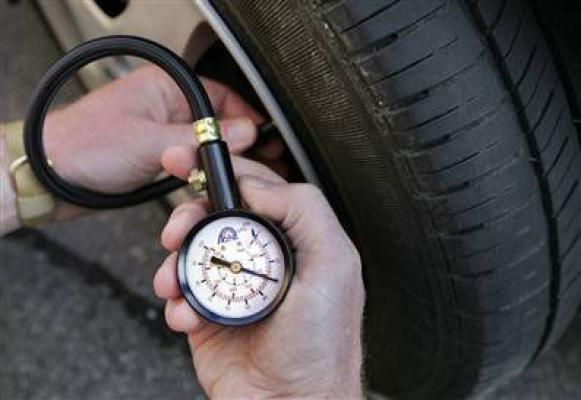
Tools needed
- A quality tire gauge (keep one in the car)
- Knowledge of the recommended pressure for your vehicle (you can find this on the driver’s door label or in the owner’s manual)
Interpreting the results
Significantly low pressure: If the pressure is well below the recommended level, stop immediately and:
- Install the spare wheel if you have experience
- Call a car service for assistance
- Avoid driving with a deflated tire
Slightly low pressure: If the pressure is only a little below normal:
- Inflate the tire to the correct pressure
- Go to a service center for evaluation immediately
- Monitor pressure frequently on the road
Repair options: professional methods recommended
Repairing a punctured tire correctly involves more than simply sealing the hole. Industry professionals use methods that consider the complex structure of modern tires.

Internal corrosion issue
An often overlooked aspect of tire repair is protecting the steel belts inside the tire’s layers. When the tire is perforated:
- Water, snow, and moisture can penetrate the inner structure
- Steel belts can corrode over time
- Corrosion compromises the tire’s structural integrity
- The belt can fail and cause complete tire failure
Approved repair method
The only repair method accepted by professionals combines:
- Rubber plug: Inserted into the puncture to stop the immediate leak
- Inner patch: Applied to the inner side of the tire for a complete seal
- Anti-corrosion treatment: Protects the steel belts from further damage
This ‘plug + patch’ method is the only approach recognized as safe in the long term.
Situations where tire replacement is mandatory
Not all punctures can be repaired safely. There are zones of the tire and types of damage that require full replacement.
Unrepairable zones
Sidewall: This area experiences constant flexing during rotation. For this reason:
- The plug + patch combination cannot withstand mechanical stresses
- Repairs in this area are considered unsafe
- The risk of catastrophic failure is too high

Transition zone: The area between the tread and the sidewall is also problematic for durable repairs.
Puncture size
Even if the puncture is in the tread area (which can be repaired), there are size limitations:
- Maximum limit: Holes larger than 6 mm (about 1/4 inch) cannot be safely repaired
- Multiple punctures: If the tire has several punctures close to each other, the repair may compromise strength
- Oblique punctures: Holes that traverse obliquely through multiple layers are difficult to repair effectively
Risks of driving with a screw in the tire
Driving with a screw in the tire presents more risks than you might think at first glance:
Immediate risks
- Progressive deflation: Even if there is no initial leak, vibrations and heat can worsen the situation
- Sudden deflation: The screw may shift or exit completely during driving
- Loss of control: A sudden deflation at speed can cause loss of vehicle control
Long-term risks
- Damage to the rim: Driving with low pressure can damage the rim
- Uneven wear: Other tires may wear prematurely due to imbalance
- Additional costs: Ignoring the issue can lead to more costly repairs
Steps to manage the situation
At the moment of discovery
- Do not panic and do not remove the screw immediately - it may provide a temporary seal
- Check the pressure with a reliable tire gauge
- Assess safety for continuing the journey
- Plan a stop at the nearest auto service
On the way to the service
- Reduce speed to minimize stress on the tire
- Avoid abrupt maneuvers (acceleration, braking, turns)
- Monitor the vehicle’s behavior for signs of deflation
- Stop immediately if you feel vibrations or instability
At the auto service
A qualified technician will:
- Evaluate the position and depth of the puncture
- Check whether a repair is possible or a replacement is necessary
- Perform the repair according to safety standards
- Test pressure and balance after repair
Prevention of similar problems
Although you cannot completely control objects on the road, you can reduce the risks:
- Regular tire inspections for foreign objects
- Check pressure at least once a month
- Avoid areas with construction debris or repairs
- Maintain a safe distance from the vehicle in front
Remember that your safety and that of your passengers is more important than any time or cost consideration. A prudent and professional approach to this situation will help you avoid bigger problems down the road.