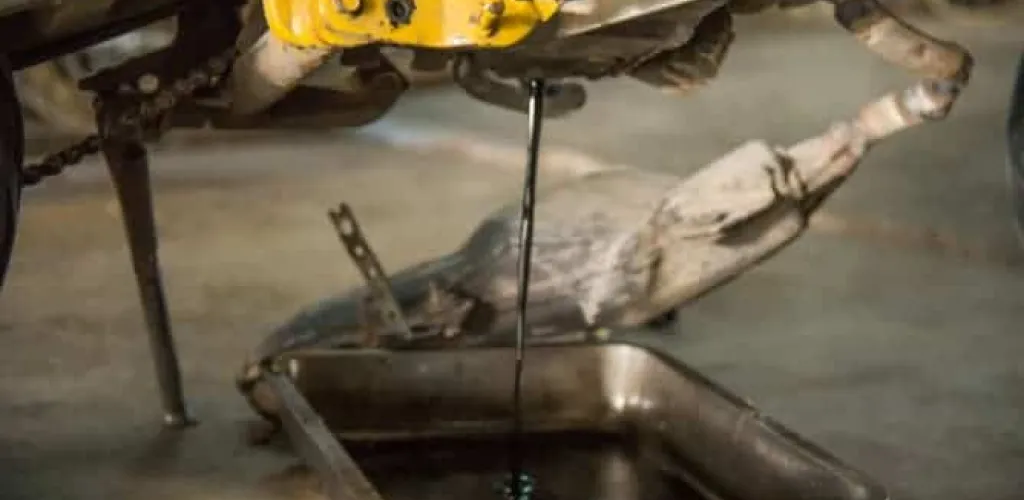
- Oil doesn’t wear out; it could be reused with proper filtering.
- Filtration and reuse are impractical for most drivers due to cost, time, and degraded additives.
- Recycling at specialized centers is recommended; processes include separation, filtration, distillation, and re-additivation.
- Regenerated base oil can be used; take used oil to a recycling center.
More and more drivers are choosing to perform basic maintenance and upkeep of their vehicles themselves, either out of a passion for automotive mechanics or to save on service costs. An engine oil change is one of the most accessible tasks a car owner can perform. But after finishing this operation, an essential question arises: what do you do with used oil? The answer is not only simple but also crucial for protecting the environment.
In this article you will discover everything about the correct handling of used oil: why it can be recycled, where you can take it, how to store it until recycling, and even how you can be rewarded for choosing to recycle it.
Why engine oil never wears out
Most drivers believe that oil becomes progressively darker and thicker over time due to wear, and that this is the main reason it must be replaced. However, the reality is surprising: engine oil never wears out in the classic sense of the word. In theory, the same oil could be used endlessly if it were filtered and cleaned properly after each use cycle.
When oil circulates through the engine to lubricate metal components, it also plays a secondary essential role: it captures soot and carbon particles produced during fuel combustion. These particles are normal by-products of internal combustion, whether we have a petrol or a diesel engine.
Oil thickens and turns black not because it wears, but because the oil filter reaches its maximum capacity to retain impurities. Once the filter is saturated, carbon particles begin to accumulate directly in the oil, changing its color and viscosity. Add to this the degradation of additives in the oil composition (antioxidants, detergents, dispersants), which lose effectiveness over time due to high temperatures and oxidation.
What you can do with used motor oil
Option 1: Filtering and reuse
Theoretically, you could use special oil cleaning filters to refilter the oil. There are centrifugal filtration systems or ultra-fine filters on the market that can remove carbon particles and other impurities. However, this option presents several major drawbacks:
- The cost of professional filtration equipment is high for home use
- You cannot regenerate degraded additives through simple filtration
- The process is time-consuming and requires technical knowledge
- The cost-benefit ratio is not favorable for an ordinary driver
For these reasons, filtration and reuse of the oil is not a practical solution for most car owners.

Option 2: Recycling at specialized centers (recommended)
The best choice is to take the used oil to a special recycling center. These centers have the equipment necessary to reintroduce the oil into the productive circuit, thereby protecting the environment.
At such centers, used oil undergoes complex processes of:
- Separation of water and sediments
- Ultra-fine filtration
- Vacuum distillation
- Refining and re-additivation
The final result is a regenerated base oil that can be used to produce new motor oils, industrial lubricants, or even fuels.
What types of oil can be recycled
You can and should recycle any type of motor oil that has been used inside a vehicle, regardless of:

- Vehicle type (car, motorcycle, light commercial, truck)
- Engine type (gasoline, diesel, LPG, hybrid)
- Oil viscosity (5W-30, 10W-40, 15W-50, etc.)
- Brand or quality of the oil
Additionally, these can be recycled as well:
- Oils for manual and automatic transmissions
- Differential oils
- Hydraulic oils from steering or braking systems
Important: Do not mix engine oil with other substances such as coolant, brake fluid, or windshield washer fluid, as this complicates the recycling process.
Why it is essential to recycle used oil
Environmental impact
Used engine oil is extremely dangerous for the environment for several reasons:
- One liter of used oil can contaminate up to a million liters of drinking water
- It contains heavy metals (lead, zinc, arsenic) absorbed from engine components
- It includes chemical additives (detergents, dispersants, friction modifiers) that are toxic
- Carbon and soot particles can affect soil and the food chain
If used oil is disposed of into:
- Sewer or toilet: it can clog wastewater treatment systems and reach rivers and seas
- Soil or garden: it degrades soil fertility for long periods and can reach the groundwater
- Household waste: it can leak and contaminate soil at landfills
Economic benefits of recycling
Recycling used oil is not only about protecting the environment; it also supports a circular economy:
- Producing oil from crude oil requires far more energy than re-refining used oil
- From 4 liters of used oil you can obtain about 2.5 liters of regenerated base oil
- It preserves non-renewable natural resources
- It reduces the carbon footprint of the petrochemical industry
Where and how to take oil for recycling
Collection locations
In Romania there are several options for recycling used oil:
- Auto service centers: Most car service centers accept used oil for free, even if you did not have your oil changed there
- Fuel stations: Many Petrom, OMV, Rompetrol stations have used oil collection points
- Hazardous waste centers: Municipal centers or sanitation companies accept used oil
- Auto parts stores: Some large chains (AutoExpert, Emag Auto, etc.) have collection programs
Recycling rewards
Great news is that in many places you will be rewarded for choosing to recycle:
- Discounts on new oil: Some stores offer 10-20% off when you bring used oil
- Loyalty points: Large store chains award points in loyalty programs
- Free products: Oil filters, car wipes or other accessories
- Cash bonuses: In some cases you can even receive money for large quantities of used oil
Thus you get both financial and moral satisfaction from protecting nature.
How to store used oil correctly until recycling
If you cannot go to a recycling center immediately or you want to accumulate a larger quantity before making the trip, proper storage is essential.
Suitable containers
Best options:
- Metal containers with screw-cap
- HDPE plastic jugs specifically for oil
- The original container the oil came in (if intact)
What to avoid:
- Plastic beverage bottles (they can deteriorate)
- Cardboard or wooden containers
- Containers without a cap or with an insecure closure
- Containers that previously held food products
Storage conditions
Essential rules:
-
Constant temperature: Keep oil at moderate temperatures (10-25°C)
- Avoid freezing, which can damage containers
- Avoid excessive heat (over 40°C), which accelerates oxidation
-
Ventilation: The storage area should be well-ventilated to prevent vapor buildup
-
Leak protection: Place containers in a tray or area where leaks can be controlled
-
Labeling: Clearly mark containers with “USED OIL” and the collection date
-
Keep away from children and animals: Store it in a location that is inaccessible and away from open flames
How long you can store used oil
Although used oil can be stored for long periods under proper conditions, it is recommended to take it to recycling as soon as possible, ideally within 2-3 months. The longer it sits, the more:
- The risk of leaks increases
- Oxidation and degradation continue
- Sedimentation may occur, complicating recycling
Home oil change: practical tips
If you decide to change your oil yourself, here are some tips to do it correctly:
Preparation
- Check in the owner’s manual the exact type and quantity of oil needed
- Obtain a new oil filter and a new gasket for the oil drain plug (if needed)
- Prepare a container large enough to collect all used oil
- Make sure you have the right wrench for the drain plug and filter
Execution
- Warm the engine for 5-10 minutes before draining to help the oil flow
- Let the oil drain completely (minimum 10-15 minutes)
- Check the condition of gaskets and replace if damaged
- Refill with new oil gradually, checking the level with the dipstick
After the change
- Start the engine and run it for 2-3 minutes
- Stop the engine and re-check the level after 5 minutes
- Check for leaks at the drain plug and filter
- Seal the used oil in appropriate containers
Benefits of changing oil at home
Realizing an oil change by yourself brings multiple advantages:
Personal satisfaction: You know exactly what was done to your car and you trust the quality of the work.
Substantial savings: An oil change at a service can cost between 150-400 lei, depending on the car. Doing it yourself saves labor costs (50-150 lei).
Learning and experience: You understand more about how your car works and can spot potential issues more easily.
Flexibility: You can choose exactly when and where to do the change, without relying on a service schedule.
Control over quality: You select the brand and quality of the oil and filter, with no compromises.
Myths about engine oil
Myth 1: “Synthetic oil doesn’t need replacing that often”
Reality: Although synthetic oil lasts longer than mineral oil, it still needs to be changed according to the manufacturer’s recommendations. Additives degrade over time, and oil collects impurities regardless of its type.
Myth 2: “If the oil looks fine, it doesn’t need changing”
Reality: The appearance of oil is not a reliable indicator. Essential additives can degrade even if the oil retains an acceptable color. Respect the recommended change intervals.
Myth 3: “You can mix any type of oil”
Reality: While in an emergency you can top up with oil of a different specification, it is not recommended. Mixing oils with different viscosities and specifications can affect engine protection.
Myth 4: “Used oil can be dumped on the ground, it biodegrades naturally”
Reality: This is one of the most dangerous myths. Used oil does not biodegrade naturally and can contaminate soil and water for decades.
Conclusion
Changing engine oil at home is an accessible operation that gives you the satisfaction of directly participating in car maintenance and helps you save money over time. But the responsibility does not end once you have finished pouring the new oil.
Recycling used oil is not optional - it is a necessity to protect the environment. Each liter of recycled oil reduces pollution and conserves natural resources. Moreover, the process is completely free, convenient, and in many cases even rewarded.
Note: a single liter of oil dumped improperly can contaminate a million liters of water. Your choice to recycle makes a real difference.
Essential steps:
- Change the oil according to the manufacturer’s recommendations
- Collect all used oil in secure containers
- Store it properly until drop-off
- Take it to the nearest recycling center
- Enjoy the satisfaction of protecting the environment (and potential rewards)
Through these simple gestures, you contribute to a cleaner environment and a more sustainable automotive industry, while saving money and learning more about your car.