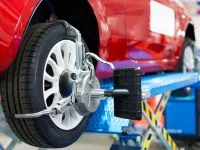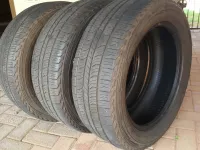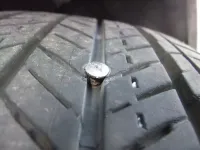
Although not many pay attention to it, tires and their pressure require special attention. That’s why throughout this article, we will discuss tire pressure in cars, how to check it, what the optimal tire pressure is, what the TPMS warning light on the dashboard represents, and what can happen if you drive with tires that have too low or too high pressure. You will definitely have something to learn from this article, so stay tuned.
Why should tires always have the correct pressure?
As already mentioned, tire pressure is extremely important, and that’s why tires should be checked, and their pressure should be optimal. If the tires have too low or too high pressure, they can wear out faster, wear unevenly, affect the car’s grip on the road, require realignment, and there is also a high risk of a blowout. Moreover, reduced grip and increased fuel consumption can occur.
Checking tire pressure takes only a few minutes, so do not hesitate to check your tire pressure regularly to avoid any unpleasant surprises. With properly inflated tires, costs will be significantly reduced. For example, if you drive with underinflated tires, there is a tendency to overheat, leading to increased fuel consumption and faster, uneven tire wear.
On the other hand, if you overinflate your tires, their lifespan will be significantly reduced, and grip will suffer, the contact patch will be smaller, grip decreases, the tread wears out rapidly, and braking distance increases substantially. Additionally, if you hit a pothole with overinflated tires, there’s a risk of a tire explosion.
So, maintain the correct tire pressure to avoid issues.
What is the correct tire pressure for an Audi Q1?
Many car owners wonder what the ideal tire pressure for their car is. Well, this can vary from car to car and is not a “one size fits all” pressure. It depends on several factors, including the weight loaded into the car, the car’s dimensions, its construction, and whether it is front-wheel drive or rear-wheel drive.
To find the correct tire pressure for an Audi Q1, you can look in three places. The most reliable source is your car’s manual. You can also find tire pressure information on the sticker inside the driver’s side door jamb and on the fuel tank cap.
However, make sure not to rely on the numbers on the tire’s sidewall, as those indicate the maximum pressure for the tire, not the recommended pressure for your specific car.
TPMS Warning Light is on in an Audi Q1 – What Does It Mean?
Many drivers choose to ignore the TPMS (Tire Pressure Monitoring System) warning light when it comes on. Regardless of the situation or your location, it’s not advisable to drive with this warning light illuminated.
TPMS stands for Tire Pressure Monitoring System, and it lights up when one or more tires have lost more than 25% of their pressure. The first TPMS systems are based on ABS (Anti-lock Braking System) indications to estimate tire pressure. The logic is simple: an underinflated tire has a slightly larger circumference, so it rotates at a slightly slower speed.
Newer and more advanced TPMS systems have sensors on each wheel, and the information is transmitted from the wheels using radio waves, reaching the dashboard instrument cluster. In these models, you can even see the pressure of each tire individually, and sometimes the tire temperature as well.
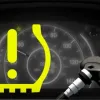
An illuminated TPMS warning light in your Audi Q1 clearly indicates a problem. Normally, the light comes on when you start the engine, but only for a short period of time. If it lights up while driving, it could indicate a problem with one of the tires, such as a flat tire, or it could be an issue with the TPMS system itself or an ABS sensor. Regardless, you should immediately check the condition of your tires. If they appear fine at first glance, you can drive to a tire shop or a gas station to check and, if necessary, adjust the tire pressure.
Why Does the TPMS Warning Light Blink in an Audi Q1?
This happens when the TPMS system has lost its electrical charge, causing the sensors to reset. If you’ve left the car without a battery for an extended period or if it has just been serviced with the battery disconnected for a while, the TPMS light will blink on the dashboard. After driving for a few minutes, the warning light will disappear.
Driving a car with tires that have too low pressure means you are exposing yourself to the risk of a tire blowout. Furthermore, such an underinflated tire significantly increases the braking distance, and maneuvering the car becomes difficult.
Once you’ve checked the tire pressure on your Audi Q1 and adjusted it as needed, don’t worry if the warning light doesn’t go off immediately when you start the car. In most cases, it will disappear after a few minutes of driving.
So, make sure to periodically check that you have the correct tire pressure and never hesitate to visit a tire shop when problems start to appear, and the TPMS warning light comes on in the dashboard.