- ABS prevents wheel lock by pulsing brake pressure during hard braking.
- If the warning light stays on, ABS may be faulty and braking risks rise.
- If ABS and brake warning lights appear together, stop immediately and tow.
- Normal ABS operation shows pedal pulsation; if not, seek urgent inspection.
An illuminated ABS warning light on your dashboard can raise immediate questions: is it safe to keep driving, or should you pull over right away? The ABS (Anti-lock Braking System) is one of the most important safety features in a modern vehicle, and a fault can significantly affect braking performance.
In this article, we explain what ABS does, how to interpret the warning, common causes of the light coming on, when to seek urgent service, and how to drive safely if the light is on.
What is the ABS system and how it works
ABS is a safety system that uses wheel speed sensors to prevent wheel lockup during hard braking. When wheels lock, you can lose the car’s grip and braking distance increases significantly, as the tires skid on the pavement.
Instead of slowing the car efficiently, locked wheels slide very quickly and can increase braking distance by up to 100% in an emergency. This can be the difference between avoiding an accident and a devastating impact.
When the ABS system engages
- Ice
- Snow
- Very wet surfaces
- Gravel or dirt
- Wet asphalt or oil-contaminated pavement
When the system is doing its job, it will send pulses to the brake pedal that prevent you from pressing the pedal to the floor to avoid a complete wheel lock. This pulsation in the pedal is normal and indicates that the ABS is functioning correctly.
Is it safe to drive with the ABS warning light on?
You should know the following about ABS and its warning light:
Warning light on startup (normal)
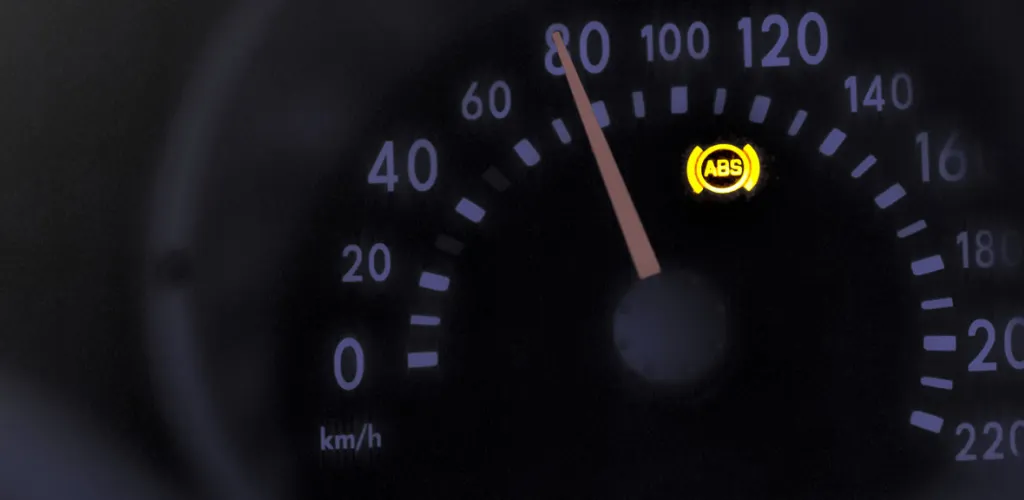
When you start the car, the ABS warning light will illuminate for a few seconds in the dash. This is because the ECU (engine control unit) tests the safety system. If the onboard computer detects a problem, the warning light will stay on until the issue is fixed. If the bulb goes out immediately, it means the system has passed the self-test.
The warning light stays on during driving
If the ABS warning light turns on and stays on while driving, it means the system has encountered a problem and may not function. In this case:
- Brakes still work, but without ABS
- In sudden braking, wheels may lock
- Increased risk of loss of control on slippery surfaces
- Increased braking distance in adverse conditions
What to do: Pull over to a safe place, stop and restart the car. Observe if the light comes back on. If it remains on, the ABS system needs urgent inspection by a specialist.

Emergency situations - when to stop immediately
ABS and brake warning lights on simultaneously
There are cases where both the ABS and brake warning lights are on simultaneously. In this situation:
- Stop immediately in a safe place
- Do not continue driving
- Call a tow truck
- You may have a scenario where brakes do not function at all
This can indicate serious problems with brake fluid, pressure in the circuit, or failure of the main brake pump.
Verifying the handbrake
If the brake warning light is on after you start the car, check the handbrake. It might be lifted and that’s why the light stays on. It is a common and easily fixable cause.

Risks of driving with a defective ABS
We do not recommend driving long distances with the ABS warning light on, i.e. with a defective ABS, for the following reasons:
Safety risks
- Wheel locking in emergency braking
- Loss of control on wet or slippery surfaces
- Braking distance increased by up to 100% in certain conditions
- Increased risk of accident in adverse weather conditions
Financial impact
This safety system can save you from:
- High repair costs after an accident
- Higher insurance premiums
- Legal issues in case of an accident
- Health risks for you and other road users
Common causes of the ABS warning light
Issues with wheel speed sensors
- Sensors dirty or damaged
- Wiring broken or corroded
- Ring gear damaged
- Magnetic interference
Issues with the ABS module
- ABS computer faults
- Problems with hydraulic valves
- ABS pump defective
- Wiring damaged
Issues with the braking system
- Low brake fluid level
- Air in the circuit
- Blocked pressure valves
- Worn components
When to go to service
When you have a problem with the braking system, you should take the car to a service center. Do not try to repair it at home — braking systems require specialized equipment and advanced technical knowledge.
Professional diagnostics
An authorized service can:
- Perform a full diagnostic with an automotive tester
- Identify the exact faulty component
- Check the integrity of the entire system
- Perform safe and compliant repairs
- Test operation after repair
Maintaining safety
Remember that safety systems like ABS are designed to save your life. A short-term saving by delaying repair can cost much more in the long run, both financially and in terms of your safety and that of others.
Photo source: trackdays.co.uk, carlsonqualitybrakeparts.com