- All-season tires balance summer and winter performance with intermediate compounds.
- They target 60,000–100,000 km treadwear but may lose grip in cold.
- Climate variation (e.g., Romania) influences tire suitability.
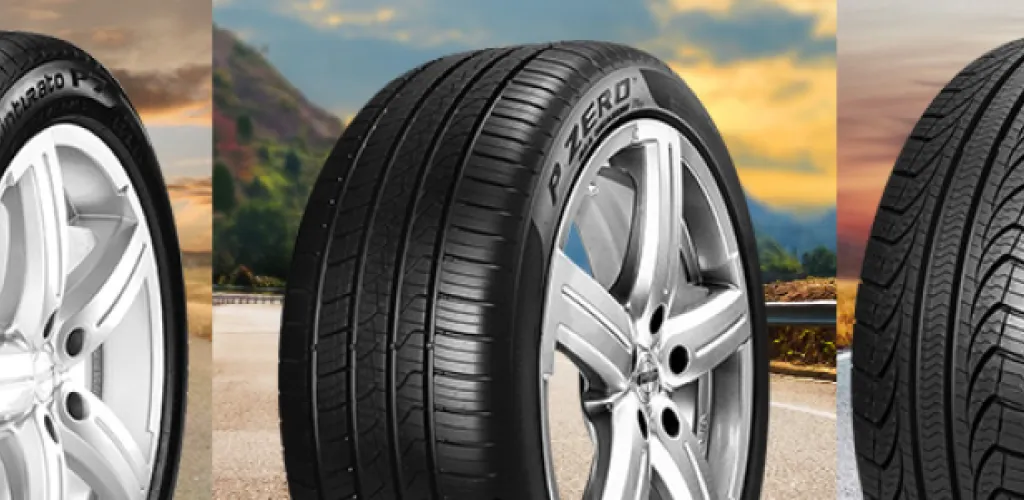
- Tread patterns include channels and sipes for wet traction.
All-season tires are a practical solution for drivers who want to avoid seasonal tire changes. They promise decent performance year-round, but the reality is more nuanced than it first appears.
Romania’s climate varies significantly from region to region. In the plains of the south, winters are milder, with short freezes and little snow. In contrast, the mountainous and northern areas face long winters with consistently low temperatures and abundant snowfall. These climatic differences are crucial when deciding which tires are appropriate.
What are all-season tires
All-season tires are tires designed to offer a compromise between summer and winter tire performance. Unlike specialized seasonal tires that excel in specific conditions, all-season tires strive to maintain acceptable performance across a wide range of weather conditions.
These tires use rubber compounds with an intermediate formulation that doesn’t stiffen excessively at low temperatures, nor become too soft in intense heat. The tread pattern combines elements typical of summer tires (water evacuation and dry-road traction) with features of winter tires (sipes for grip on snow and ice).
How all-season tires are designed
Designing all-season tires involves balancing several technical factors:
Treadwear durability
Manufacturers prioritize the longevity of the tread layer, targeting lifespans of 60,000–100,000 kilometers. The rubber compounds are formulated to resist uniform wear while maintaining the flexibility needed for traction.
The rubber compound is the heart of tire performance. A harder mix offers longer life but compromises grip on slick surfaces. Conversely, a softer compound provides superior grip but wears faster. All-season tires seek the optimum point between these extremes.

Water evacuation capability
The tread design includes:
- Longitudinal channels to evacuate water from the central contact area
- Lateral channels to direct water outward
- Transverse sipes to improve grip and water evacuation
- Sipes to offer additional grip on wet surfaces
The tread pattern is engineered to maintain maximum contact with the road, even on wet surfaces.
Acoustic comfort
Rolling noise can significantly affect ride comfort. Manufacturers use various techniques to reduce noise:
- Alternating blocks reduce noise frequency
- Variations in block sizes eliminate constant tones
- Optimizing stiffness minimizes vibrations
At highway speeds, the difference between a well-designed tire and a mediocre one can be as much as 5–8 decibels, equivalent to a noticeable reduction in perceived noise.
Ride comfort
The sidewall plays a crucial role in ride comfort. A more flexible sidewall cushions impacts from road imperfections but may compromise steering precision. All-season tires balance this trait to offer an acceptable compromise.
Limitations of all-season tires
Performance at low temperatures
The most important criterion for all-season tires is the 6°C threshold. Below this temperature, the rubber compound begins to stiffen progressively, resulting in:
- Braking distances increased by up to 20–30%
- Reduced traction on startup and in turns
- Compromised handling on slick surfaces
In comparative tests, all-season tires may exhibit braking distances 10–15 meters longer than specialized winter tires at 50 km/h on snow.

Performance at high temperatures
At very high temperatures (above 35°C), all-season tires can suffer:
- Accelerated wear due to the softer compound
- Reduced traction on very hot asphalt
- Risk of overheating at sustained speeds
When to choose all-season tires
Suitable climate conditions
All-season tires are ideal in regions with:
- Mild winters with temperatures rarely below 0°C
- Minimal snow (less than 10–15 days per year)
- Gradual transitions between seasons
- Precipitation mainly in the form of rain
Driver profiles suitable
- Occasional drivers who don’t cover long distances
- Urban drivers avoiding mountainous areas
- People who prioritize convenience over maximum performance
- Owners of secondary vehicles used sporadically
Comparison with seasonal tires
Summer tires vs all-season
Specialized summer tires offer:
- Superior grip on dry and wet asphalt at temperatures above 10°C
- Shorter braking distances by up to 15%
- Precise handling in summer conditions
- More uniform wear at high temperatures
Winter tires vs all-season
Specialized winter tires outperform all-season tires significantly in:
- Snow traction up to 40% better
- Ice grip with 3–4 times superior performance
- Stability at subzero temperatures
- Active safety in severe winter conditions
Recommendations for Romania
Plains region (Bucharest, Constanța, Craiova)
In these regions, all-season tires can be a viable option due to:
- Milder winters
- Rare and short-lasting snow
- Temperatures that rarely drop below -10°C
Mountain region (Brașov, Cluj, Suceava)
For these areas, it is recommended:
- Seasonal tires for maximum safety
- Premium all-season only for very occasional drivers
- Careful monitoring of weather conditions
Maintenance of all-season tires
Regular checks
- Pressure — checked monthly, adjusted for ambient temperature
- Tread depth — minimum 4mm for optimal performance in wet conditions
- Even wear — rotate tires at 10,000 km
- Visible damage — cracks, cuts or deformations
Wear factors
- Aggressive driving reduces lifespan by 20–30%
- Incorrect wheel alignment can cause premature wear
- Inadequate inflation affects both wear and safety
All-season tires represent a practical compromise for many drivers, but the final decision should take into account local climate conditions, driving style, and personal priorities regarding safety versus convenience.