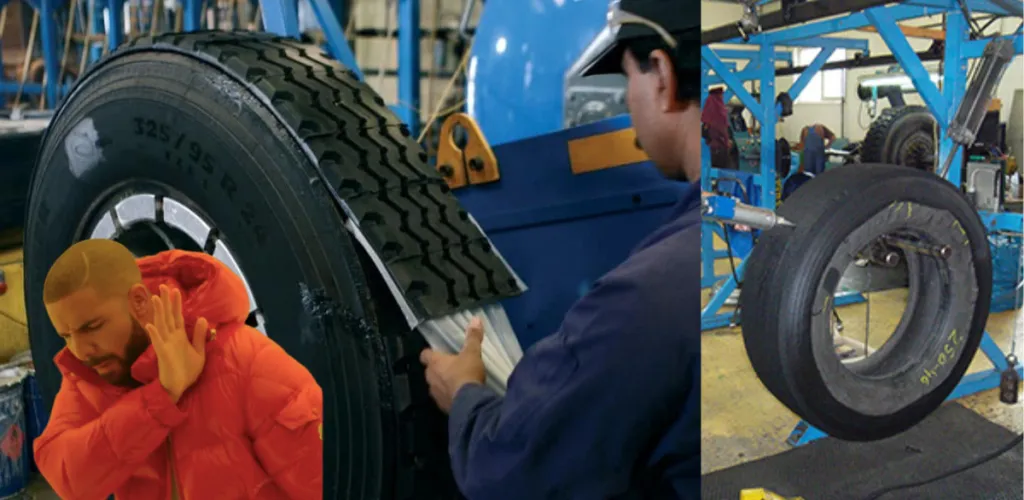
- Retread tires are cheaper but may differ in performance from new tires
- They add weight, can reduce fuel efficiency and handling, and may be noisier
- In Romania retreads are legal if from authorized manufacturers with warranties and proper labeling
- Risks include uneven handling and hidden defects from mixed materials
Retread tires represent an alternative to new tires, attractive due to their lower price, but with their own characteristics and limitations. The retreading process involves reconditioning worn tires by applying a new layer of rubber to the existing casing, giving these products a second life.
If you are considering opting for retread tires, it’s important to understand both the benefits and the risks of this choice. Although they are legal in Romania and can be an economical solution, retread tires have different performance compared to new ones.
What are retread tires and how they are made
Retreading is a technological process by which worn tires are reconditioned by rebuilding the tread. This process involves applying a new layer of rubber to the existing carcass, fixed with the help of special fabrics.
The technique is specific to tires labeled with AUR (worn reusable tires), which must be used with caution due to certain inherent risks in the reconditioning process.
Manufacturing process
The retreading process consists of the following steps:
- Inspection and selection of worn casings
- Cleaning and surface preparation
- Application of the special adhesive
- Mounting the new rubber layer
- Vulcanization under controlled conditions
- Final testing and certification
Differences between new and retread tires
By retreading, tires are reconditioned to extend their life. However, there are significant differences compared to new tires:
Increased weight
Retread tires are heavier due to the addition of a new layer of material over the old one. The extra rubber and adhesive contribute to this weight gain, which can slightly affect fuel consumption and the vehicle’s dynamic behavior.

Reduced durability
During operation, retread tires wear more quickly due to the separation of adhesive layers or their lower ability to withstand the weight of the vehicle. The lifespan depends on:
- Quality of materials used
- Road conditions
- Weather conditions
- Driving style
Increased noise level
After retreading there may be small surface imperfections on the tire surface that will be felt more on roads with bumps. These irregularities can generate vibrations and extra noise in the cabin.
Legal aspects and certification
Retread tires are accepted by Romanian laws as long as they come from authorized manufacturers and distributors. They must have:
- Commercial warranty
- Safety warranty
- Stamped with the manufacturer’s name
- Dimension indicator
- Construction type
- Retread date
- Speed rating
- TUBELESS mention (for tubeless tires)
Risks and limitations of retread tires
Retread tires combine different materials – the base from worn tires and the new top layer. This combination can generate various nonconformities:
Handling problems
Uneven turns - Because each tire is reconditioned individually, weight differences can cause the car to pull to the right or left.
Hidden defects
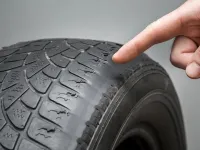
Although a tire has a new layer on the surface, the carcass on which that layer is laid is crucial. The risk of pieces of rubber detaching during operation is significant.
Inferior quality
Considering the shorter lifespan and the fact that retread tires can crack after only a few hundred kilometers, they can be less safe than quality used tires.
Classification and energy performance
Tires are classified according to their fuel efficiency index, with classes from A to H. Differences in consumption between class A and class H are about 10% on long distances, an important aspect to consider for drivers who cover many kilometers.
The Romanian tire market
In Romania you can purchase three types of tires:
New tires
- Advantages: Maximum performance, full warranty
- Disadvantages: High cost
Second-hand tires
- Advantages: Affordable price
- Disadvantages: Unknown age, no warranty
Retread tires
- Advantages: Affordable, eco-friendly, with certifications
- Disadvantages: Limited performance, reduced durability
Specialist recommendations
Experts consider retread tires an acceptable choice only from a cost perspective. The general recommendation is to choose the cheapest new tires instead of retreads, even if they seem to have favorable characteristics.
The savings from choosing retread tires will be reflected later in:
- Lower performance
- Higher fuel consumption
- Reduced durability
- Additional replacement costs
Frequently asked questions about retread tires
What information is found on retread tires?
Retread tires are mandatorily stamped with the retread date, the speed category, the fuel efficiency rating, and the type of construction.
Are they the same as second-hand tires?
No. Retread tires are recycled and reconditioned by applying a rubber band over an old carcass. Second-hand tires are used tires, handed to a storage facility, but with no intervention on them.
Where are they most commonly used?
Retread tires are frequently used in freight transport, but they can also be mounted on personal vehicles.
How many retreads can a tire withstand?
Depending on tire quality, a tire can be retreaded up to seven times, but only if it shows no defects or major deformations.
What is the lifespan?
Retread tires have a running life warranty of 3-4 years (roughly 20,000 kilometers), but durability depends on maintenance, driving style, and storage conditions.
Are retread tires worth choosing?
Retread tires are convenient mainly for their low price. While used by budget-conscious owners, specialists generally advise avoiding them in favor of new tires of a lower grade but with better long-term performance.