- Low-profile tires look sportier and improve handling and braking.
- They are not more prone to punctures; sidewall damage risk higher.
- Road noise, harsher ride, and higher replacement costs accompany them.
Low-profile tires are gaining ground in the auto industry, preferred by drivers who prioritize performance and a sporty look. These tires are characterized by narrower sidewalls, but they raise questions about their vulnerability to damage.
What low-profile tires mean
The tire profile is a crucial element in understanding its characteristics. In the size P225/55R18, the 55 indicates the profile—a percentage expressing the ratio between the height of the sidewall and the width of the tire.
The smaller this number, the lower the tire profile. Tires with a profile of 50 or less are classified as low-profile tires, offering a sportier appearance and different driving characteristics.
Advantages and disadvantages of low-profile tires
Main benefits:
- Improved vehicle control - increased cornering precision
- Sporty appearance - gives the car a more dynamic look
- Stiffer road holding - more direct feedback from the road surface
- Superior braking capability - larger rims allow mounting higher-performance braking systems, reducing stopping distance
Trade-offs to consider:
- Increased road noise - the rigid sidewall transmits more noise into the cabin
- Reduced ride comfort - poorer absorption of road irregularities
- Higher replacement costs - prices higher than standard tires

Vulnerability of low-profile tires to damage
Risk of structural damage
Low-profile tires exhibit increased vulnerability to certain types of damage due to their specific construction. The much narrower sidewall provides a reduced air cushion for absorbing impacts from potholes, curbs, or other road obstacles.
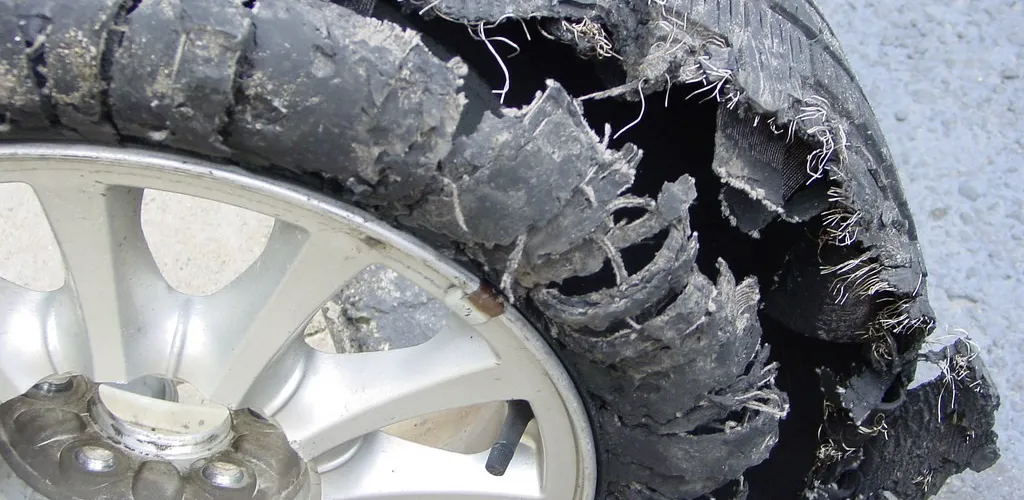
- Structural damage to the sidewall - cracks or tears in the tire carcass
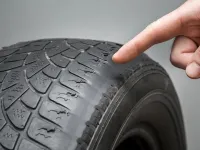
- Bulges in the sidewall - deformations that compromise safety
- Sudden pressure loss - rapid deflation or even blowouts
- Wheel rim damage - impact is transmitted more directly to the rim
Comparison with standard tires regarding punctures
Un aspect important de clarificat este că low-profile tires are not more prone to punctures than standard-profile tires.
The probability of getting a puncture caused by nails, screws, or other penetrating objects remains the same, regardless of tire profile.
Diferența esențială constă în:

- Lateral impact resistance - lower in low-profile tires
- Absorption capacity of shocks - reduced due to the narrow sidewall
- Post-impact behavior - higher risk of instantaneous damage
Recommendations for using low-profile tires
Preventive measures:
- Regularly check tire pressure - correct pressure reduces risk of damage
- Avoid potholes and curbs - drive more carefully on roads with irregularities
- Periodic visual inspection - early identification of cracks or bulges
- Replace at the first sign of damage - do not postpone replacing a damaged tire
When to opt for low-profile tires:
- Sports or performance vehicles
- Predominantly urban driving on good roads
- Prioritizing aesthetics and performance
- A larger maintenance budget
Conclusion
Although low-profile tires do not pose a greater risk of punctures to the tread, they are more vulnerable to damage caused by lateral impacts. The narrow sidewall provides reduced protection against potholes, curbs, and other obstacles, increasing the risk of structural damage.
The decision to choose low-profile tires should take into account your driving style, the road conditions you frequently encounter, and your priorities between performance, appearance, and comfort.