- Romania’s winter conditions demand winter tires for safety
- Winter tires stay flexible below 7°C, improving grip and reducing braking distance
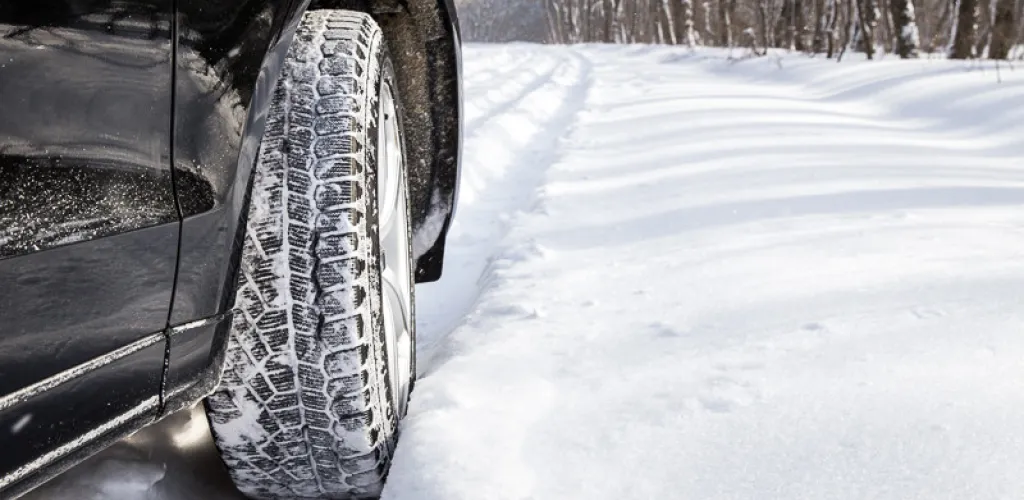
- Specialized rubber compounds and siped tread maximize grip on ice and snow
- Winter tires stop 35-40m on snow at 50 km/h; summer 60-80m
As the cold season approaches, preparing the car for winter becomes a priority for all drivers. In Romania, temperatures can drop below -15°C, and roads become dangerous due to ice and snow. In these conditions, winter tires are the difference between safety and an accident.
Winter tires are not just a recommendation but a technical necessity dictated by the physics of materials and driving conditions. When the temperature remains consistently below 7°C, the rubber of summer tires loses its flexibility, becoming as hard as plastic and dramatically reducing grip.
The technology behind winter tires
Special chemical composition
Winter tires are the result of sophisticated material engineering. The rubber used contains a special formulation that includes:
- High-performance silica - maintains flexibility down to -40°C
- Special aromatic oils - prevent rubber crystallization at low temperatures
- Thermoplastic polymers - provide strength and elasticity
- Modified vulcanizing agents - for optimized molecular structure
This composition allows the tire to stay soft and adapt to the micro-roughness of the road, creating maximum contact patch even on ice.
Tread pattern design
The tread pattern architecture of winter tires differs fundamentally from that of summer tires:

Key technical features:
- Sipes - up to 1,500 per tire, with depths of 3-7 mm
- Traction blocks - zigzag geometry for snow grip
- Circumferential channels - 3-4 main channels for water evacuation
- Void ratio - 30-35% empty space vs. 20-25% for summer tires
- Tread depth - 8-10 mm for new tires (vs. 6-8 mm in summer)
When is the critical moment to mount
The 7°C temperature rule
The 7°C temperature is not chosen arbitrarily - it marks the transition where the physical properties of the rubber change significantly:
Below 7°C:

- Summer tires lose about 50% of their flexibility
- Braking distance increases by 10-15 m at 50 km/h
- Lateral grip decreases by 30-40%
- The risk of sliding increases exponentially
Practical indicators for switching:
- Morning temperature falls below 5°C for 3 consecutive days
- Weather forecast predicts temperatures below 7°C for the next 2 weeks
- First frost appears on the windshield
- Vehicle behavior – you feel it skidding on cold asphalt
Simple verification test
You can test the difference at home: place a summer tire and a winter tire in the fridge at 4°C overnight, then press with your finger on both. The winter tire remains soft, the summer tire becomes rigid.
The demonstrated technical advantages
Braking performance
Tests conducted by ADAC and TÜV show dramatic differences:
At 50 km/h on snow:

- Winter tires: 35-40 m stopping distance
- Summer tires: 60-80 m stopping distance
- All-season tires: 45-55 m stopping distance
On ice at 30 km/h:
- Winter tires: 25-30 m
- Summer tires: 45-60 m
- All-season tires: 35-45 m

Traction on acceleration
In controlled tests on 5 cm of snow:
- Winter tires: 0-30 km/h in 8-12 seconds
- All-season tires: 12-18 seconds
- Summer tires: 20-30 seconds (if they manage)
Technical comparison: all-season vs. specialized winter tires
[All-season tires] represent a technical compromise with clear limitations
All-season – technical analysis
Advantages:
- Rubber compound adaptable to 5-25°C
- Moderate tread depth – not too deep, not too shallow
- Suitable for regions with mild winters (-5 to +5°C)
- Convenience in time and storage
Disadvantages:
- Subpar performance below 3°C
- Faster wear under extreme conditions
- Braking distance 15-20% longer than dedicated winter tires
- Increased noise on compacted snow
Winter tires – decisive technical advantages
- Molecular adhesion - the soft rubber “embraces” ice asperities
- Compression effect - snow compresses into the grooves, creating extra traction
- Hydrodynamic relief - broader channels rapidly expel water from under the tire
- Thermal stability - properties remain constant between -30 and +15°C
The optimal time to return to summer tires
Transition temperature: 10°C
Switching back to summer tires should be done when the average daily temperature stays above 10°C consistently for a week. This temperature higher than the mounting threshold (7°C) provides a safety margin against a sudden return of cold.
Consequences of prolonged use
Using winter tires in warm weather (above 20°C) leads to:
Technical issues:
- Overheating - the soft rubber deforms excessively
- Increased wear - 1-2 mm tread loss per 5,000 km
- Higher fuel consumption - rolling resistance increases ~15%
- Instability - lateral deformations in fast cornering
- Excessive noise - soft blocks vibrate on asphalt
Economic impact:
- Shorter tire life by 30-40%
- Additional consumption 0.5-1 L/100 km
- Risk of premature failure
Advanced technical maintenance
Monitoring tire pressure
Tire pressure varies by about 1 psi for every 10°C change in temperature. At -20°C, a tire rated at 2.5 bar at +20°C will read about 2.1 bar.
Check schedule:
- Weekly – during transition period (October–November, March–April)
- Biweekly – in mid-winter when temperatures are stable
- Before long trips – always when cold
Measuring tread depth
Measurement methods:
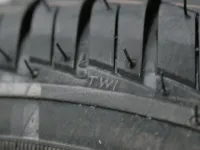
- DOT indicators – wear bars at 1.6 mm in the grooves
- 1-cent coin – the height corresponds to ~1.5 mm
- Professional tread depth gauge – precise measurement
Safety limits:
- 4 mm – minimum recommended for winter
- 3 mm – significantly reduced performance
- 1.6 mm – legal limit (dangerous for winter)
Tire rotation
Optimal rotation pattern to maximize tire life:
Front-wheel drive (FWD):
- Front → rear on the same side
- Rear → front crosswise
Rear-wheel drive (RWD):
- Rear → front on the same side
- Front → rear cross
All-wheel drive (AWD):
- Rotation in an X or square pattern
- Short interval: 5,000-6,000 km
Updated Romanian legislation
Mandatory use and fines
Legal period: November 1 – March 31 (with possible extension depending on weather conditions)
Penalties 2024:
- Fine: 580-1,160 lei
- Penalty points: 2 points
- License suspension: in extreme cases with safety risk
- Vehicle immobilization: if tread depth < 1.6 mm
Specific responsibilities
- Driver - daily checks of the vehicle’s technical condition
- Owner - ensuring proper equipment
- Transport companies - regular technical inspections
- Authorities - checks at fixed and mobile checkpoints
Expert buyer’s guide
Essential technical criteria
1. Certifications and homologations:
- 3PMSF (Three Peak Mountain Snow Flake) – mandatory standard
- M+S (Mud + Snow) – minimal marking
- EU Label – ratings from A-G for traction, braking, and fuel efficiency
2. Technical specifications:
- Load Index – load rating per the vehicle’s technical sheet
- Speed Index – minimum from vehicle homologation
- DOT Code – production date (maximum 3 years for purchase)
Realistic budget 2024
Premium category (Michelin, Continental, Bridgestone):
- 205/55 R16: 450-650 lei each
- 225/45 R17: 550-750 lei each
- 245/40 R18: 650-900 lei each
Mid-range category (Hankook, Vredestein, Nokian):
- 205/55 R16: 300-450 lei each
- 225/45 R17: 400-550 lei each
- 245/40 R18: 500-650 lei each
Budget category (Kormoran, Debica, Matador):
- 205/55 R16: 200-300 lei each
- 225/45 R17: 250-400 lei each
- 245/40 R18: 350-500 lei each
Additional costs:
- Mounting and balancing: 30-50 lei per tire
- New valves: 5-10 lei each (recommended when changing)
- Seasonal storage: 80-150 lei per set/6 months
Evaluating second-hand tires
Before opting for new tires or used ones, apply this checklist:
Acceptance criteria for SH:
- Age – maximum 4 years from production
- Even wear – wear difference between tires < 1 mm
- No repairs – neither external nor internal
- Minimum tread – 5 mm for purchase (to reach 4 mm by season end)
- Same manufacturer – on the same axle required
- Origin – preferably from countries with a similar climate
Signs to avoid:
- Wear on edges (geometry issues)
- Cracks in sidewalls (aging)
- Patches from puncture repairs (structural compromise)
- Large wear differences (donor vehicle with problems)
Complete winter vehicle preparation
Cooling and heating system
Antifreeze – technical specifications:
- Concentration: 50% for -35°C, 60% for -50°C
- Types: G11 (blue), G12 (red), G13 (purple)
- Check: with a refractometer or dipstick
- Change interval: every 3-4 years or 120,000 km
The battery in winter conditions
Temperature impact:
- At -18°C: capacity drops by 40%
- At -30°C: capacity drops by 60%
- Starting power required increases by 30-50%
Professional testing:
- Open-circuit voltage: 12.6-12.8 V
- Voltage under load: minimum 11.5 V during starting
- Charging current: 10-15 A for 60-80 Ah batteries
- Electrolyte density: 1.27-1.29 g/cm³
Engine oil for winter
Recommended viscosities:
- 0W-20 – for extremely cold winters below -25°C
- 5W-30 – standard for most modern engines
- 5W-40 – for high-mileage engines
- 10W-40 – only for older engines in temperate climates
Benefits of winter oils:
- Easier starting in cold temperatures
- Improved protection at startup
- Reduced fuel consumption during warm-up
- Maintains optimum oil pressure
Mandatory and recommended safety equipment
The 2024 legal kit
Mandatory in the car:
- Valid first aid kit
- ECE-approved warning triangle
- Reflective vest (EN 20471 standard)
- Fire extinguisher (recommended, not mandatory)
Additional winter equipment
Expert checklist:
- Traction chains – for emergencies
- Jump cables – at least 25 mm², 3-4 m
- Folding shovel – for snow removal
- Sand or salt bags – 10-20 kg for traction
- Thermal window cover – for the windshield
- De-icer spray – for locks and glass
- LED flashlight – with spare batteries
- Gloves and warm clothing – in the trunk
- Water and food – for emergencies
- Car phone charger – for communication
Signals that tires require urgent replacement
Critical visual indicators
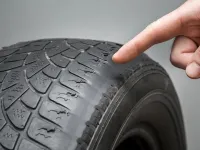
Dangerous wear:
- Visible DOT indicators – tread depth reached 1.6 mm
- Uneven wear – differences > 2 mm between spots
- Visible steel cords – structural compromise
- Deformations – waves, bulges, flattening
Structural damage:
- Cracks in sidewall or tread
- Bubbles – internal delamination
- Cuts deeper than 3 mm
- Missing chunks from the tread
The coin test
A 1-bani coin (1.5 mm height) placed into the main grooves:
- Tip fully covered = OK for winter
- Tip partially visible = change within 1-2 months
- Tip fully visible = urgent change
Conclusion
Winter tires are the most important safety investment for driving in the cold season. The 7°C rule is not a suggestion but a physical necessity dictated by material properties. In Romania, where temperatures can frequently drop below -15°C and roads can be unpredictable, specialized winter tires can mean the difference between getting home safely and a serious accident.
Remember: investing in quality tires pays off in increased safety, long-term fuel efficiency, and avoiding the costs of potential accidents that can run into tens of thousands of euros.
7°C is the critical temperature – below this, summer tires become a hazard to your safety and that of other road users.
Photo sources: sullivantire.com, youtube.com, pakwheels.com