- P0420 indicates catalytic converter efficiency below threshold, not proof of failure.
- Cleaning may be cheaper but not always effective and can void warranties.
- If the converter is severely clogged, cleaning is ineffective; removal inspection needed.
- Internal deterioration test via tapping for rattles suggests replacement.
Failure at the ITP emissions test is one of the most common issues drivers face, and in most cases the culprit is a clogged or damaged catalytic converter. This critical component of the exhaust system reduces harmful emissions, but over time it can lose efficiency due to carbon buildup or internal deterioration.
Deciding between cleaning and replacing the catalytic converter isn’t straightforward and depends on several technical factors. While cleaning may seem cheaper, it’s not always effective and can even void the vehicle warranty. Let’s go through the process step by step to approach this problem and make the best decision.
Correct Diagnosis of Emission Problems
Before making any decision regarding the catalytic converter, it is essential to identify the exact cause of the emission test failure. A failed test will generate error codes in the vehicle’s OBD2 system, most commonly code P0420.
Understanding the P0420 code
Code P0420 indicates that the catalytic converter efficiency is below the normal threshold. This means the system detects that the converter is no longer processing exhaust gases at optimal parameters. However, this code does not automatically confirm that the problem lies with the catalytic converter itself.

Other possible causes of high emissions
Before blaming the catalytic converter, check:
- Oxygen sensors (lambda sensors): A faulty sensor can provide incorrect data to the ECU
- Exhaust system: Cracks or leaks can affect readings
- Fuel injection system: Dirty or faulty injectors can cause incomplete combustion
- Ignition system: Worn spark plugs or faulty coils can produce excessive emissions
Assessing the Condition of the Catalytic Converter
To determine whether the catalytic converter can be cleaned or must be replaced, a detailed inspection is required.

1. Checking the degree of clogging
An extremely clogged catalytic converter can cause:
- Difficulties starting the engine
- Significant power loss
- Increased fuel consumption
- Engine overheating
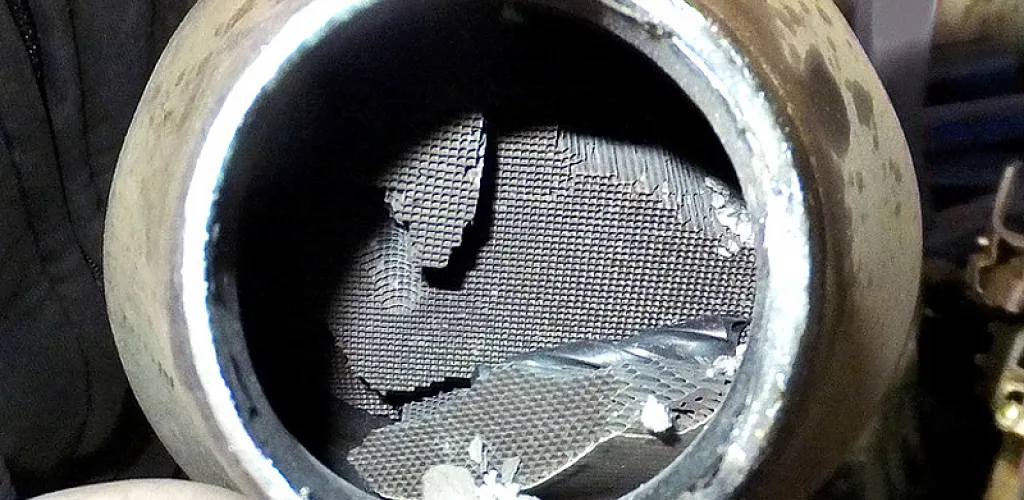
For a complete inspection, the catalytic converter must be removed from the vehicle. Visually check the interior honeycomb structure – if it is completely blocked by deposits, cleaning will not be effective.
2. Internal deterioration test
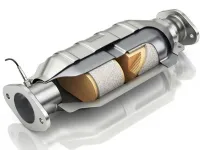
Internal components of the catalytic converter (ceramic or metallic honeycomb) can deteriorate over time. A simple test consists of:

- Lightly tapping the catalytic converter with a hammer
- Listening to the internal sounds
- If you hear rattling noises, the converter must be replaced
3. Oil consumption analysis
Excessive oil consumption is often the main cause of catalytic converter clogging. Signs include:
- Bluish smoke from the exhaust
- Oil level drops between changes
- Excessive deposits on spark plugs
Causes of oil consumption:
- Worn piston rings: Allow oil to enter the combustion chamber
- Worn valve guides: Cause oil leaks
- Defective head gaskets: Can mix oil with fuel
Options for Cleaning the Catalytic Converter

If the diagnosis confirms that the catalytic converter can be salvaged, there are several cleaning methods available.
Manual cleaning
The traditional method involves:
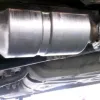
- Removing the catalytic converter
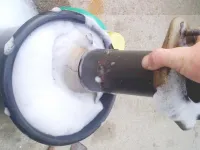
- Washing with special solutions (cellulose thinner)
- Thorough rinsing with water
- Complete drying before reassembly
Specialized chemical products
There are specific solutions on the market for cleaning catalytic converters:
- Oxicat: Concentrated product for removing carbon deposits
- Cataclean: A solution added to fuel for progressive cleaning
- Other specialized products: Wynn’s, Liqui Moly, Bardahl offer various solutions
Limitations of cleaning
Cleaning the catalytic converter has several drawbacks:
- Limited effectiveness: Cannot fully restore original capacity
- Warranty risk: Manufacturers do not recommend this practice
- Reduced durability: Effect is temporary in many cases
- Questionable cost-benefit: Cleaning cost can be close to replacement
Replacing the Catalytic Converter – The Recommended Solution
Advantages of replacement
- Guaranteed performance: A new catalytic converter ensures optimal efficiency
- Durability: Trouble-free operation for many years
- Compliance with standards: Full compliance with emission standards
- Warranty: Most manufacturers offer a warranty on new parts
Types of replacement catalytic converters
- OEM (Original Equipment Manufacturer): Identical to factory-installed units
- Quality aftermarket: More economical yet performing alternatives
- Universal converters: Adaptable solutions for multiple models
Estimated costs
Prices vary significantly depending on:
- Engine type and size
- Vehicle make and model
- Quality of the chosen converter
- Installation complexity
Final Recommendations
Before making a final decision, consider the following:
When to opt for cleaning:
- Older vehicle (over 10-12 years)
- Low vehicle value
- Light to moderate clogging
- Very tight budget
When to choose replacement:
- Relatively newer vehicle (under 8-10 years)
- Severely deteriorated catalytic converter
- Desire for a permanent solution
- Warranty considerations
Preventing future problems
- Regular maintenance: Timely oil and filter changes
- Quality fuel: Use fuel from reputable stations
- Periodic checks: Inspect sensors and the injection system
- Optimal driving: Avoid sudden accelerations and prolonged idling
In conclusion, while cleaning the catalytic converter can be a temporary solution, replacement remains the safest and most effective long-term option. Consulting a mechanic specialized in exhaust systems will help you make the best decision for your vehicle’s specific situation.
Photo sources: motorverso.com, vipermotorsports.com, carfromjapan.com