- Universal converters are cheaper but require careful compatibility checks.
- Key criteria include exact intake and outlet sizes, 1.75–3 inches.
- Use a high-quality stainless steel body and durable catalyst core.
- Thermal shields protect nearby components from 400–800°C.
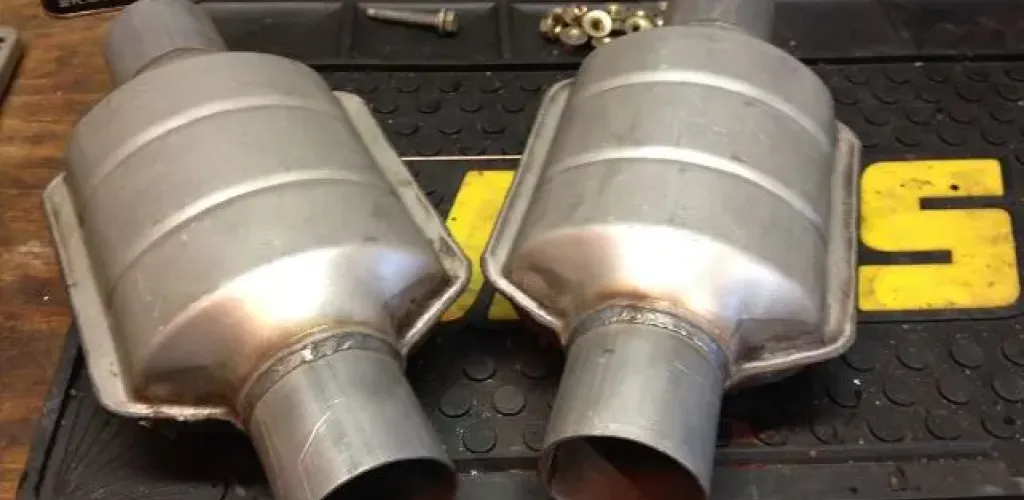
Every vehicle equipped with an internal combustion engine includes a catalytic converter in its exhaust system, a vital component for reducing pollutant emissions. While essential for environmental compliance, this part can also be quite costly. When the catalytic converter fails or is stolen, universal catalytic converters offer an affordable alternative to OEM parts. These units are designed to fit multiple vehicle models and cost significantly less than OEM equivalents. However, choosing the right universal converter requires attention to several technical factors.
What you need to know about universal catalytic converters
Advantages and disadvantages
Advantages:
- Significantly lower cost than OEM parts
- Wide market availability
- Relatively simple installation for an experienced mechanic
- Performance comparable to original parts
Disadvantages:
- Requires careful compatibility checks
- May require modifications to the exhaust system
- Limited warranty compared to OEM parts
- Risk of mismatch with lambda sensors on some vehicles
Essential selection criteria
Intake and exhaust dimensions
This is the most critical technical aspect. The diameter of the inlet and outlet pipes must match exactly the vehicle’s exhaust system. Standard sizes vary between 1.75 and 3 inches (approximately 44–76 mm). A mismatch of just a few millimeters can make proper installation impossible or compromise system sealing.
Material quality and construction
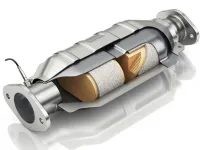
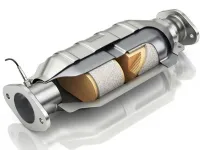
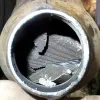
The converter body must be made from high-quality stainless steel, resistant to corrosion and high temperatures. Inside there is a ceramic or metallic honeycomb core coated with noble metals that facilitate catalytic reactions. The quality of these materials directly determines the durability and efficiency of the component.
Certifications and compliance with emission standards
In Europe, catalytic converters must meet Euro 5 or Euro 6 standards, depending on the vehicle’s year of manufacture. In the USA, EPA or CARB certifications are mandatory. Ensure the chosen product is certified for the applicable standards in your country and that the vehicle will pass periodic technical inspection.
Thermal protection
Thermal shields are essential to protect surrounding components from the intense heat generated by catalytic reactions, which can reach 400–800°C. A quality converter will include aluminized or stainless steel thermal shields.
Recommended universal catalytic converter models
Walker Exhaust EPA-standard catalytic converter
Walker Exhaust offers a balanced solution between quality and price. The stainless steel body provides long-term durability, and the aluminized heat shields effectively protect adjacent components. An important advantage is that it does not require a break-in period—the converter operates at maximum capacity immediately after installation. Expanding bushings facilitate mounting, reducing installation time. This model is a safe choice for most general applications.
AUTOSAVER88 universal catalytic converter 2.25″
Designed specifically for vehicles with a 2.25 inch (57 mm) outer diameter exhaust pipe, this model stands out for optimized exhaust flow. EPA certification confirms compliance with American emission standards, and the robust stainless steel construction guarantees durability. The improved design allows better exhaust gas flow compared to other models in the same price range, which can help maintain engine performance.
Walker CalCat universal catalytic converter Pre-OBDII
This model is specially designed to comply with CARB standards, making it ideal for older vehicles (pre-OBDII) in states with strict emissions regulations. OE-style coverage ensures consistent performance throughout the product’s life. The simplified design facilitates installation even for amateur mechanics with experience, making it an excellent option for those who want to perform maintenance on their own vehicle.
MagnaFlow 94106 universal catalytic converter
MagnaFlow is well known in the industry for the superior quality of its products. This model uses higher-gauge stainless steel than most competitors, translating to increased resistance to corrosion and thermal distortion. The ribbed body reduces expansion and contraction caused by thermal cycles, lengthening its lifespan. The honeycomb mount maximizes the contact area with exhaust gases, improving catalytic reaction efficiency. With a 2.5 inch (63.5 mm) inlet diameter, it is suitable for midsize and large vehicles.
Tips for installation and maintenance
Before installation
- Check the condition of the lambda sensors — faulty sensors can affect the performance of the new converter
- Inspect the entire exhaust system for leaks or cracks
- Ensure the engine is running correctly — issues such as oil burning can prematurely damage the new catalyst
- Prepare all necessary mounting hardware — bolts, washers, gaskets, and new clamps
Installation process
Although installing a universal converter is simpler than it may seem, following essential steps guarantees optimal results:
- Raise the vehicle safely and allow the exhaust system to cool completely
- Spray the mounting bolts with penetrating oil a few hours ahead to ease removal
- Disconnect the lambda sensors and remove the old catalytic converter
- Clean the contact surfaces and check the condition of flanges and gaskets
- Install the new catalytic converter, observing the gas flow direction (usually marked with an arrow)
- Tighten the mounting bolts evenly, following the recommended torque
- Reconnect the lambda sensors, checking the electric contacts
- Start the engine and check for leaks
Maintenance and lifespan
A quality universal catalytic converter can last between 80,000 and 150,000 km, depending on usage conditions. To maximize its lifespan:
- Use quality fuel and recommended additives
- Promptly address engine issues that could affect the converter
- Avoid frequent cold starts followed by abrupt accelerations
- Periodically check the exhaust system for corrosion and leaks
Legal aspects and ITP verification
In Romania, vehicles must meet emission standards corresponding to their year of manufacture to pass the periodic technical inspection (ITP). A correctly chosen universal converter installed professionally will allow trouble-free ITP. Keep the product documentation proving compliance with the applicable Euro standards — these documents may be requested during the inspection.
Conclusion
Universal catalytic converters are a viable and cost-effective alternative to original parts, provided you choose based on the vehicle’s technical specifications. Investing in a quality model from reputable manufacturers such as Walker, MagnaFlow, or AUTOSAVER88 ensures performance comparable to OEM parts at a fraction of the price. Pay particular attention to intake and exhaust dimensions, compliance certifications, and material quality to ensure you choose the optimal solution for your vehicle.