- Regular maintenance prevents premature wear; watch for shifting problems and noises.
- Gear oil leaks indicate seals, housing damage, or cracked casing.
- Gear oil isn’t lifetime; replace periodically, worsened by city driving and heat.
- Normal operating temps 60-70°C; extremes can reach 80-90°C.
Manual transmissions remain a core part of many vehicles. Proper maintenance can make the difference between a dependable car and costly, long-term repairs. While owners often focus on regular engine oil changes, the transmission system is easy to neglect until problems arise.
This component works under demanding conditions, enduring constant mechanical stress through gear changes and the transfer of power from the engine to the wheels. Without proper care, internal parts can wear prematurely, leading to expensive failures. Pay attention to any changes in the vehicle’s behavior: unusual noises, difficulty shifting gears, or other deviations from normal operation can be early warning signs of transmission issues.
Importance of Manual Transmission Maintenance
Although many people believe the manual transmission is simpler than an automatic one, it still requires attention and regular maintenance. Unlike the engine, which receives constant care, the transmission system is often ignored until problems occur.
The manual transmission operates under demanding conditions, subjected to constant mechanical stress from gear changes and the transfer of power from the engine to the wheels. Without proper maintenance, internal components can wear prematurely, leading to costly failures.
It is essential to be attentive to any change in the vehicle’s behavior. Unusual noises, difficulty shifting gears, or any other deviation from normal operation can be early signs of transmission problems.
Most Common Manual Transmission Problems
Gear oil leaks
One of the most common issues is a gear oil leak. When you notice oil spots under the car, especially in the central area, this can indicate a leak from the transmission system.
Leaks can occur for several reasons:

- Wear of seals and gaskets
- Damage to the gearbox housing
- Loosening of mounting bolts
- Cracks in the gearbox casing
It is important not to ignore these leaks, even if they seem minor. A low gear oil level can lead to accelerated wear of internal components and even seizure.
Problems with gear oil
Contrary to a prevalent belief, gear oil is not “for life” and must be replaced periodically. Many people think the manual transmission can run with factory-fill oil for the vehicle’s life, but this is incorrect.
Like other vital fluids of the vehicle, gear oil degrades over time and loses lubricating properties. This process accelerates under challenging driving conditions:
- City driving with frequent stops and starts
- Towing trailers or carrying heavy loads
- Driving in extreme temperatures
A gear oil in good condition has a dark red color and a mildly sweet odor. As it degrades, the color becomes darker, almost black, and the odor may become burnt, indicating overheating or contamination of the oil.
Temperature-related problems
A healthy manual transmission operates at relatively low temperatures, between 60-70°C. In extreme conditions, temperatures can reach 80-90°C, which is still acceptable.
Temperature problems can arise from:
- Insufficient gear oil level
- Old and degraded oil that no longer lubricates effectively
- Excessive wear of internal components
- Overloading of the vehicle
When the temperature exceeds normal limits, the oil begins to lose its properties, creating a vicious cycle where lack of lubrication leads to more friction and even higher temperatures.
Symptoms Indicating Transmission Problems
Abnormal noises
A faulty transmission produces a variety of characteristic noises:
Noises when shifting gears:
- Grinding or metallic sounds when you shift
- Sharp noises when engaging a gear
- Unusual noises that vary from loud to intermittent
Noises in the neutral position: If you hear noises when the shifter is in the neutral position (engine running and clutch engaged), this may indicate:
- Problems with gearbox bearings
- Wear of internal components
- Low oil level
An experienced driver will notice these unusual noises immediately, which normally should not be present.
Difficulties shifting gears
The gearbox can exhibit various operation problems:
Difficult gear engagement:
- Resistance to gear changes
- Inability to engage certain gears
- Need to force the shift lever
Gears slipping: A particularly dangerous symptom is when the shifter “jumps” out of the current gear. If this happens:
- Stop the vehicle safely
- Turn on the hazard lights
- Do not continue driving until you check the transmission
Burning smells
The distinct burning odor can indicate:
- Overheating of gearbox components
- Excessive friction between parts
- Deterioration of gear oil
- Clutch problems

Common Mistakes That Accelerate Transmission Wear
Incorrect use of the shift lever
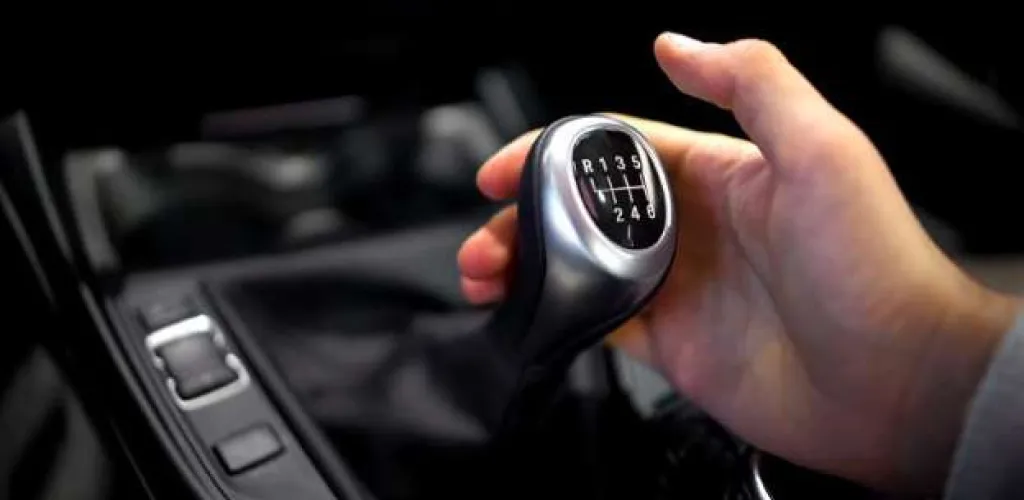
A common mistake is keeping your hand on the shift lever while driving. This creates constant pressure on internal components:
- The shift fork (the fixed element) comes into forced contact with the gear (the moving element)
- Continuous pressure leads to premature wear of these components
- Repair costs can be significant
Incorrect use of the clutch
Other harmful practices include:
- Keeping the clutch pedal pressed unnecessarily (at traffic lights, in traffic)
- Shifting gears well ahead of necessity
- “Playing” with the clutch pedal while stationary
These maneuvers may seem harmless but, in the long term, contribute to premature wear of the transmission system.

Preventing Transmission Problems
Regular checks
To avoid major issues:
- Check the gearbox oil level at every engine oil change
- Visually inspect under the car for leaks
- Listen carefully for any unusual noises
- Follow the maintenance intervals in the vehicle manual
Responsible driving
Avoid:
- Overloading the vehicle beyond its recommended capacity
- Driving with low fluid levels
- Abrupt gear changes and forcing gears
- Ignoring warning signs
Scheduled maintenance
Even if some manufacturers claim that gear oil is “for life”, experts recommend changing it at regular intervals, especially in demanding operating conditions.
Recommended intervals:
- Normal conditions: 80,000-120,000 km
- Severe conditions (urban traffic, towing): 60,000-80,000 km
- High-mileage vehicles: more frequent checks
Diagnosis and Repair
When you notice transmission symptoms, it is crucial to act quickly. Vehicle components are interconnected, and a poor state of the transmission can affect the efficiency of other systems.
A professional diagnosis can identify:
- The degree of wear of components
- The need to replace gear oil
- The presence of contaminants in the oil
- The condition of the clutch system
Don’t ignore the signals your vehicle gives you. Timely intervention can save hundreds or even thousands of euros in major repairs.
Conclusion
Manual transmission, while simpler than automatic, requires attention and proper maintenance to function optimally. Early recognition of symptoms, adherence to maintenance intervals, and responsible driving are the keys to a long-lasting transmission.
By taking a proactive approach and conducting regular checks, you can avoid major problems and keep the vehicle in peak operating condition for the long term. Remember that prevention is always cheaper than repair.